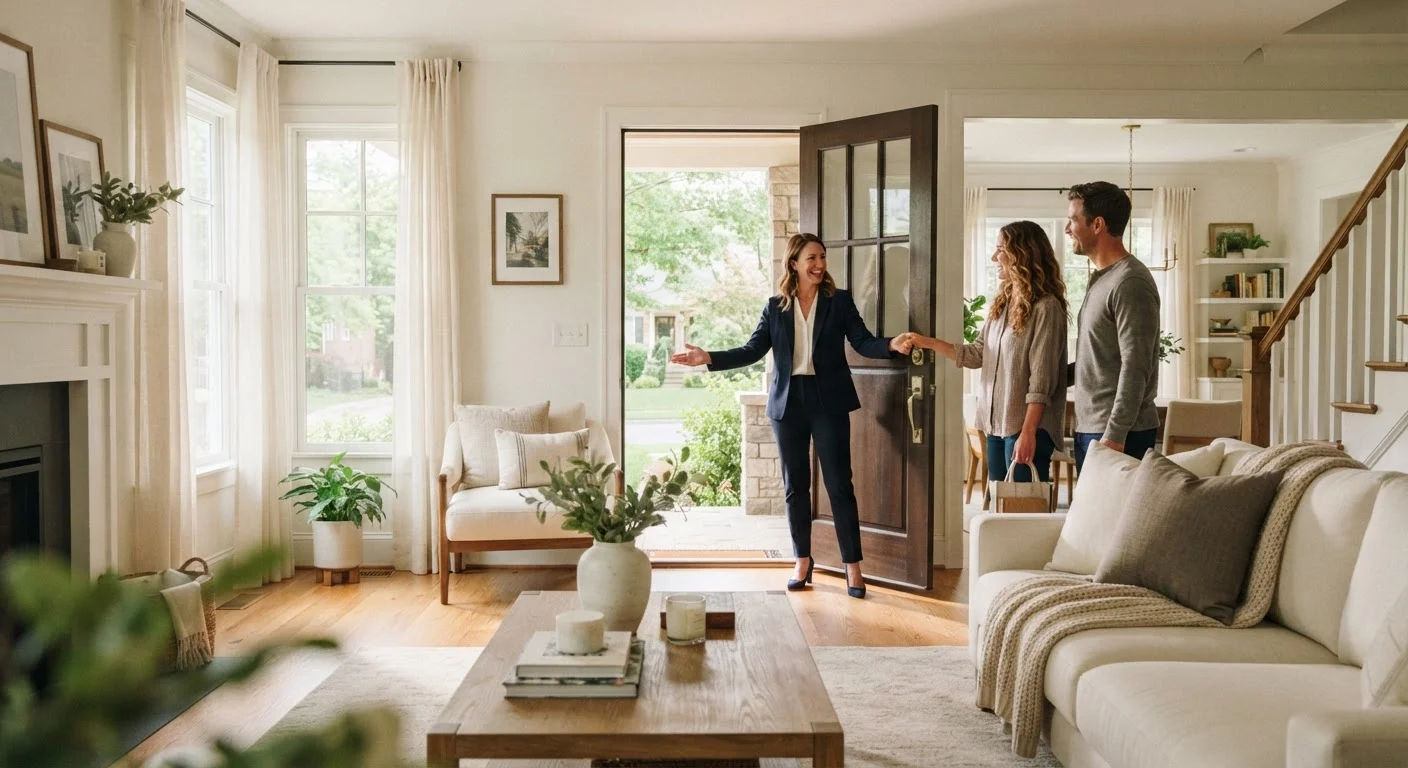
How Each Showing Format Works
When you list a home, you have two primary ways to get buyers through the door: open houses and private showings. Understanding how each operates helps you set realistic expectations and plan accordingly.
Open houses are scheduled events - typically held on weekend afternoons - during which any member of the public can walk through your home without an appointment. They're often announced through the MLS, listing portals, and signage. The format is social by nature: multiple visitors may be present simultaneously, creating a sense of activity and, in competitive markets, mild urgency.
Private showings are scheduled one-on-one appointments coordinated through buyer's agents. A prospective buyer and their agent tour the home at a specific time, usually with 24 to 48 hours of advance notice to you. The environment is quieter, more deliberate, and allows for longer, more investigative walkthroughs.
Before either format can work effectively, your home needs to be prepared. See the pre-listing checklist for a room-by-room guide to getting your property showing-ready.
The Case for Open Houses
Open houses remain a fixture of residential real estate for good reason. When held early in a listing's life - typically the first or second weekend - they can concentrate buyer interest into a short window, which can contribute to multiple-offer situations in active markets.
They also serve a marketing function beyond direct sales. Neighbors who attend may refer friends or family. Buyers who aren't yet working with an agent discover the property organically. And the visible foot traffic signals to the market that the home is generating interest.
~4-5%
Homes sold directly through open houses
Industry surveys suggest open houses directly produce a sale in a small fraction of cases, though they contribute to broader marketing momentum.
92%+
Buyers who search online before touring
According to the National Association of Realtors, the vast majority of buyers research homes online before scheduling any in-person visit.
That said, open houses draw a wider audience than private showings, which means not every visitor is a qualified or motivated buyer. Agents frequently note that a meaningful portion of open house attendees are neighbors satisfying curiosity or early-stage browsers who are months away from making an offer. Sellers should also be aware of security considerations - foot traffic through your home from unverified visitors warrants removing valuables, personal documents, and prescription medications before any public event.
First impressions formed at open houses begin outside - curb appeal improvements directly affect how buyers feel before they cross the threshold.
The Case for Private Showings
Private showings tend to attract buyers who are further along in their decision-making. They've likely already reviewed your listing online, discussed it with their agent, and decided the property merits their time. That self-selection matters: feedback from private showings is generally more substantive, and offers that follow tend to come from buyers with pre-approval in hand.
For certain property types - higher-priced homes, properties with unique features, or listings in lower-density areas - private showings may be the dominant or even exclusive format. In these cases, the controlled, focused environment allows buyers to absorb the property's character without distraction.
Make Each Private Showing Count
Treat every private showing as a high-stakes presentation. Ensure the home is clean, well-lit, and at a comfortable temperature. If you have pets, arrange for them to be off-premises. Ask your agent to follow up with the buyer's agent within 24 hours for feedback - consistent, timely responses help you identify patterns and adjust your strategy accordingly.
Private showings also give sellers more control over the presentation. You can ensure the home is at its best for each visit rather than managing a high-volume open house. The tradeoff is logistical: accommodating multiple individual appointments over days or weeks requires flexibility, especially for occupied homes with pets, children, or work schedules to work around.
How your home looks and feels during these visits is consequential. Effective staging influences buyer perception in ways that persist long after they leave the property.
Choosing the Right Mix for Your Situation
The decision isn't binary. Most listing agents recommend a strategy that incorporates both formats, calibrated to the local market and the property itself.
| Open Houses | Private Showings | |
|---|---|---|
| Buyer qualification level | Mixed - includes browsers and serious buyers | Higher - typically pre-approved, agent-represented buyers |
| Scheduling flexibility | Single event, set date and time | Flexible, spread over days or weeks |
| Market exposure | Broad, public-facing | Targeted, by appointment only |
| Seller disruption | High on event day, low otherwise | Moderate, recurring across multiple dates |
| Feedback quality | Limited, often surface-level | Detailed, actionable agent feedback |
| Best market condition | Active, competitive markets | Slower markets or premium properties |
| Security considerations | Higher risk - unverified public access | Lower risk - verified buyer and agent |
In a fast-moving seller's market, an open house in the first week can create competitive energy and accelerate offers. In a slower market, where buyers have more options and time, consistent private showings over a longer period may be more productive. Homes that have been sitting on the market sometimes benefit from a fresh open house to re-engage buyer interest - though pricing and condition are typically the deeper issue when listings stall, as explored in this breakdown of why homes sit on the market.
Talk with your agent about showing data: how many private appointments are being booked per week, what feedback is coming back, and whether an open house would expand or simply duplicate the buyer pool already seeing the home. Showing strategy is dynamic - it should be revisited as the listing ages.
This article is for general informational purposes only and does not constitute real estate, financial, or legal advice. Consult a licensed real estate professional for guidance tailored to your specific situation and local market.