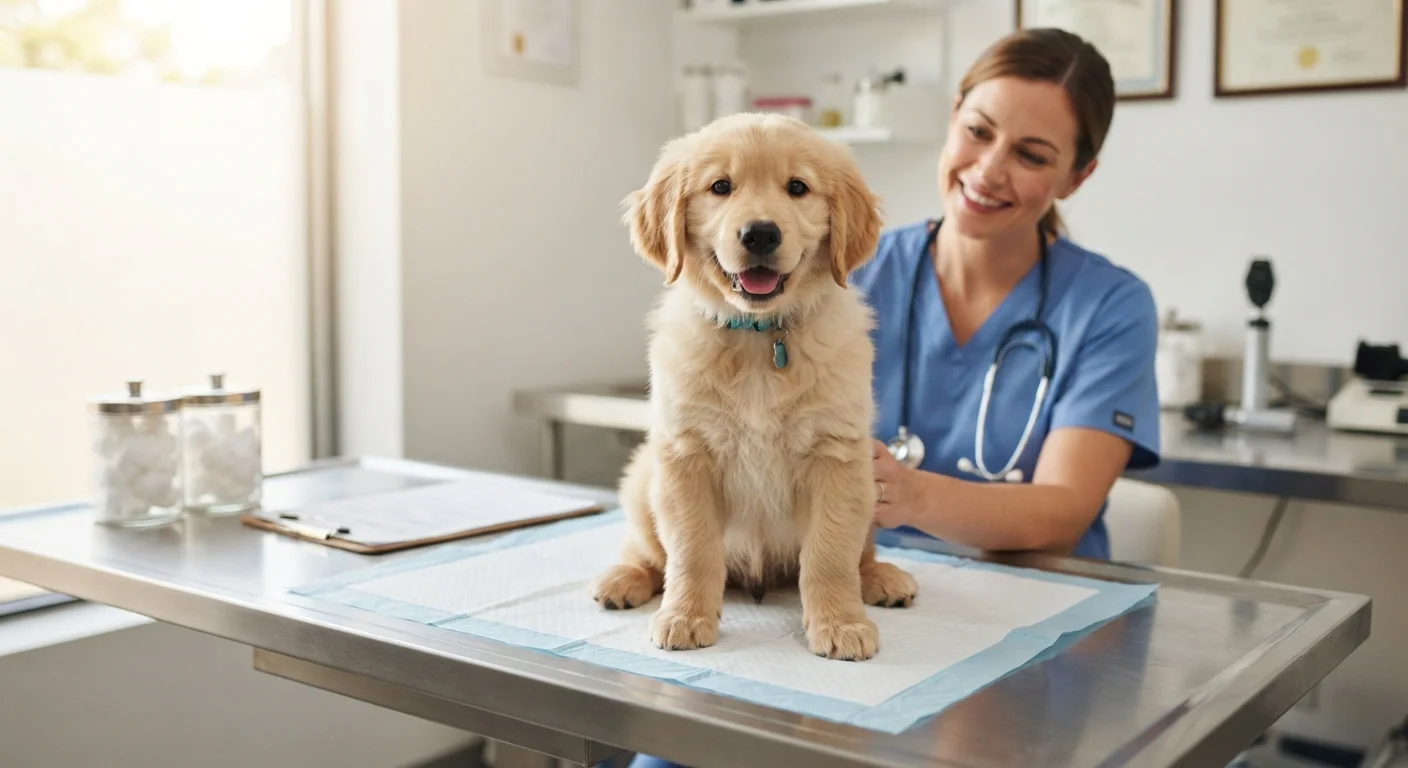
Why the First Year Sets the Foundation
A dog's first twelve months are among the most consequential of its life. During this period, the immune system matures, behavioral patterns take shape, and organ systems reach functional capacity. What happens - or doesn't happen - in these early months can affect a dog's health and temperament for years to come.
This overview follows a month-by-month framework to help owners understand what to anticipate, when to schedule veterinary care, and how to support healthy development at each stage. It's meant to work alongside your veterinarian's guidance, not replace it. Every puppy is individual, and breed, size, and existing health factors all influence timing and care decisions.
If you're still preparing for a new puppy's arrival, see our puppy-proofing checklist for room-by-room safety guidance before the first day home.
Bring Records to Every Vet Visit
Keep a simple log of your puppy's vaccines, deworming treatments, weight at each visit, and any health concerns noted. Many veterinary practices provide their own records, but having your own copy ensures nothing falls through the cracks - especially if you ever need to see a different clinic or emergency vet.
Weeks 6-8: The Starting Point
Most puppies join their new families between 8 and 12 weeks of age, but the health clock starts earlier. By week 6, a puppy's maternal antibodies - the immune protection passed through the mother's milk - begin to wane. This creates a vulnerability window that vaccines are timed to address.
At the first vet visit (ideally around 6-8 weeks), a veterinarian will typically:
- Perform a full physical exam, checking eyes, ears, heart, lungs, abdomen, and limbs
- Administer the first round of distemper-parvovirus combination vaccine
- Test for intestinal parasites via fecal exam and begin deworming if needed
- Discuss flea, tick, and heartworm prevention options appropriate for age and weight
For a fuller picture of core versus non-core vaccines and their typical schedule, see our pet vaccination schedule reference.
3-14 weeks
Critical socialization window in puppies
According to veterinary behaviorists, experiences during this period have an outsized influence on a dog's long-term temperament and stress responses.
4 visits
Minimum vet visits in the first 16 weeks
Most puppies require a visit roughly every 3-4 weeks from 6 to 16 weeks of age to complete the initial vaccine series.
~6 months
Average age when permanent teeth fully erupt
Baby teeth are typically replaced by 28 permanent teeth starting around 3 months; most dogs complete teething by 6 months.
Weeks 8-16: Vaccines, Socialization, and Core Development
This stretch is arguably the most packed period in a puppy's first year. Vaccine boosters are given every 3-4 weeks because no single dose reliably overcomes maternal antibody interference in all puppies. The series typically continues until 16 weeks, when the immune system can mount a dependable response on its own.
Core vaccines in this window generally include:
- Distemper, parvovirus, adenovirus (DA2P or DA2PP) - usually given at 8, 12, and 16 weeks
- Rabies - typically given at 12-16 weeks depending on local law
- Non-core options (Bordetella, leptospirosis, Lyme) discussed based on lifestyle risk
Simultaneously, this is the peak of the socialization sensitive period. Puppies exposed to a wide variety of people, surfaces, sounds, and environments during weeks 3-14 tend to develop more adaptable, confident temperaments. Our guide on socializing a puppy during the critical early window explains how to do this safely, even before the vaccine series is complete.
Don't wait until the vaccine series is complete to begin socialization - work with your vet to find safe, controlled exposures (like puppy classes with health requirements) during the series.
The socialization window closes around 14 weeks, which overlaps significantly with the vaccine schedule. Delaying all exposure until 16 weeks means missing the most neurologically receptive period.
Start handling your puppy's paws, ears, and mouth from day one - even briefly - so that veterinary exams and grooming feel routine rather than stressful.
Early habituation to touch reduces fear responses during future exams, which makes health care easier and less traumatic for the dog throughout its life.
Months 4-6: Adolescence Begins
By 4 months, most puppies have completed their initial vaccine series and are ready to interact more freely with other dogs and public spaces. This is also when teething intensifies - permanent teeth replace baby teeth between roughly 3 and 6 months - and owners often notice increased chewing behavior.
From a health standpoint, watch for:
- Retained deciduous teeth: Baby teeth that don't fall out on their own may require veterinary extraction to prevent misalignment
- Rapid growth changes: Large and giant breeds are especially prone to orthopedic issues if caloric intake or exercise isn't managed appropriately during growth spurts
- First signs of adolescent behavior: Reduced responsiveness to commands and increased independence are normal but call for consistent training
This is a good time to build on foundational training. Our puppy training roadmap covers housebreaking and early commands in a structured way.
Watch for Retained Baby Teeth
If a baby tooth hasn't fallen out by the time the permanent tooth is fully erupted, it's considered retained and should be evaluated by a veterinarian. Retained deciduous teeth can push permanent teeth out of alignment and create pockets where bacteria accumulate. This is more common in small and toy breeds.
Months 6-12: Growth, Spay/Neuter, and Adult Transition
The second half of the first year brings major hormonal shifts and continued physical development. For many dogs, this is when spaying or neutering is recommended - though timing now varies more than it once did. Veterinary guidance has evolved, with many clinicians suggesting that larger breeds may benefit from waiting until 12-18 months to allow musculoskeletal development to complete before hormone-altering surgery.
Discuss the optimal timing for your specific dog with your veterinarian. Factors influencing the decision include breed, size, sex, and behavioral considerations.
Other milestones in this window:
- Most puppies reach close to adult height, though weight and muscle mass continue to develop
- The booster vaccine schedule transitions: a 1-year booster follows the puppy series, then adult schedules apply
- Parasite prevention remains ongoing - monthly or quarterly depending on the product used
- Dental hygiene habits started early (tooth brushing, appropriate chews) pay dividends as adult teeth are now permanent
For a comparison to feline development timelines, see our overview of kitten health milestones in the first six months.
Spay/Neuter Timing Is Not One-Size-Fits-All
Veterinary recommendations on spay and neuter timing have shifted in recent years. Emerging evidence suggests that for some large and giant breed dogs, waiting until skeletal maturity - often 12-18 months - may reduce the risk of certain orthopedic and health conditions. This is an individualized decision. Discuss your puppy's breed, sex, and lifestyle with your veterinarian before scheduling surgery.
Vet Visit Timing: A Quick Reference
Here's a condensed schedule to help owners plan ahead. Your veterinarian may adjust timing based on your puppy's individual needs.
| Age | Typical Focus |
|---|---|
| 6-8 weeks | First exam, DA2PP vaccine, fecal test, deworming |
| 10-12 weeks | DA2PP booster, lifestyle vaccines discussed, parasite prevention |
| 14-16 weeks | Final DA2PP booster, rabies vaccine, Bordetella if indicated |
| 4-6 months | Dental check, growth assessment, spay/neuter discussion |
| 6-12 months | Spay/neuter (timing varies), 1-year vaccine booster planning |
Consistent preventive care in the first year builds a strong baseline for lifelong health. Keeping records of vaccines, parasite treatments, and growth notes makes future vet visits more efficient and helps catch patterns early.
For broader day-to-day care guidance, explore our pet care basics hub, which covers nutrition, grooming, and wellness routines alongside these health fundamentals.
This article is for general informational purposes only and does not constitute veterinary medical advice. Always consult a licensed veterinarian for guidance specific to your puppy's health and circumstances.