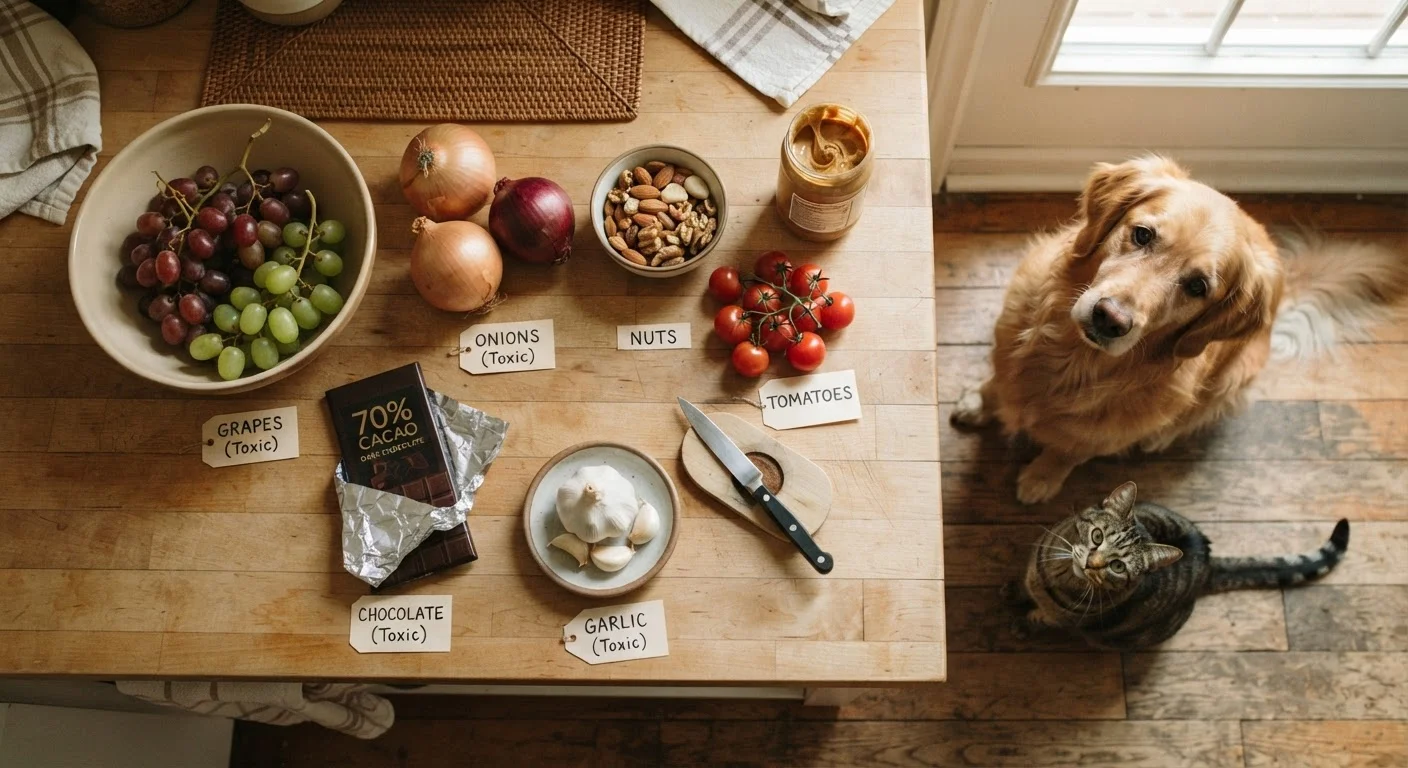
Why Human Foods Can Be Dangerous to Pets
Dogs and cats metabolize food very differently than humans do. A small amount of a seemingly harmless ingredient - a handful of raisins, a square of dark chocolate, a slice of onion - can trigger severe toxicity in pets that would cause no harm at all to an adult person. Understanding which foods pose a risk is one of the most practical things a pet owner can do to protect their animal.
This reference covers the most widely encountered toxic foods for dogs and cats. It is organized by food type, notes which species are at risk, and explains the mechanism of harm. It is not a substitute for veterinary care. If you suspect your pet has eaten something toxic, contact your veterinarian or a pet poison helpline immediately.
For a broader look at household hazards beyond the kitchen, see our guide on common household items that are toxic to pets, and our guide to dangerous houseplants for plant-specific risks.
| Most commonly reported toxic food | Chocolate (ASPCA Animal Poison Control Center annual data) |
| Species most often affected | Dogs (due to indiscriminate eating habits) |
| Xylitol found in | Sugar-free gum, some peanut butters, mouthwash, candy |
| Safe dose of grapes for dogs | None established - any amount considered potentially dangerous (Veterinary toxicology consensus) |
| Emergency resource | ASPCA Animal Poison Control Center: (888) 426-4435 (Consultation fee may apply) |
High-Risk Foods: A Reference List
The foods below are among the most frequently implicated in pet poisoning cases reported to veterinary toxicology centers.
Methylxanthines
A class of chemical compounds found in chocolate, coffee, and tea. Dogs and cats metabolize them far more slowly than humans, allowing toxic levels to accumulate in the body.
Heinz Body Anemia
A type of anemia in which red blood cells are damaged by oxidative stress, reducing their ability to carry oxygen. Allium vegetables (onions, garlic) are a common cause in pets.
Xylitol
An artificial sweetener used in many sugar-free products. In dogs, it triggers a rapid, dangerous drop in blood sugar and can cause liver failure even in small amounts.
Hypoglycemia
Abnormally low blood sugar. In pets, it can cause weakness, tremors, seizures, and loss of consciousness, and requires immediate veterinary attention.
Chocolate, Coffee, and Caffeine
Species at risk: Dogs and cats (dogs are more commonly exposed).
Why it's harmful: These foods contain methylxanthines - theobromine and caffeine - which dogs and cats cannot metabolize efficiently. Even modest amounts can cause vomiting, diarrhea, abnormal heart rhythms, seizures, and, in severe cases, death. Dark chocolate and baking chocolate contain far higher concentrations than milk chocolate.
Grapes and Raisins
Species at risk: Dogs (cats are rarely exposed but should also avoid them).
Why it's harmful: The exact toxic compound is not yet identified, but grapes and raisins are well-documented to cause acute kidney failure in some dogs - with no safe established dose. Even small quantities have been fatal in reported cases.
Onions, Garlic, Leeks, and Chives
Species at risk: Both dogs and cats; cats are especially sensitive.
Why it's harmful: These allium vegetables contain compounds that damage red blood cells, leading to a form of anemia called Heinz body anemia. Toxicity can result from a single large exposure or repeated small ones, and applies to raw, cooked, and powdered forms.
Xylitol (Birch Sugar)
Species at risk: Dogs primarily; toxicity in cats is less established but the substance should still be avoided.
Why it's harmful: Xylitol is an artificial sweetener found in sugar-free gum, some peanut butters, candy, and certain baked goods. In dogs, it triggers a rapid release of insulin, causing dangerous hypoglycemia (low blood sugar). It can also cause liver failure. Always check ingredient labels before offering any human food to your dog.
Alcohol
Species at risk: Both dogs and cats.
Why it's harmful: Alcohol is rapidly absorbed and causes the same depressant effects in pets as in people - but at a fraction of the dose. Vomiting, disorientation, dangerously low blood sugar, and respiratory failure are possible. Even fermented foods like raw bread dough pose a risk.
Macadamia Nuts
Species at risk: Dogs.
Why it's harmful: The mechanism is not fully understood, but ingestion can cause weakness, vomiting, tremors, and elevated body temperature. Symptoms typically appear within 12 hours of ingestion.
Raw or Undercooked Meat, Eggs, and Bones
Species at risk: Both dogs and cats.
Why it's harmful: Raw meat and eggs may harbor Salmonella or Listeria, posing risks to both the animal and the humans in the household. Raw egg whites also contain avidin, an enzyme that interferes with biotin absorption. Cooked bones can splinter and cause internal injuries.
Cats and Toxicity: A Special Note
Cats are often considered finicky eaters and less likely to consume toxic foods than dogs, but they are not immune. Cats are actually more sensitive than dogs to onions, garlic, and certain medications. Because cats groom themselves, they can also ingest toxic residues that have landed on their fur. If a cat shares a home with a dog that frequently counter-surfs, keep toxic foods well secured for both animals' safety.
For a fuller picture of what your cat should and shouldn't be eating, our article on cat nutrition myths separates common beliefs from the evidence.
What to Do If Your Pet Eats Something Toxic
Time matters in poisoning situations. If you believe your pet has consumed any of the foods listed above - or any unknown substance - act quickly:
- Do not wait for symptoms to appear. Some toxins, such as xylitol, act within minutes; others, like grape toxicity, may take 24-72 hours to show signs of kidney damage.
- Contact your veterinarian or a pet poison helpline immediately. Have the product name, estimated quantity, and your pet's weight ready.
- Do not induce vomiting unless a veterinarian instructs you to. In some cases, inducing vomiting can worsen the situation.
- Bring the food packaging if you visit a clinic - ingredient lists help the vet assess the level of risk.
Preventing access is the most reliable protection. Keeping toxic foods in sealed containers, out of reach, and educating everyone in the household reduces the risk considerably. For a systematic approach, our room-by-room pet-proofing guide walks through the most common household hazard zones.
This article is for general informational purposes only and does not constitute veterinary or medical advice. Always consult a licensed veterinarian for guidance specific to your pet's health needs.