Why Travel Preparation Matters for Pets
Most pets don't naturally enjoy car rides or clinical environments - these are learned tolerances built through repeated, positive exposure. Without preparation, even a short trip to the vet can become a stressful event that takes hours for a pet to recover from. Over time, repeated stressful trips can make animals harder to examine and less cooperative during care, which affects the quality of veterinary attention they receive.
The good news is that consistent, low-pressure practice genuinely works. The steps below address both car travel and vet-visit readiness as a combined routine, since the two are closely linked. If your pet is already anxious about riding in the car, that stress typically carries over to the destination - addressing car comfort first makes vet visits smoother by extension.
Before you begin, gather what you'll need:
What you will need
Having the right equipment in place - particularly a correctly sized crate - makes every step easier. See the tools section for details:
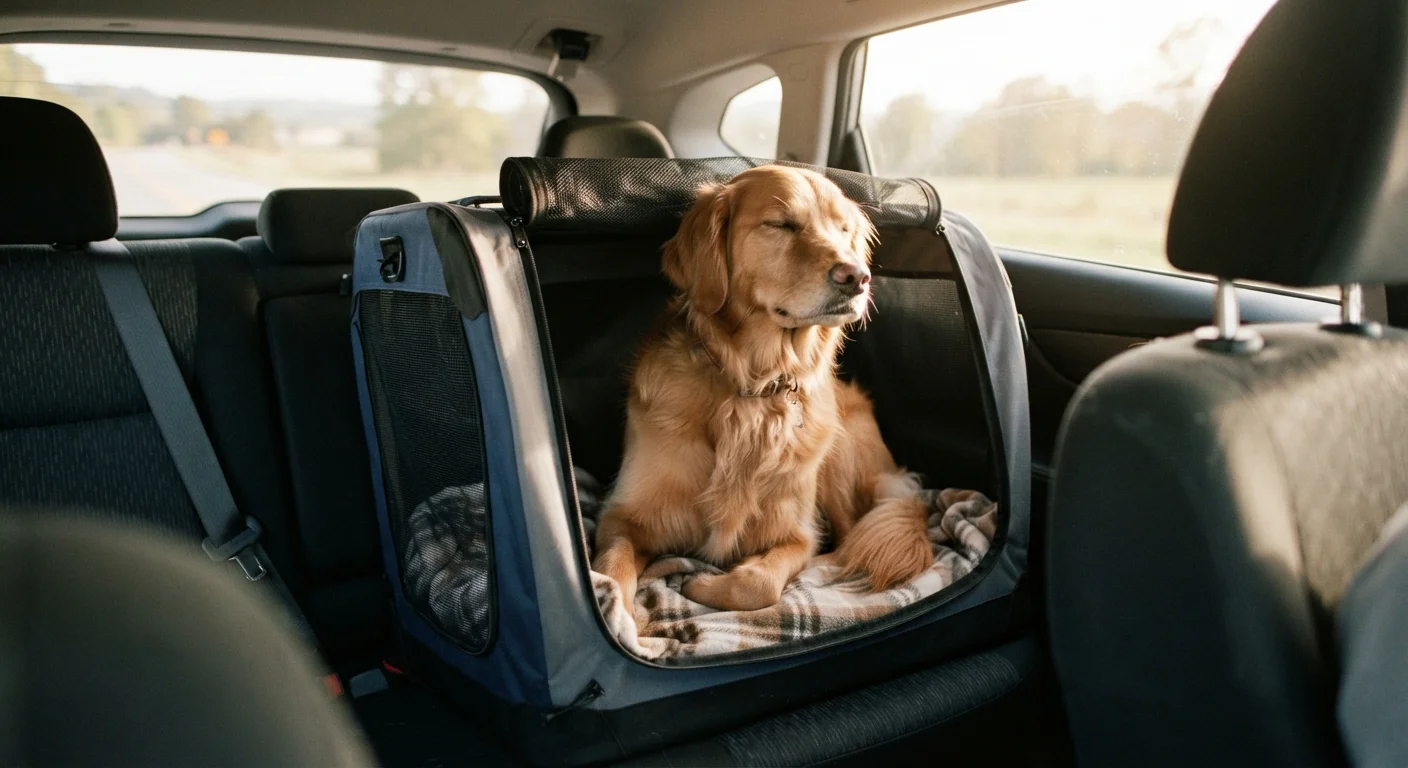
Hard-sided or soft-sided travel crate
Provides a safe, enclosed space that contains the pet and prevents in-cabin distractions while driving.
Crash-tested dog seatbelt harness
Restrains dogs who do not tolerate crates, keeping them from becoming projectiles in sudden stops.
Absorbent crate liner or travel mat
Protects the crate interior and keeps pets comfortable during longer rides.
Collapsible water bowl and portable water supply
Allows hydration stops without requiring a clean bowl at each location.
Pet first-aid kit
Provides basic supplies for minor injuries or stabilization before reaching veterinary care.
Step-by-Step: Building Calm Travel Habits
Introduce the crate or carrier well before the trip
Place the crate in a common area of your home at least one to two weeks before any planned travel. Leave the door open and put familiar bedding or a worn t-shirt inside so it smells like home. Let your pet explore and enter voluntarily - never force them inside. Feed meals near or inside the crate to build a positive association.
Practice short car rides before the main journey
Once your pet enters the crate comfortably at home, begin loading them into the car for brief, low-stakes outings - around the block or to a nearby park, not always to the vet. Gradually extend the duration over multiple sessions. This teaches pets that car rides don't always end in something stressful and reduces anticipatory anxiety. Refer to our guide on recognizing anxiety signals in pets to identify if your pet needs extra support during this phase.
Secure the crate or carrier properly in the vehicle
A crate that slides or tips during braking is unsafe and distressing for your pet. In most vehicles, the back seat or cargo area works best. Use a seatbelt threaded through the crate's handle or frame, or load the crate snugly against the back of a seat so it cannot shift. Avoid placing crates in the front seat where airbag deployment poses a risk.
Pack a dedicated travel kit for your pet
Prepare a bag specifically for your pet that includes: a day's supply of food portioned into a zip bag, bottled water and a collapsible bowl, waste bags or a portable litter setup for cats, any prescription medications, and a copy of your pet's vaccination records. If you're traveling across state lines, some states require a health certificate issued by a veterinarian within a set window before travel - check requirements in advance. A well-stocked pet first-aid kit is also worth keeping in the vehicle.
Plan rest stops on longer trips
Dogs generally need a bathroom and movement break every two to three hours. Cats traveling in enclosed carriers can go longer, but should be offered water at stops. Always use a leash when letting dogs out of the vehicle at rest areas - unfamiliar environments can trigger bolting even in well-trained dogs. Keep cats secured in their carrier when the car door is open. Before a long drive, also confirm your vehicle is in good shape - our car preparation checklist covers the basics.
Desensitize your pet to handling before vet visits
Routine vet exams involve touching ears, paws, teeth, and the abdomen. Pets unfamiliar with this handling often become fearful or resistant, making exams harder on everyone. Practice gentle handling at home in low-pressure sessions. Pair each touch with calm praise and a treat. This is especially useful alongside desensitization work for other stressful procedures - see our guide on easing nail trimming anxiety, which uses similar principles. For comprehensive context on what vet exams involve, annual vet visit expectations offers a useful walkthrough.
Never Leave Pets in a Parked Car
Even on a mild 70°F day, a car's interior can reach dangerous temperatures within minutes. Pets left in parked vehicles can suffer heatstroke rapidly, which can be fatal. Always take your pet with you or have someone stay in the car with the engine and air conditioning running.
Watch for Signs of Motion Sickness
Dogs and cats can experience nausea during car travel, especially on winding roads or their first few rides. Signs include drooling, yawning excessively, lethargy, or vomiting. If your pet consistently shows these signs, speak with your veterinarian before the next trip - there are management options available.
Replicate the Vet Clinic at Home
Periodically handle your pet's paws, ears, and mouth at home in a calm setting. This mirrors what a vet exam involves and makes the real thing far less startling. Pair each session with a treat to build a positive association.
If your pet has an upcoming procedure rather than a routine visit, preparation for veterinary surgery covers additional steps specific to that situation, including fasting requirements and post-procedure home care.
For pet owners managing broader lifestyle changes - such as a new baby joining the household - our guide on preparing pets for a new baby addresses how to keep animals settled through major household transitions.
This article is for general informational and educational purposes only and is not a substitute for professional veterinary advice. Always consult a licensed veterinarian for guidance specific to your pet's health and needs.