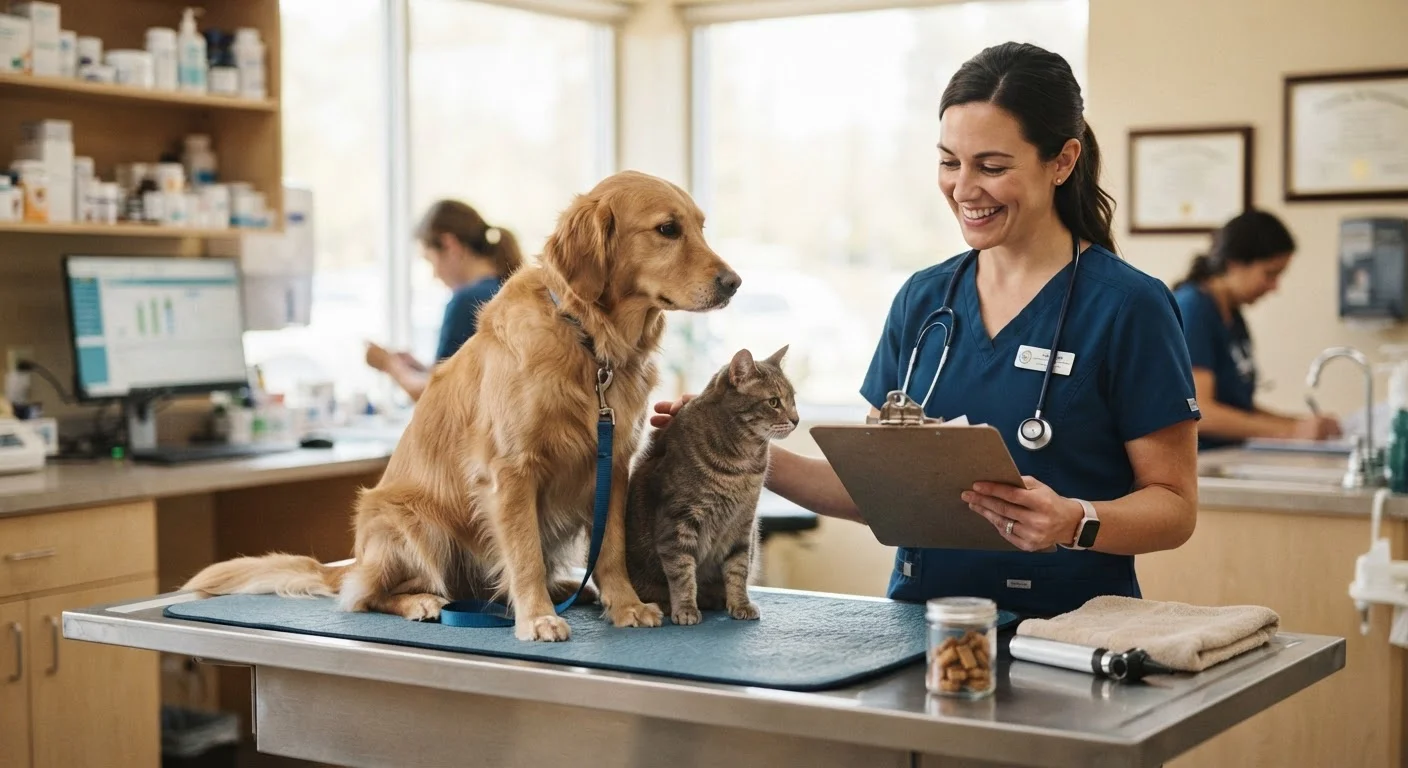
Why an Annual Wellness Plan Matters
Pets age faster than people do, which means a lot can change in a single calendar year. A puppy that was healthy at its first visit may be dealing with early joint stiffness by its third or fourth year. A senior cat may be silently managing kidney changes that only a blood panel would reveal. Annual wellness planning exists to catch those shifts early - when options are broader and outcomes are typically better.
A wellness plan is not simply a once-a-year vet appointment. It is a coordinated calendar of preventive actions: scheduled exams, vaccinations, parasite control, dental assessments, and nutrition check-ins, organized so nothing falls through the cracks. Think of it as a maintenance schedule, similar to what you'd keep for a car - except the stakes are higher and the patient can't tell you something feels off.
For a detailed look at what actually happens inside that annual exam room, see our guide on annual vet visits.
70%+
Adult dogs with periodontal disease by age 3
According to the American Veterinary Medical Association, dental disease is among the most prevalent conditions seen in companion animals.
All 50
U.S. states with reported heartworm cases
The American Heartworm Society reports heartworm disease has been diagnosed in dogs in every U.S. state, underscoring the need for year-round prevention.
56%
U.S. dogs and cats classified as overweight or obese
The Association for Pet Obesity Prevention's annual surveys consistently find more than half of companion animals in the U.S. are above a healthy weight.
The Core Veterinary Exam
The physical exam is the foundation of any wellness plan. During a standard wellness visit, your veterinarian will systematically assess your pet from nose to tail: eyes, ears, teeth, skin and coat, heart and lung sounds, lymph nodes, abdomen, joints, and body condition score. This nose-to-tail review can surface issues - a new heart murmur, a developing lump, or early arthritis - that owners may not notice at home.
Most vets recommend annual exams for healthy adult pets. Senior pets (generally dogs over 7 and cats over 10, though this varies by breed and size) are often seen every six months because age-related changes can progress quickly. Puppies and kittens typically follow a more frequent schedule in their first year to complete their initial vaccine series and monitor development.
Blood work and urinalysis may not be ordered every year for a young, healthy pet, but become increasingly important as pets age. These tests can detect early signs of kidney disease, diabetes, thyroid dysfunction, and other conditions before outward symptoms appear. Ask your vet which diagnostics are appropriate for your pet's current life stage.
Before your pet's annual exam, spend five minutes writing down any changes you've noticed - appetite shifts, new lumps, altered energy, or bathroom habit changes. Vets can only work with what they observe in the room; your home observations fill in critical gaps.
Owners spend far more time with their pets than any clinician can, making their observations a key diagnostic tool that complements the physical exam.
Ask your vet to walk you through your pet's body condition score at every visit and show you how to assess it yourself at home. Catching a two- or three-pound weight gain early is far easier to correct than addressing established obesity.
Body condition scoring is a validated, practical tool that pet owners can learn to perform between visits, enabling earlier intervention for weight-related health risks.
Vaccinations and Titer Testing
Vaccines are divided into two categories: core vaccines, recommended for virtually all pets regardless of lifestyle, and non-core vaccines, which are given based on individual risk factors like geographic location, time spent outdoors, or contact with other animals.
For dogs, core vaccines generally include rabies, distemper, parvovirus, and adenovirus (hepatitis). For cats, core vaccines typically include rabies, feline herpesvirus, calicivirus, and panleukopenia. Non-core examples include leptospirosis and Bordetella for dogs, or feline leukemia for cats with outdoor access.
Not every vaccine needs to be given every single year. Many have three-year intervals once initial boosters are complete. Titer testing - a blood test that measures existing antibody levels - can sometimes be used to assess whether a booster is needed, though its applicability varies by vaccine type and local regulations (particularly for rabies). Discuss your pet's vaccination schedule with your vet annually so it stays current without being redundant.
Keep a Vaccination Record at Home
Maintain a simple folder - physical or digital - with your pet's vaccination history, including the vaccine name, date given, and next due date. This record is essential for boarding facilities, groomers, dog parks, and emergency vet visits, where proof of current vaccines is often required.
Parasite Prevention Year-Round
Fleas, ticks, heartworm, and intestinal parasites are year-round concerns in most parts of the United States, not seasonal ones. Ticks, for example, can remain active in temperatures above freezing. Heartworm disease - transmitted by mosquitoes and potentially fatal if untreated - has been reported in all 50 states.
A complete annual wellness plan includes a heartworm test (typically done at the annual exam for dogs) and consistent use of preventive medications recommended by your vet. Fecal exams - checking a stool sample for intestinal parasites like roundworms, hookworms, and giardia - are also typically recommended once or twice per year, even for indoor pets.
Cats that go outdoors, dogs that frequent dog parks or wooded trails, and pets in households with young children warrant particularly consistent parasite monitoring. Your vet can help you select an appropriate prevention protocol based on your pet's exposure risks and your geographic area.
Don't Skip Parasite Prevention in Winter
Many pet owners discontinue flea, tick, or heartworm prevention once temperatures drop, but this creates coverage gaps that parasites can exploit. In mild-winter climates especially, fleas and ticks remain active year-round. Always follow your veterinarian's guidance on the appropriate duration for any preventive protocol in your region.
Dental Health Checks
Dental disease is one of the most common - and most commonly overlooked - health issues in companion animals. Veterinary studies consistently show that the majority of dogs and cats over age three have some degree of periodontal disease. Left untreated, dental disease can lead to pain, tooth loss, and in severe cases, bacterial spread that may affect the heart, kidneys, and liver.
An annual wellness plan should include a dental assessment at every physical exam. Your vet will grade the level of tartar buildup, gingivitis, and any signs of tooth damage or infection. When professional dental cleaning under anesthesia is recommended, it allows for a thorough cleaning below the gumline - the area where disease actually originates - plus dental X-rays to assess roots and bone.
At home, daily tooth brushing with pet-safe toothpaste is the gold standard for dental maintenance between professional cleanings. If brushing isn't tolerated, ask your vet about veterinary-approved dental chews or rinses as supplemental options.
Nutrition and Weight Review
A pet's nutritional needs shift across its lifespan - what was appropriate for an active two-year-old Labrador may contribute to obesity in a seven-year-old dog with a slower metabolism. Weight management is a significant issue in companion animals; obesity is linked to joint problems, diabetes, respiratory difficulty, and a shorter lifespan overall.
During the annual exam, your vet will assess body condition score (BCS) - a standardized scale, typically 1 to 9, used to evaluate whether a pet is underweight, at an ideal weight, or overweight. This is a better indicator of health than scale weight alone. Based on that assessment and your pet's life stage, your vet may recommend adjusting food type, portion size, or feeding frequency.
For more on building day-to-day routines that support your pet's nutrition and health, see our guide on the building blocks of a healthy pet routine.
Life Stage Diets Are Not One-Size-Fits-All
Labels like 'puppy,' 'adult,' and 'senior' on pet food are useful starting points, but individual pets within the same life stage can have very different caloric and nutrient needs. A senior dog with kidney disease, for instance, has different dietary requirements than a healthy senior of the same age and breed. Always confirm diet changes with your veterinarian before making a switch.
Building Your Year-Round Care Calendar
Translating a wellness plan into an actual calendar helps prevent gaps. A practical approach is to anchor everything to your pet's annual exam date and work outward from there.
- At the annual exam: Physical assessment, vaccines due for renewal, heartworm test, fecal exam, dental grading, blood work if indicated, and nutrition review.
- Monthly: Administer parasite preventives as recommended; check for any new lumps, coat changes, or behavioral shifts.
- Every 6 months (senior pets): Schedule a mid-year exam to monitor age-related changes between annual visits.
- Daily: Dental brushing, weight-appropriate feeding, and observation of energy levels and appetite.
Understanding how pet insurance or wellness add-on plans can offset the cost of routine care is worth exploring. Our comparison of pet insurance coverage types breaks down what different plan structures typically include.
If you have a rabbit, guinea pig, hamster, or other small mammal, note that their wellness needs are often underestimated - see our guide on health basics for small pets for species-specific guidance.
This article provides general educational information about pet care and is not a substitute for individualized advice from a licensed veterinarian. Consult your vet to develop a wellness plan tailored to your specific pet's needs.