Why the Introduction Process Matters More Than You Think
Bringing a new pet home is an emotionally significant event - for the animals involved, not just the humans. Resident pets have established territory, routines, and a sense of safety that a newcomer's arrival directly disrupts. How that disruption is managed in the first days and weeks determines whether animals form a workable relationship or develop lasting anxiety and conflict.
Research in animal behavior consistently supports gradual, structured introductions over immediate contact. The underlying principle is straightforward: animals need time to process unfamiliar stimuli at a pace that doesn't trigger a defensive stress response. Rushing this process - even with the best intentions - can create negative associations that are difficult to reverse.
This applies whether you're introducing a second dog, adding a cat to a dog household, or mixing species in more complex configurations. For a dog-specific deep dive, see our guide to introducing a new pet to a resident dog. The principles below work across species combinations, though the pacing differs.
Health Clearance Comes First
Before any animal meets your resident pets, a veterinary exam and up-to-date vaccinations are essential. A new pet may carry contagious illnesses or parasites that pose a direct health risk to animals already in your home. Do not skip this step regardless of where the new pet came from - shelter, breeder, or private rehome.
What you will need
Baby gate or pet gate
Creates a physical barrier that allows animals to see and smell each other without direct contact.
Exercise pen or crate
Provides a secure, defined space for the new pet during supervised face-to-face sessions.
Separate feeding bowls and water dishes
Prevents resource guarding by ensuring each animal eats from their own station.
Cotton cloths or small towels
Used for scent swapping between animals before direct interaction begins.
High-value treats
Reinforces calm, positive behavior in the presence of the other animal.
Pheromone diffuser (species-specific)
May help reduce baseline anxiety in resident pets during the adjustment period.
Step-by-Step Introduction Process
Follow these steps in order. Skipping stages - even when animals seem calm - increases the risk of setbacks. Progress at the pace of the more anxious animal, not the more confident one.
Use Scent Swapping Early and Often
Rub a clean cloth on one animal's cheeks and chin, then place it near the other animal's resting area. Repeat daily in both directions. Familiar scent dramatically lowers threat perception before animals ever share a room, making first visual contact far less reactive.
Set up a dedicated space for the new pet before arrival
Choose a room the resident animals do not use as a primary territory - a spare bedroom or home office works well. Equip it with everything the new animal needs: food, water, a litter box (for cats), bedding, and enrichment items. The new pet will spend all of its initial time here.
Close the door fully. Do not allow resident pets access even for brief investigations. The physical separation protects both sides from an unmanaged first encounter and gives the new animal time to decompress after the stress of transport.
Begin scent swapping on day two or three
Using separate clean cloths, gently rub one cloth on the new pet's face and body, then place it in the resident pet's area. Repeat in reverse with a fresh cloth. Over the next two to three days, observe each animal's reaction - curiosity and brief sniffing are positive; prolonged fixation, growling, or hissing are signals to extend this phase before moving forward.
Introduce a visual barrier before face-to-face contact
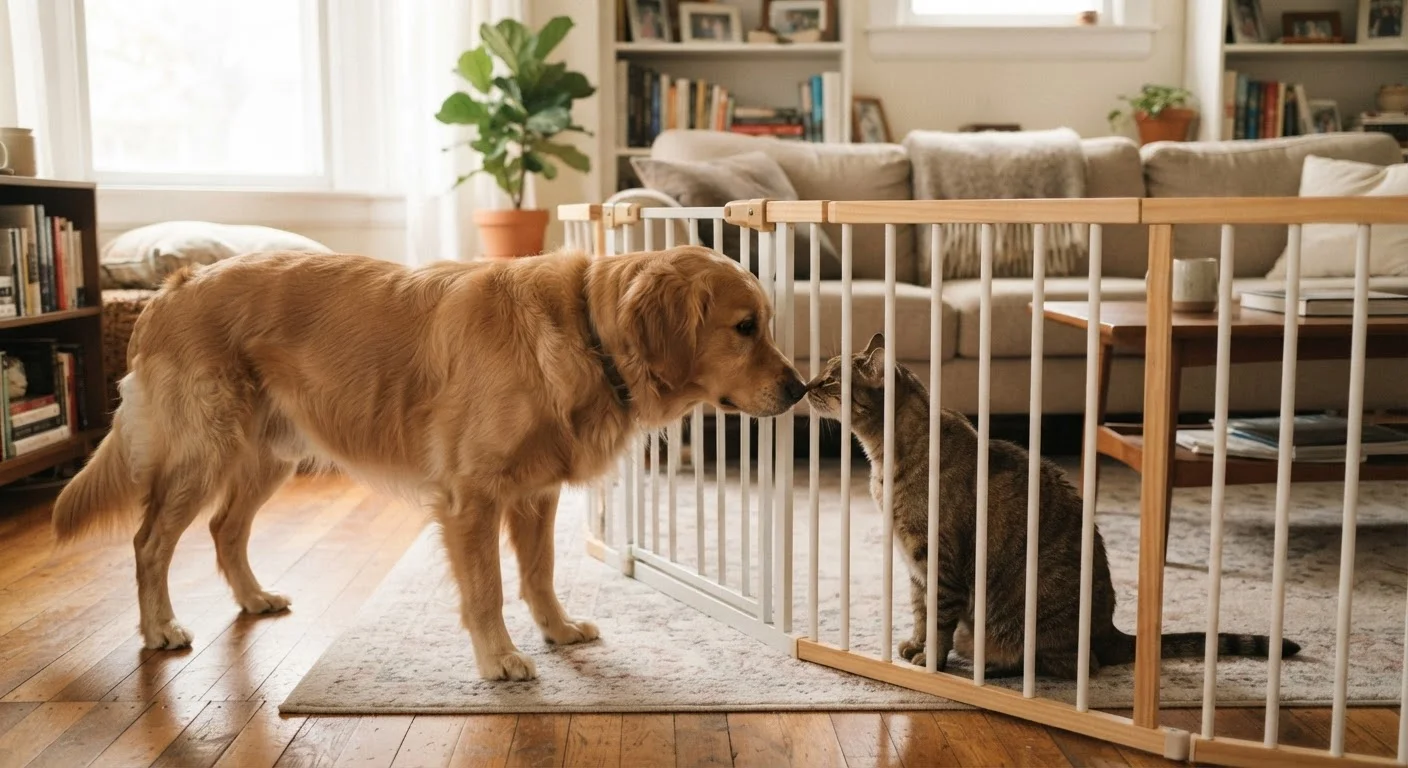
Once both animals appear relaxed around each other's scent - typically three to five days in - open the closed door and replace it with a baby gate. This allows both parties to see, smell, and hear each other while the barrier prevents direct physical contact.
Keep initial gate sessions to five to ten minutes, two to three times per day. Reward calm behavior on both sides of the gate with treats and calm verbal praise. If either animal becomes highly reactive, return to the closed-door phase for another day or two.
Allow supervised, off-leash face-to-face time in a neutral space
Choose a room that neither animal has strongly claimed. Keep dog-to-dog or dog-to-cat introductions short - under fifteen minutes - and have two people present if possible so each animal has a handler. Keep dogs on a loose leash initially; tight leashes communicate tension to the dog and can escalate reactivity.
Watch for body language signals: loose posture, play bows, or mutual sniffing at the face and hindquarters are positive signs. Stiff posture, direct hard staring, or raised hackles mean the session should end calmly without punishment.
Manage resources to prevent guarding conflicts
Once animals begin sharing space, feed them in separate rooms or at opposite ends of a large space with sufficient distance that neither animal can guard the other's bowl. Provide one more litter box than the number of cats in the household - the standard guideline is n+1 boxes, placed in different locations.
Identify and multiply high-value resting spots: elevated perches, window seats, and favored dog beds. Resource competition is one of the most common drivers of ongoing household conflict, and it is largely preventable through environmental management.
Build toward unsupervised cohabitation gradually
Most animals need two to four weeks of successful supervised interactions before being left together unsupervised. Keep the new pet's room available as a retreat even after the introduction is complete - some animals, particularly cats, benefit from having a consistent private space indefinitely.
Signs that cohabitation is progressing well include: animals resting near each other voluntarily, mutual grooming (cats), or relaxed play. If conflict escalates at any point, consult a certified applied animal behaviorist or a veterinary behaviorist - not just a general trainer - for professional guidance.
Never Force Animals to Share Space
Flooding - putting animals together and waiting for them to 'sort it out' - frequently causes injuries and lasting fear responses. If either animal freezes, growls, hisses, lunges, or refuses to eat during introductions, slow the process down. Regression is normal and does not mean the relationship is doomed.
Managing the Longer Adjustment Period
Full integration often takes several weeks to a few months depending on the animals' individual histories, temperaments, and prior socialization. A pet with a history of being an only animal typically needs more time than one raised with other pets. Pet health signals to monitor include changes in appetite, litter box habits, excessive grooming or hiding, and any signs of redirected aggression toward people in the household.
Parallel to the physical introduction, maintain your resident pet's existing routines as closely as possible - feeding times, walk schedules, and play sessions. Disrupted routines amplify stress and can be misread by owners as jealousy or spite when they are more accurately signs of anxiety. For households welcoming both a new pet and other major changes, our article on preparing your pet for a new baby covers how to layer multiple adjustments without overwhelming resident animals.
Once your animals are sharing space reliably, the next challenge may be managing them together during training. Our guide on training multiple dogs in the same household offers practical strategies for households with more than one dog.
This article provides general pet care information and is not a substitute for professional veterinary or animal behavior advice. If your pets show signs of aggression, injury, or severe stress during introductions, consult a licensed veterinarian or certified applied animal behaviorist.