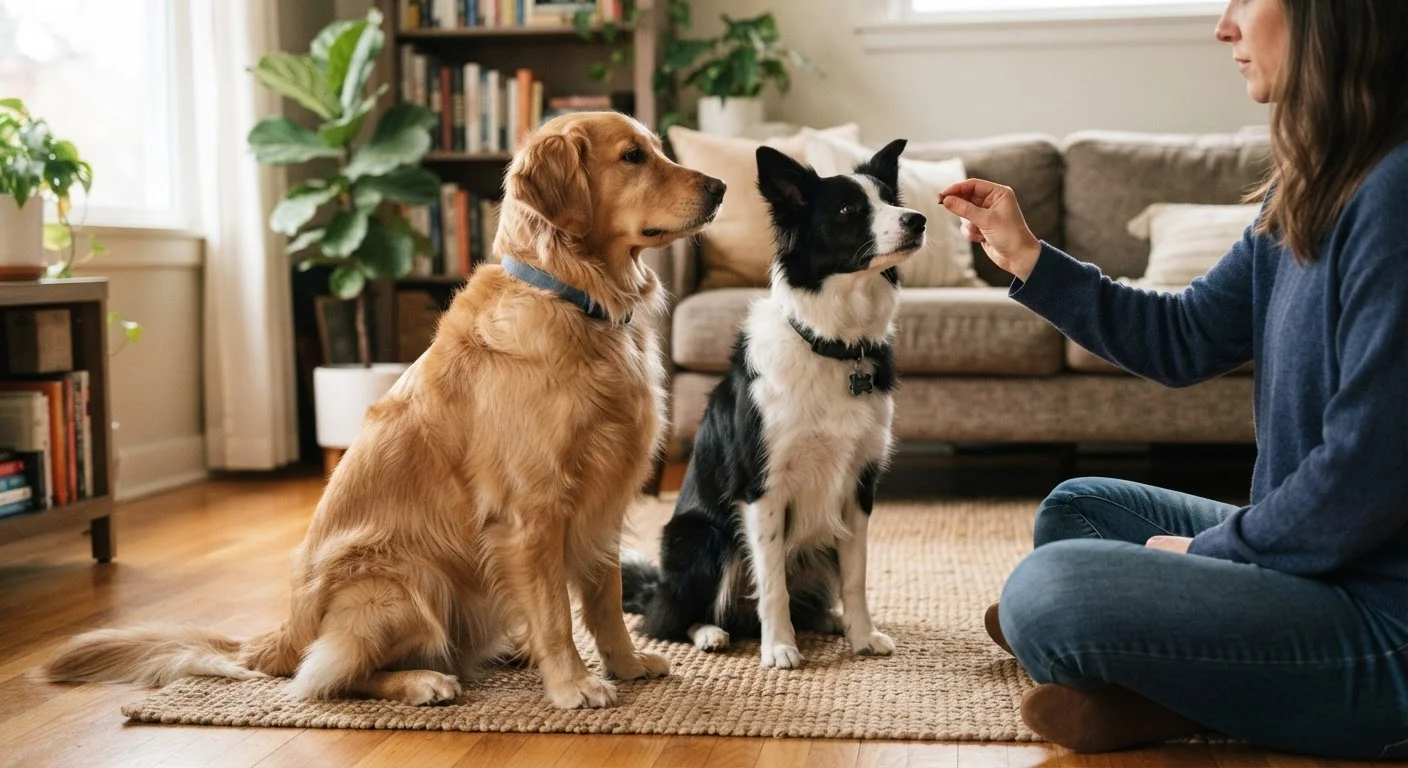
Why Multi-Dog Households Need a Different Training Approach
Training one dog takes patience and structure. Training two or more in the same home multiplies those demands - not just logistically, but behaviorally. Dogs influence each other constantly: they pick up cues from each other's reactions, compete (or collaborate) for your attention, and can quickly rehearse each other's unwanted behaviors.
The most common mistake owners make is attempting to train all their dogs together from the start. Group sessions feel efficient, but without a solid individual foundation, you're essentially asking each dog to learn a new skill while distracted by their most compelling distraction: another dog they live with.
Understanding this dynamic is the starting point. The strategies below are organized around a core principle: build the skill solo, then proof it with a housemate present. For a broader look at how training myths can derail your efforts from the beginning, see common training myths that make dog behavior worse.
Core Practices for Training Multiple Dogs
The following practices reflect methods supported by applied animal behavior research and recommended by certified professional trainers. Each addresses a specific challenge that arises in multi-dog training environments.
Train each dog separately before combining them into any shared session.
A dog that hasn't mastered a behavior on its own will not reliably perform it with a second dog present. The added distraction of a housemate undermines learning and increases frustration for both owner and dog. Solo sessions let each dog build fluency without competition.
Use physical barriers to create clear separation during individual training.
Dogs left loose while a housemate trains will almost always interrupt - jumping in for treats, nudging the working dog, or barking from frustration. A crate, baby gate, or separate room keeps the non-working dog calm and gives the working dog your full attention.
Use the same cues and reinforcement rules for every dog in the household.
Different verbal cues or hand signals for the same behavior across dogs creates household confusion - both for you and for them. Dogs observe each other constantly, and inconsistent standards can erode a behavior that one dog had already learned well. See also: why consistency across all household members matters.
Introduce group sessions gradually, starting with parallel work rather than shared tasks.
Asking two dogs to perform the same behavior at the same time in the same space is the hardest version of the skill. Parallel work - each dog doing their own behavior side by side, with their own handler or cue - bridges the gap between solo and fully combined training.
Manage treat delivery carefully to prevent resource competition.
In multi-dog sessions, the dog who didn't get the treat yet may redirect frustration toward the dog who did. Delivering rewards in separate spaces or using physical distance during reinforcement prevents this friction from disrupting the session.
Keep sessions short and end before either dog loses focus.
Multi-dog sessions are more mentally taxing than solo ones - for the dogs and for you. Fatigue and arousal build faster when dogs are training together, and a tired or overstimulated dog makes more errors and learns less. Enrichment and training work together to keep dogs mentally satisfied without overdoing structured sessions.
When to Consult a Professional Trainer
If two or more dogs in your home show tension, resource guarding, or outright conflict, a certified professional trainer or applied animal behaviorist should assess the situation before you continue group training. Competitive dynamics can escalate when training adds arousal to an already tense relationship. This article covers general multi-dog training for households without significant aggression between dogs.
Making Group Sessions Work Over Time
Once each dog has reliable solo skills, you can begin increasing the complexity of group work incrementally. The goal is not to have both dogs performing tricks simultaneously for show - it's to build enough impulse control that each dog can hold their behavior even when the other is receiving attention or reinforcement.
“Dogs learn best when they can focus without competing for resources or attention. In a multi-dog home, management is training - how you structure the environment shapes what each dog is actually learning.”
— Patricia McConnell, Applied animal behaviorist and author on dog behavior and training
One helpful benchmark: if your dogs can each maintain a 30-second down-stay while you give the other dog attention, they're ready for more advanced combined work. If either dog breaks immediately, that's the skill level to train to next - not a reason to push harder in the group context.
As your dogs progress, group sessions become useful for real-life scenarios: both dogs sitting before going through a door, both waiting while you prepare meals, or both holding a stay while a visitor enters. These practical applications make the training investment visible in daily life. For ideas on keeping both dogs mentally engaged between training sessions, explore enrichment activities that go beyond the daily walk.