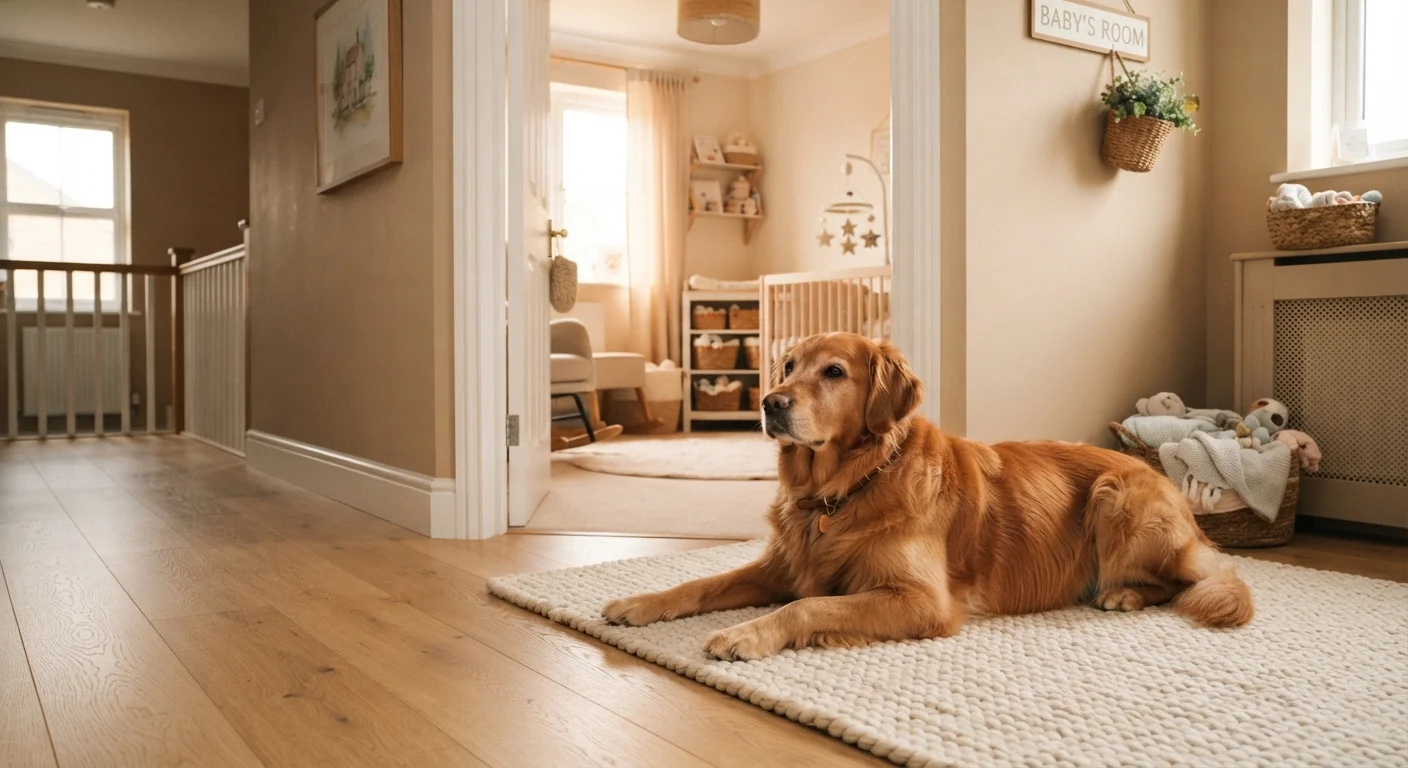
Why Early Preparation Makes a Real Difference
Pets thrive on predictability. The arrival of a newborn - with its unfamiliar sounds, smells, and demands on your attention - represents a significant disruption to an animal's established world. Research in animal behavior consistently shows that gradual exposure and consistent routines reduce stress responses in companion animals. Starting preparation months in advance, rather than days, gives your pet time to adapt at a pace that doesn't overwhelm their coping capacity.
This is especially important for pets that are older, anxious, or have had limited exposure to children. Senior pets in particular may need additional time and gentler adjustments, since they are generally less flexible in the face of change. Dogs accustomed to being the primary focus of household attention may show signs of stress - including over-grooming, house soiling, or increased clinginess - if the transition is abrupt.
It's also worth recognizing that the skills covered here - managing introductions, setting boundaries, reinforcing calm behavior - overlap meaningfully with broader pet training principles. If your pet has gaps in basic obedience, address those now rather than during the postpartum period.
What you will need
Step-by-Step: Getting Your Pet Ready
The steps below are designed to be started at least two to three months before your due date. Each builds on the last, and together they cover the key behavioral and environmental changes your pet will need to navigate successfully.
Consult Your Vet and a Trainer Early
If your pet has a history of anxiety, resource guarding, or unpredictable behavior, consult a veterinarian and a certified animal behaviorist or trainer well before the baby arrives. This is not a situation to manage with guesswork. Early professional guidance significantly improves outcomes for both the animal and the child.
Schedule a Pre-Arrival Veterinary Visit
Book a wellness check at least six to eight weeks before your due date. Ask your vet to confirm your pet's vaccinations are current, address any parasite prevention gaps, and discuss whether anxiety or behavioral concerns warrant a referral to a certified trainer or behaviorist. A healthy, behaviorally stable pet is a safer companion for a newborn.
Shift Your Pet's Daily Routine Gradually
Newborns reshape household schedules dramatically. Rather than abruptly changing feeding times, walk lengths, or play sessions the day the baby arrives, begin making those adjustments now - in small increments over several weeks. If your dog currently gets a walk at 7 a.m. but that will need to shift to 8 a.m. post-baby, move it by fifteen minutes every few days. Pets adapt far better to slow change than to sudden disruption.
Establish and Reinforce Boundary Rules
Decide which areas will be off-limits to your pet - the nursery is the most important - and begin enforcing those boundaries consistently now. Use baby gates or closed doors. If your pet currently sleeps on your bed or has free access to all rooms, start limiting access in stages rather than all at once. Consistent boundaries set before the baby arrives mean your pet is not learning a new rule at the most chaotic possible moment.
Desensitize Your Pet to Baby Sounds and Smells
Play recordings of infant cries, babbling, and newborn vocalizations at a low volume while going about normal household activities. Pair the sounds with calm praise or a small treat so your pet begins to associate them with neutral or positive experiences. Over several weeks, gradually increase the volume. Similarly, introduce baby-related scents - lotions, powders, laundry detergent - in small amounts around the home.
Reinforce Core Obedience Skills
A pet that reliably responds to sit, stay, leave it, and off is far easier to manage safely around a newborn. Practice these commands daily in the weeks leading up to the birth, and reward calm, settled behavior. If your pet does not yet have reliable responses to these cues, this is the right time to address that - through structured training methods that use positive reinforcement rather than punishment.
Plan the First Introduction Home
When you return from the hospital, have one adult greet the pet calmly outside or in a neutral space while another adult carries the baby inside first. Allow the pet a calm, sniff-based introduction on leash or from behind a gate - not an immediate close encounter. Keep the first interactions brief and positive. Over the following days, allow supervised, gradually closer access as the pet demonstrates calm behavior.
Use Scent as an Early Introduction Tool
Before the baby comes home from the hospital, bring home a worn blanket or piece of clothing that carries the newborn's scent. Allow your pet to sniff it calmly while you offer praise or a treat. This gives your animal a low-stakes first introduction to the baby's smell before any face-to-face encounter.
Never Leave Pets and Infants Unsupervised
Regardless of how well-prepared or well-behaved your pet is, direct, uninterrupted supervision is required whenever a pet and infant share the same space. Even a gentle animal can react unpredictably to an unexpected sound or movement. Supervise every interaction and separate them when you cannot actively watch both.
This article provides general pet care information and is not a substitute for professional veterinary or behavioral advice. If your pet has existing health or behavioral concerns, consult a licensed veterinarian or certified animal behaviorist before your baby arrives.
Tools That Support the Transition
A few practical items can make the preparation period more manageable for both pet and owner. None of these replace training or routine-building, but they support the process.
Baby sounds audio recordings
Used to desensitize pets to infant cries and vocalizations before the baby arrives.
Baby gates or room barriers
Used to establish pet-free zones and manage access to the nursery.
Long-lasting chews or puzzle feeders
Keep pets occupied and calm during feeding or settling periods with the baby.
Pheromone diffuser (species-appropriate)
Can support a sense of calm in anxious dogs or cats during household transitions.
For households where multiple animals are present alongside the new arrival, the structured approach outlined in our guide to introducing a new pet to a household that already has animals offers additional context on managing multi-animal dynamics during stressful transitions.