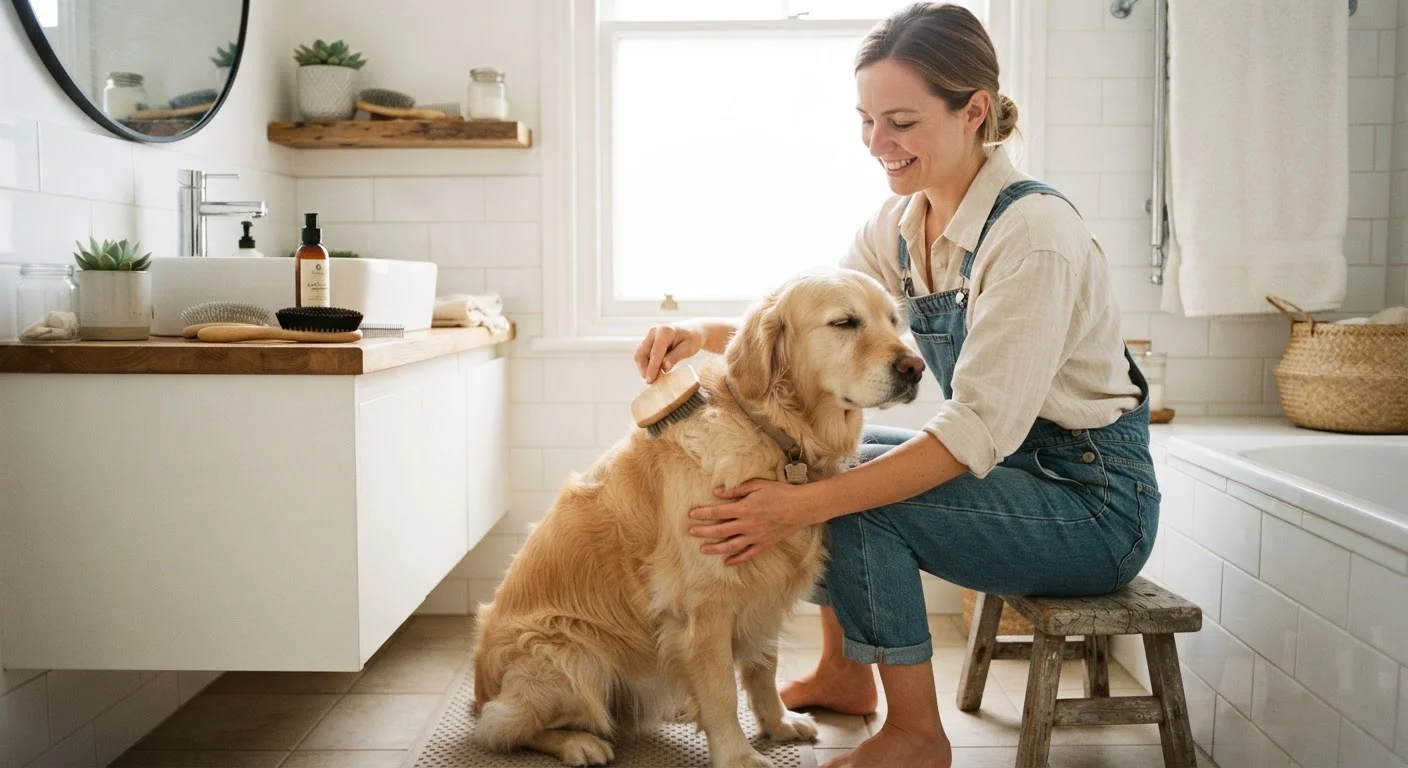
Why a Room-by-Room Approach Makes Grooming Easier
Home grooming doesn't have to mean corralling your dog into one spot and working through every task at once. A room-by-room strategy assigns each grooming task to the space where it's most practical and least stressful - brushing in a familiar common area, ear cleaning somewhere calm and well-lit, nail trims in a contained space, baths in the tub. Matching the task to the right environment reduces your dog's anxiety and keeps sessions manageable.
Beyond aesthetics, routine grooming is a genuine health practice. As we explore in our guide to grooming as a health practice, regular handling gives you the opportunity to notice skin changes, ear problems, and nail issues before they become serious. Grooming is also a natural complement to the broader habits covered in a well-rounded daily pet care routine.
What you will need
Before you begin, gather all your tools so you won't need to leave your dog mid-session to search for something.
Slicker brush or deshedding tool
Removes loose fur, detangles the coat, and distributes skin oils during brushing sessions.
Dog-safe shampoo
Cleans the skin and coat without disrupting your dog's natural skin pH balance.
Dog nail clippers or grinder
Trims nails to a safe length to prevent overgrowth, splitting, and discomfort when walking.
Styptic powder
Stops minor bleeding quickly if you accidentally cut the nail's quick during trimming.
Veterinarian-approved ear cleaning solution
Loosens wax and debris from the ear canal during routine ear cleaning.
Cotton balls or gauze pads
Used to wipe the outer ear after applying cleaning solution - never insert into the canal.
Non-slip bath mat
Provides secure footing in the tub or sink, reducing anxiety and slipping during bathing.
Handheld sprayer or pitcher
Allows controlled, gentle rinsing of the coat without startling your dog with overhead spray.
What to Expect During Each Session
Most dogs can tolerate a full grooming session - brushing, ears, nails, and bath - in 45 to 90 minutes once they are accustomed to handling. For dogs new to home grooming, break tasks across multiple shorter sessions over several days. This is especially important for nail trims and ear cleaning, which involve sensitive areas.
Pair Every Session With Positive Reinforcement
Small, high-value treats given during and immediately after each grooming task help your dog form a positive association with handling. Over several sessions, many dogs become noticeably calmer and more cooperative. Keeping sessions short at first - even just two to three minutes - builds tolerance gradually.
Tooth brushing is often overlooked in grooming routines but is equally important. Our step-by-step guide to brushing your dog's teeth covers how to introduce it gradually. Dental care can easily be added after a calm brushing session when your dog is already in a cooperative mindset.
Never Use Human Products on Dogs
Human shampoos, conditioners, and ear-cleaning solutions are formulated for human skin pH, which differs significantly from a dog's. Using them can cause skin irritation, strip protective coat oils, or damage the ear canal. Always use products labeled safe for dogs, and when in doubt, ask your veterinarian for a recommendation.
Stop If Your Dog Shows Stress Signals
Lip licking, yawning, whale eye (showing whites of the eyes), stiff posture, or growling are signs your dog is stressed or uncomfortable. Pushing through these signals can lead to biting and will make future grooming sessions harder. End the session calmly, reward your dog, and try again in shorter increments next time.
Brush your dog's coat in the living room or a calm common area
Choose a low-traffic room where your dog already feels comfortable. Lay a towel or mat on the floor and invite your dog to stand or lie on it. Using a slicker brush or an appropriate deshedding tool for your dog's coat type, brush in the direction of hair growth using smooth, even strokes. Work section by section - starting at the neck, moving along the back, then the sides, belly, and legs. For dogs with longer coats, hold the base of the fur while brushing to prevent painful tugging at the skin. Aim to brush at least two to three times per week, or daily for heavy shedders.
Clean your dog's ears in a comfortable, contained space
A quiet room with good lighting works well for ear cleaning. Gently fold back one ear flap to inspect the visible portion of the ear canal. Healthy ears appear light pink, are free of discharge, and have little odor. If you see dark debris, redness, swelling, or notice a strong smell, skip cleaning and contact your veterinarian - these can signal infection. For routine cleaning, apply a few drops of veterinarian-approved ear cleaning solution into the canal, then gently massage the base of the ear for about 20-30 seconds. Allow your dog to shake their head, then wipe the outer ear with a cotton ball or gauze pad. Never insert a cotton swab into the canal.
Trim nails in the bathroom or on a stable, elevated surface
A bathroom with a closed door reduces escape opportunities and helps keep your dog focused. If your dog is small enough, a counter with a non-slip mat works well. Hold one paw gently but firmly and locate the quick - the pink blood vessel visible in light-colored nails. In dark nails, trim tiny amounts at a time until you see a small dark dot appear at the nail's center; that signals you are near the quick and should stop. Clip straight across, slightly above the quick. Trim all four paws, and don't forget the dewclaws if your dog has them. Keep styptic powder nearby to address any accidental nicks immediately.
Bathe your dog in the bathroom tub or a utility sink
Place a non-slip mat in the tub before your dog steps in. Use lukewarm water - not hot - and wet your dog's coat thoroughly, avoiding the ears and eyes. Apply a small amount of dog-safe shampoo and lather from the neck back, working it into the coat with your fingertips. Rinse completely; leftover shampoo residue can irritate skin. For the face, use a damp cloth rather than direct water spray. After rinsing, gently squeeze excess water from the coat before lifting your dog out of the tub. Wrap in a towel and pat dry - avoid vigorous rubbing, which can cause matting in longer coats. For dogs that tolerate it, a low-heat blow dryer held at a distance can speed drying.
This article is for general informational purposes only and is not a substitute for professional veterinary advice. If your dog shows signs of a skin condition, ear infection, nail injury, or any health concern during grooming, consult a licensed veterinarian.