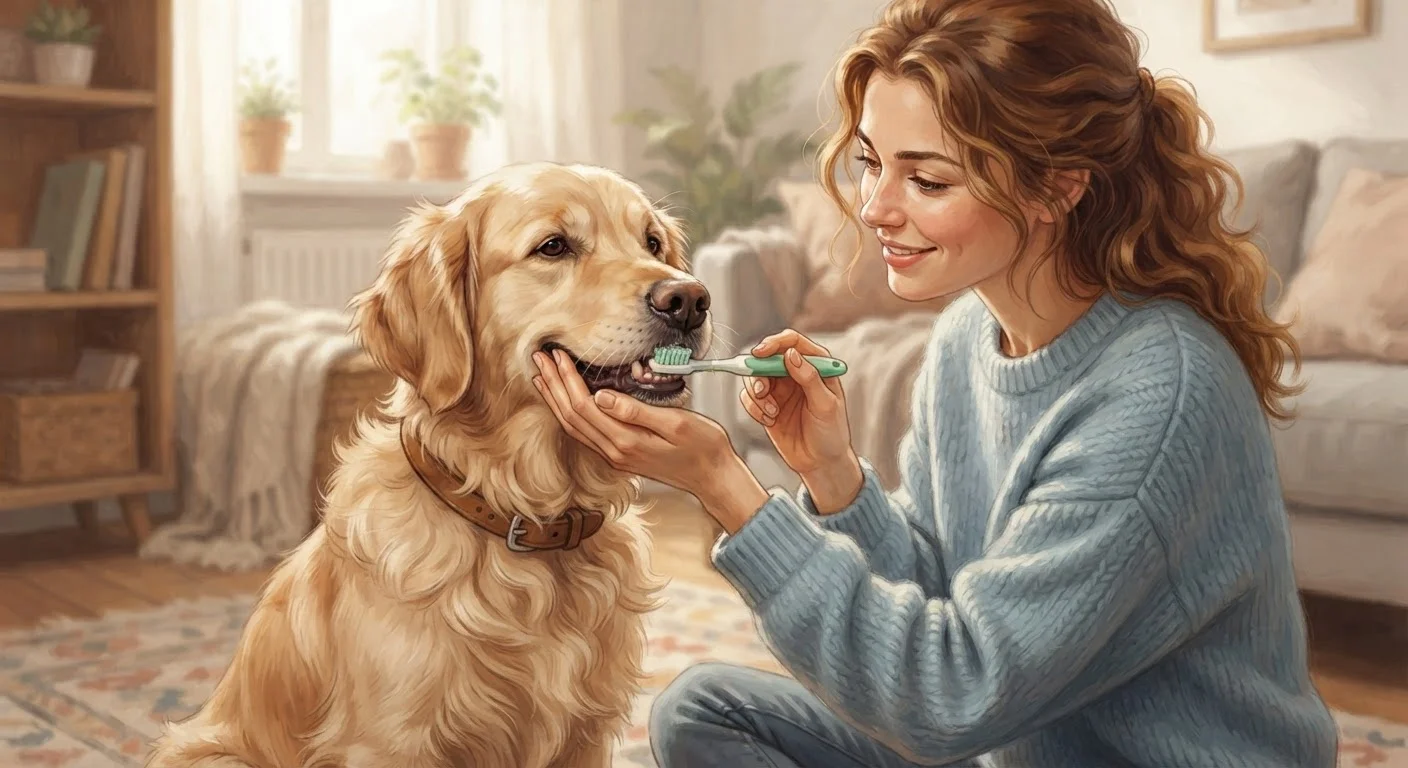
Why Tooth Brushing Is Worth the Effort
Dental disease is one of the most common health problems veterinarians see in adult dogs. Plaque builds up on tooth surfaces daily and, if not removed, hardens into tartar within days. Left unchecked, tartar leads to gum inflammation (gingivitis), tooth loss, and - in more advanced cases - bacteria that can enter the bloodstream and affect internal organs. For a deeper look at what's at stake, see why dental health in pets is more serious than most owners realize.
The good news: brushing your dog's teeth at home is the single most effective way to slow plaque accumulation between professional cleanings. It does not need to be a wrestling match. With a structured approach, most dogs - even initially reluctant ones - can learn to accept, and sometimes even enjoy, the routine.
Short Sessions Beat Long Ones
Two calm minutes of brushing is more beneficial than five stressful ones. Dogs learn through repetition and positive associations, not through duration. If your dog is showing signs of stress, stop early, reward, and try again tomorrow rather than pushing through.
What You'll Need Before You Start
Gathering the right supplies before your first session removes unnecessary friction and helps things go smoothly from day one.
What you will need
Dog-formulated enzymatic toothpaste
Breaks down plaque chemically and comes in pet-safe, palatable flavors - never use human toothpaste, which contains xylitol or fluoride toxic to dogs.
Finger brush
Slides over your fingertip for gentle, controlled contact with teeth and gums; ideal for the introductory phase.
Long-handled soft-bristled pet toothbrush
Provides better reach for back molars once your dog is comfortable with the brushing motion.
Small soft treats
Used to reward calm behavior during and after each session, reinforcing a positive association with the toothbrush.
Step-by-Step: Building the Brushing Habit
The key to success is desensitization - moving slowly enough that your dog never feels overwhelmed. Each step below should feel comfortable before you advance to the next. Rushing is the most common reason dogs become resistant. Tooth brushing fits naturally into a broader grooming and care routine; if you're building that foundation from scratch, The Building Blocks of a Healthy Pet Routine offers a useful starting framework.
Let Your Dog Taste the Toothpaste
Place a small amount of dog toothpaste on your fingertip and let your dog sniff and lick it. Do not introduce any brushing yet. Repeat this for one to two days until your dog approaches your hand eagerly. This step establishes the toothpaste as something pleasant rather than threatening.
Introduce Gentle Finger Contact on the Teeth
With toothpaste on your fingertip, gently rub along your dog's front teeth and gum line for just a few seconds. Keep your body relaxed and speak in a calm, even tone. Offer a treat immediately after and end the session. Practice this for two to three days before moving on.
Transition to the Finger Brush
Apply toothpaste to the finger brush and repeat the gentle contact from Step 2. The texture will feel different to your dog, so give extra time for adjustment. Use small circular motions along the outer surface of the teeth, which is where plaque accumulates most. Aim for 20-30 seconds total at this stage.
Move to a Long-Handled Toothbrush
Once your dog is relaxed with the finger brush, introduce a soft-bristled pet toothbrush. Hold it at a 45-degree angle to the gum line and use small, gentle circular strokes. Focus on the outer surfaces - the inner surfaces collect less plaque and most dogs resist access there. Work toward covering all teeth in a single session over the following week.
Build Up to a Full Daily Routine
Aim for a complete brushing session lasting 60-90 seconds. Always finish with praise and a treat to close on a positive note. Consistency is more valuable than duration - a short, calm session every day beats an infrequent thorough one that leaves your dog anxious.
Never Use Human Toothpaste on Dogs
Human toothpastes commonly contain xylitol (an artificial sweetener) and fluoride, both of which are toxic to dogs even in small amounts. Always use a toothpaste specifically formulated and labeled safe for pets. If your dog ingests human toothpaste, contact your veterinarian or a pet poison helpline promptly.
Keeping the Routine Going
Consistency matters more than perfection. Even if a session is brief or incomplete, ending on a calm, positive note keeps your dog's association with the toothbrush favorable. Aim for the same time each day - after a walk or before a meal works well for many owners - so brushing becomes a predictable part of the schedule rather than a surprise event.
If you notice persistent bad breath that doesn't improve, visible tartar buildup, red or swollen gums, or your dog suddenly flinching when you touch its mouth, contact your veterinarian. These signs can indicate existing dental disease that needs professional treatment before home care can be effective. Tooth brushing is part of a wider home grooming routine that keeps your dog healthy between vet visits.
This article is for general informational purposes only and is not a substitute for professional veterinary advice. Always consult your veterinarian for guidance specific to your dog's health needs.