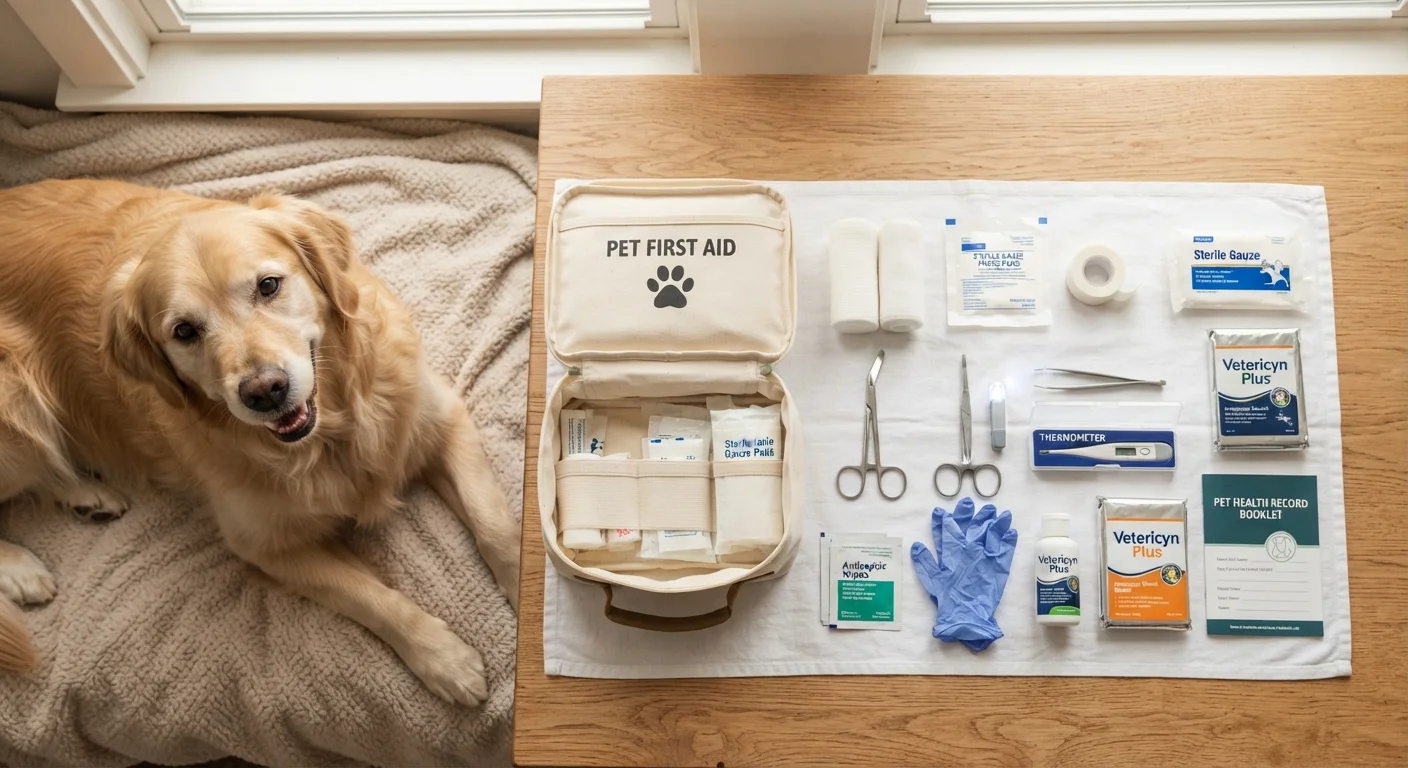
Why Every Pet Owner Needs a First-Aid Kit
Accidents don't schedule themselves. A dog can slice a paw pad on a trail, a cat might swallow a piece of string, or a small pet could take a tumble from unexpected heights. In those moments, having basic supplies within reach lets you act calmly and quickly - controlling bleeding, protecting a wound, and keeping your pet stable until you reach professional care.
This checklist is designed for dogs and cats, though many items also apply to small mammals. For species-specific guidance on rabbits, guinea pigs, and hamsters, see our small pet health basics guide. And if you're ever unsure whether an injury counts as an emergency, our emergency vs. urgent care guide can help you decide how quickly to act.
This article provides general educational information for pet owners and is not a substitute for veterinary advice. Always consult a licensed veterinarian for diagnosis and treatment of your pet's health concerns.
Waterproof storage container
Houses all kit supplies, keeps them dry, and makes the kit easy to grab in a hurry.
Digital rectal thermometer
Accurately measures your pet's body temperature to assess fever or hypothermia.
Self-adhesive bandage wrap
Secures wound dressings without sticking painfully to your pet's coat.
Blunt-tip scissors
Safely cuts gauze and bandaging material near skin and fur without risk of puncture.
Tick removal tool
Removes embedded ticks cleanly and reduces risk of pathogen transmission.
Penlight or small flashlight
Illuminates the mouth, ears, and eyes for closer inspection in low-light situations.
The Complete First-Aid Supply Checklist
Work through the groups below to build or audit your kit. Items marked must are non-negotiable foundations; should items round out your preparedness; nice to have items add useful versatility. Store everything in a clearly labeled, waterproof container and keep it in an accessible, consistent location at home - and consider a smaller travel version for car trips. Our pet travel preparation guide covers what else to bring when you're on the road with your pet.
Wound Care Essentials
Assessment and Monitoring Tools
Restraint and Handling
Removal and Extraction Tools
Reference and Contact Information
First Aid Is Not a Substitute for Vet Care
These supplies are intended to manage minor injuries and stabilize your pet before a professional can take over. Do not attempt to diagnose, medicate, or treat serious injuries at home. If your pet is unresponsive, bleeding heavily, struggling to breathe, or has ingested a toxin, go directly to an emergency veterinary clinic - do not wait.
Using Your Kit Responsibly
Having supplies is only half the equation - knowing how and when to use them matters just as much. First aid is a bridge to professional care, not a replacement for it. Use your kit to manage minor wounds, prevent further injury, and keep your pet calm while you arrange a vet visit. For anything beyond a superficial cut or mild distress, contact your veterinarian or an emergency animal hospital immediately.
Review your kit every six months. Check expiration dates on hydrogen peroxide, saline, and any medications. Replace used or degraded items promptly. Consider taking a pet first-aid course through your local humane society or a veterinary organization - hands-on practice with bandaging and CPR technique is invaluable before an emergency occurs.
If your pet needs surgery or post-operative recovery support, our surgery preparation and recovery guide walks you through what to expect and how to support healing at home. For a deeper look at what belongs in a kit and how each item is applied, see our detailed pet first-aid kit guide.
Never Use Human Medications Without Vet Guidance
Many over-the-counter human medications - including ibuprofen, acetaminophen, and certain antacids - are toxic to dogs and cats. Do not administer any medication from your own medicine cabinet unless a licensed veterinarian has explicitly directed you to do so and provided the correct dose for your pet's species and weight.
Expired Supplies Can Fail When You Need Them Most
Saline solutions, antiseptics, and adhesives all degrade over time. Set a calendar reminder every six months to open your kit, check expiration dates, replace used items, and confirm that your emergency contact numbers are still current.