Why Daily Walks Aren't Always Enough
A walk around the block checks an important box - it gets your dog moving, breaks up the day, and provides some fresh air. But for many dogs, especially high-drive or intelligent breeds, a standard walk leaves a significant need unmet: the need to think.
Dogs experience the world primarily through scent. Their brains are wired to solve problems, track smells, and engage with novel stimuli. When that cognitive appetite goes unfed, behavioral issues often follow - excessive barking, destructive chewing, anxiety, and restlessness are all common signs of under-stimulated dogs.
Physical exercise and mental health are deeply connected, but enrichment targets a different layer of your dog's wellbeing. The good news: enrichment doesn't require expensive equipment or hours of your time. It requires understanding what engages your dog's brain - and then delivering it consistently.
Sniff Walks and Decompression Outings
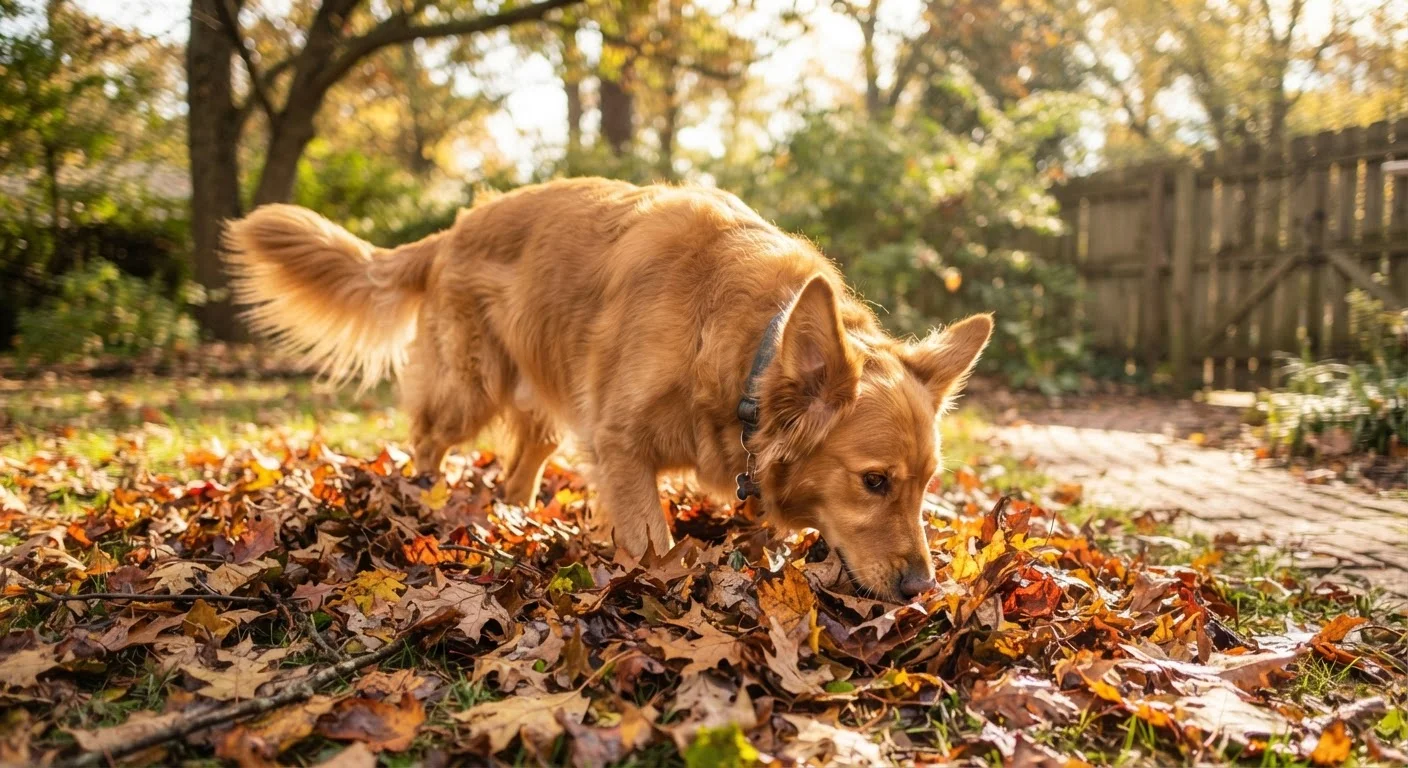
A sniff walk is exactly what it sounds like - a walk where the dog leads with their nose. Instead of maintaining a heel or covering distance efficiently, you let your dog stop, investigate, and linger on scents as long as they want. The pace is slow and dog-directed.
Research in animal behavior suggests that sniffing activates the brain's problem-solving and reward circuits. A 20-minute sniff walk can leave a dog more satisfied than a brisk 45-minute structured walk, simply because it taxes the brain rather than just the body. Consider designating specific outings as sniff walks rather than exercise walks - your dog will notice the difference.
A 20-minute sniff walk can be more satisfying than a long structured run.
Food Puzzles and Slow Feeders
Swapping your dog's regular food bowl for a puzzle feeder or slow feeder adds a problem-solving element to every meal. Dogs must manipulate the device - sliding panels, lifting cups, nosing compartments - to access their food. This converts a 30-second gulp into a 10-15 minute cognitive exercise.
Difficulty levels vary widely. Start with beginner-level puzzles to build confidence, then gradually introduce more complex designs. Rotating between different puzzles every few weeks prevents your dog from memorizing the solution and coasting through it. Lick mats spread with a thin layer of soft food offer a calmer, lower-intensity version of the same concept and can help anxious dogs decompress.
Puzzle feeders convert mealtime into a genuine problem-solving session for your dog.
Nose Work and Scent Games
Nose work is a structured activity in which dogs learn to search for a specific scent - typically birch, anise, or clove oil - hidden in containers, rooms, vehicles, or outdoor areas. It mirrors the work of professional detection dogs and can be practiced at home with basic supplies.
You don't need a formal class to begin, though classes taught by a certified nose work instructor can accelerate progress and ensure good habits from the start. At the beginner level, you can hide treats in muffin tins covered with tennis balls or place a scented cotton swab inside one of several identical boxes and reward your dog for finding it. The concentration required tires dogs quickly - many owners report their dogs napping deeply after a 15-minute session. This activity also supports long-term cognitive health by keeping the brain actively engaged as dogs age.
Nose work taps a dog's most powerful sense and produces deep cognitive fatigue.
Novel Environments and Social Exposure
Novelty itself is a form of enrichment. Taking your dog to a new park, a quiet hardware store that allows pets, or a different neighborhood street engages their brain with unfamiliar sights, smells, and sounds. This is sometimes called environmental enrichment - changing the setting rather than the activity.
For well-socialized dogs, brief, positive interactions with unfamiliar (but appropriate) people or animals adds social enrichment. The key is to keep the experience positive and within your dog's comfort zone. Forced or overwhelming exposures do the opposite of enriching - they create stress. Let your dog set the pace, especially in new or busier environments.
A new environment gives your dog's brain a workout without any extra equipment needed.
DIY Foraging and Scatter Feeding
Scatter feeding involves tossing a portion of your dog's dry kibble into grass, onto a sniff mat, or across a textured surface so the dog must search and forage to find each piece. It directly mimics the food-finding behavior dogs would engage in naturally and activates the same reward pathways as more complex puzzle toys.
A sniff mat - made from fleece strips tied through a rubber sink mat - accomplishes the same thing indoors. You can make one for a few dollars of materials or purchase a pre-made version. Scatter feeding takes no training and works for most dogs immediately, making it one of the most accessible enrichment options available. It also pairs naturally with working food rewards into your training plan in a low-pressure context.
Scatter feeding costs almost nothing and delivers immediate foraging satisfaction for any dog.
Training New Skills as Enrichment
Learning a new behavior is mentally demanding for a dog - and that's precisely what makes brief training sessions a legitimate form of enrichment. Teaching your dog to identify named toys, perform a nose-target, navigate a homemade obstacle course, or learn a trick they've never done before requires sustained focus and earns them a reward for figuring something out.
Keep sessions short - five to ten minutes is plenty - and end before your dog loses interest. The goal here isn't obedience for obedience's sake; it's using the structure of learning to exercise the brain. For a broader view of how this fits into your dog's overall health picture, the Pet Health hub covers foundational care across all life stages.
Brief training sessions are a legitimate form of mental enrichment that tires dogs productively.
Building Enrichment Into Your Routine
The goal isn't to overhaul your dog's entire day - it's to layer in variety. Start with one or two of the ideas above and observe how your dog responds. A dog that eats calmly from a puzzle feeder at breakfast and gets a ten-minute sniff walk before dinner has already received meaningful enrichment without any major time investment from you.
Rotate Enrichment to Prevent Boredom
Dogs adapt quickly to repeated activities and can lose interest when the same enrichment is offered every day. Try rotating through three or four different enrichment types across the week - puzzle feeding one day, scatter feeding the next, a nose work session mid-week. Keeping a simple log helps you track what you've offered and notice which activities your dog responds to most enthusiastically.
Enrichment also complements formal training in ways that reinforce each other. A dog practicing nose work is also learning to focus and regulate impulses - skills that carry directly into obedience work. For a closer look at how both disciplines interact, see how enrichment and training work together.
If you share your home with multiple dogs, enrichment sessions may need some structure to avoid competition or interference. The same principles covered in managing training across multiple dogs apply here - separation and individual attention go a long way.
A mentally satisfied dog is generally a calmer, more cooperative dog. Enrichment is one of the most practical tools available to everyday pet owners, and most of it costs very little. Start simple, stay consistent, and pay attention to what genuinely engages your individual dog.
This article is for general informational purposes only and does not constitute veterinary advice. Consult a licensed veterinarian if you have concerns about your dog's behavior or health.