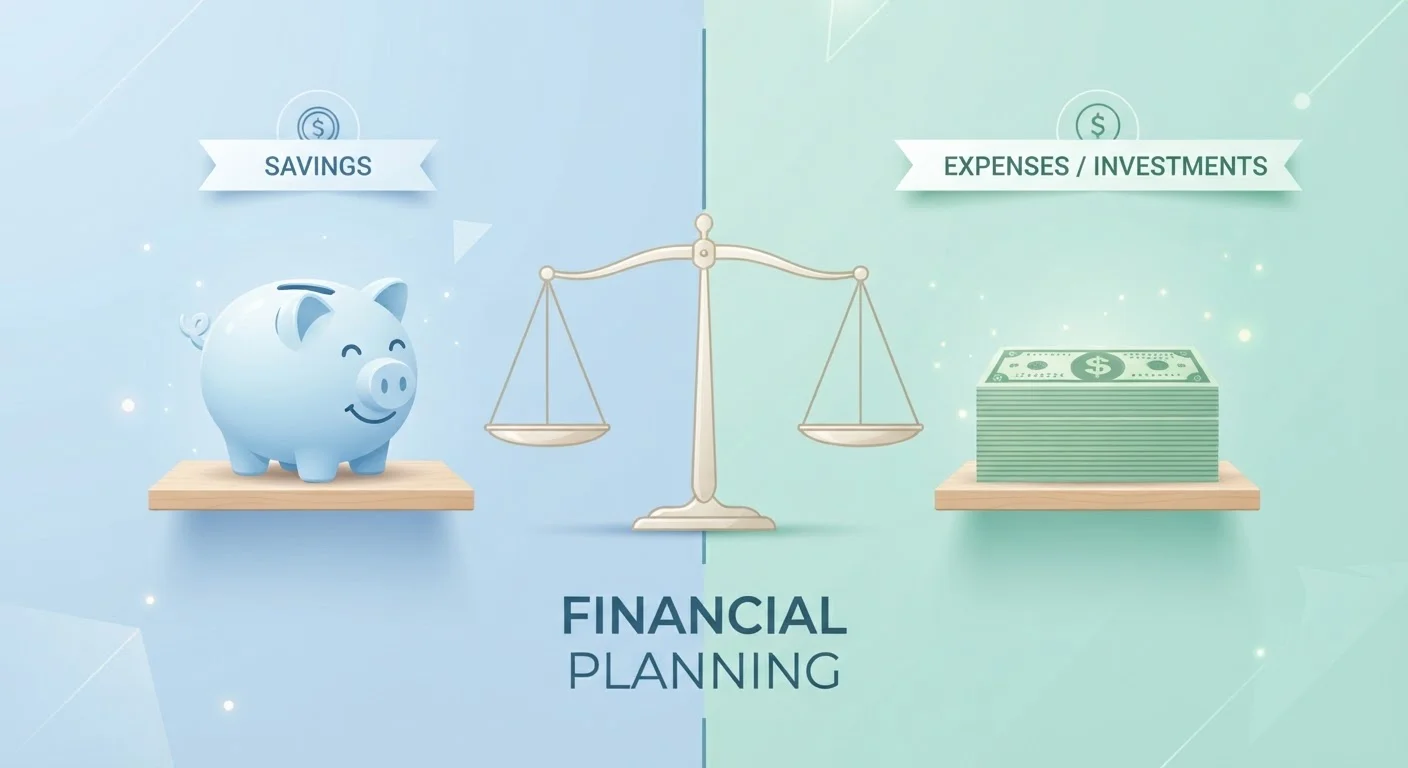
The Core Trade-Off: Why Both Goals Feel Urgent
For millions of American households, two financial imperatives compete for the same limited dollars: eliminating debt and building savings. Paying off debt reduces the interest you owe and improves cash flow. Saving builds a buffer that prevents small financial setbacks from becoming large ones. The tension is real - every dollar sent to a creditor is one not going into a savings account, and vice versa.
The key insight is that these goals are not mutually exclusive. Understanding how to weigh them against each other - rather than treating the choice as all-or-nothing - is where most people make meaningful progress. As a starting point, consider that compound interest works against you on debt just as powerfully as it works for you in savings.
| Priority: Pay Debt First | Priority: Save First | Hybrid Approach | |
|---|---|---|---|
| Best suited for | High-interest debt (20%+ APR) | Low-interest debt, stable income | Most typical households |
| Emergency fund risk | Higher - no buffer if crisis hits | Lower - buffer is in place | Moderate - small buffer maintained |
| Interest cost | Minimized fastest | Continues longer | Reduced at moderate pace |
| Retirement match captured | Possibly delayed | Yes, prioritized | Yes, step one |
| Psychological benefit | Strong - debt eliminated faster | Strong - savings milestone visible | Balanced - progress on both fronts |
| Flexibility | Low - all focus on debt | Low - all focus on saving | High - adjustable split over time |
The Case for Paying Off Debt First
High-interest debt - particularly credit card balances carrying rates of 20% or more - represents a guaranteed negative return on every dollar that stays unpaid. No conventional savings account or low-risk investment reliably outpaces that cost. In that sense, paying down expensive debt functions like a guaranteed, risk-free return equal to the interest rate.
Minimum payments can trap borrowers for years, extending repayment timelines dramatically and multiplying the total cost of borrowing. Prioritizing aggressive repayment on high-rate balances shortens that timeline and frees up cash flow sooner. Strategies like the avalanche or snowball method can add structure and motivation to the process.
Use the Interest Rate as Your Guide
Compare your debt's interest rate to the expected return on saving or investing. If your credit card charges 22% APR and your savings account yields 4-5%, paying down the card first delivers a better mathematical outcome. For lower-rate debt - such as a student loan at 5-6% - the calculus is closer, and splitting dollars between debt and savings may make more sense. Always factor in your personal risk tolerance and cash-flow needs.
The Case for Saving Simultaneously
The most compelling argument for saving even while in debt is the emergency fund. Without a cash buffer - financial educators commonly suggest three to six months of essential expenses, though the right amount varies by individual circumstances - an unexpected car repair or medical bill forces many people back into high-interest borrowing, undoing debt-payoff progress.
A second argument applies to workplace retirement accounts. If your employer matches 401(k) contributions up to a certain percentage of your salary, declining to contribute means leaving compensation on the table. That match is an immediate, guaranteed return that frequently exceeds the effective cost of carrying moderate-rate debt. Pay-yourself-first budgeting formalizes this logic by automating savings before discretionary spending occurs.
~$6,500
Median US credit card balance per household
According to Federal Reserve data, credit card balances represent the most common form of high-interest consumer debt in the US.
56%
Americans who could not cover a $1,000 emergency from savings
A Bankrate survey found that more than half of US adults would need to borrow or charge an unexpected $1,000 expense, underscoring why an emergency fund matters even during debt payoff.
A Practical Hybrid Framework
Rather than choosing one goal entirely, many households benefit from a sequenced approach:
- Build a starter emergency fund. Set aside $1,000 to $2,000 - enough to absorb minor shocks without resorting to credit. This is a floor, not a ceiling.
- Capture any employer retirement match. Contribute at least enough to receive the full match before redirecting extra dollars elsewhere.
- Aggressively target high-interest debt. Once the above are in place, direct surplus income toward balances with the highest interest rates.
- Grow the emergency fund and broader savings. As high-rate debt falls, shift more toward savings goals and longer-term investing.
This sequenced framework acknowledges that saving for multiple goals simultaneously requires deliberate allocation, not just good intentions. A written or app-based budget makes the split concrete and trackable. See the Budgeting Basics hub for foundational tools to structure your plan.
It also helps to understand options like debt consolidation, which can lower interest rates on existing balances and make the hybrid approach more effective by reducing the cost of carrying debt while you build savings in parallel.
This article is for general informational and educational purposes only. It does not constitute personalized financial, tax, or legal advice. Consult a qualified financial professional regarding your specific circumstances.