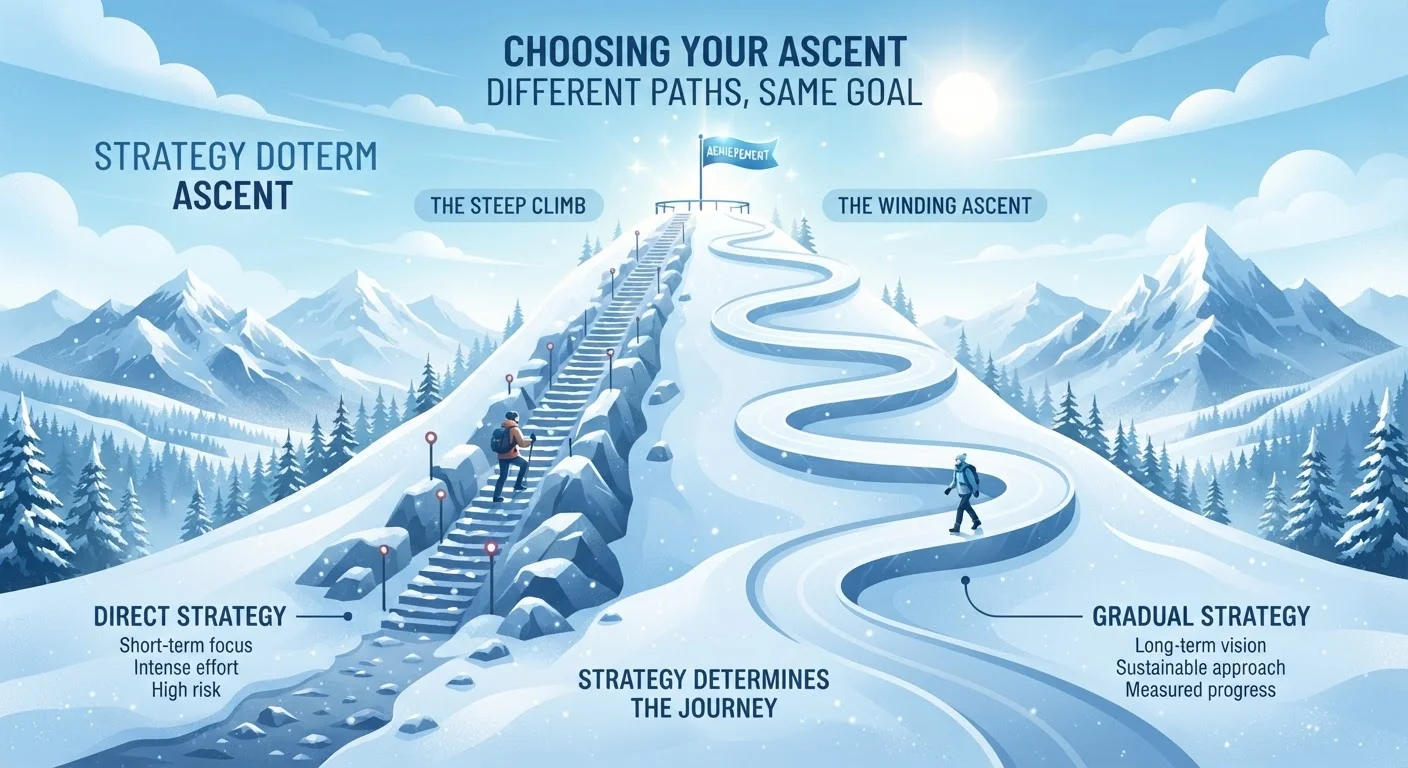
How Each Strategy Works
Both the avalanche and snowball methods share the same foundational rule: pay the minimum required amount on every debt each month, then direct any extra money toward one specific target debt. Where they differ is in how that target is chosen.
The Debt Avalanche ranks your debts by interest rate, highest to lowest. Your extra dollars go to the highest-rate balance first. Once it's paid off, you roll that payment into the next-highest-rate debt, and so on. Because high-interest balances are the ones compounding most aggressively against you - as explained in our article on what compound interest actually does to your debt - eliminating them early reduces what you pay overall.
The Debt Snowball ranks debts by balance, smallest to largest, regardless of interest rate. Extra payments go to the smallest balance first. When that account reaches zero, its freed-up payment amount rolls into the next-smallest debt. For a detailed walkthrough of this process, see our debt snowball step-by-step guide.
| Criterion | Debt Avalanche | Debt Snowball |
|---|---|---|
| Payoff order | Highest interest rate first | Smallest balance first |
| Total interest paid | Lower overall | Potentially higher |
| Time to first payoff | Can take longer | Faster first win |
| Psychological reward | Delayed gratification | Quick momentum boost |
| Best when rates vary widely | Yes - clear advantage | Less relevant |
| Complexity | Slightly more analytical | Simple to implement |
The Math vs. the Psychology
The avalanche method wins on paper. Because interest compounds on outstanding balances, reducing high-rate debt faster means less total interest accrues across your entire debt load. The difference in total cost can range from modest to significant depending on your specific balances and rates.
~$1,000+
Potential interest savings with avalanche vs. snowball
The exact difference depends on balances, rates, and timeline; higher-rate debts amplify the savings gap between methods.
3-4
Average number of debt accounts per US household
Federal Reserve consumer credit data shows many households carry multiple revolving and installment balances simultaneously.
20%+
Common APR on revolving credit card debt
The Consumer Financial Protection Bureau has reported average credit card interest rates frequently exceeding 20% in recent years.
The snowball method, however, addresses a real problem: motivation. Paying off a debt account completely - even a small one - delivers a tangible sense of accomplishment that can reinforce the behavior of making extra payments month after month. If a mathematically optimal plan is abandoned six months in, it produces worse results than a slightly less efficient plan that gets completed. This dynamic is explored further in our piece on why debt payoff motivation fades.
The honest answer is that the strategy delivering the best outcome is the one you follow consistently, not necessarily the one with the lowest projected interest cost.
Choosing the Right Fit for Your Situation
A few practical questions can help clarify which approach suits your circumstances:
- How large is the gap between your interest rates? If one card charges 24% APR and another charges 8%, the avalanche saves meaningful money. If all your rates cluster between 18% and 21%, the difference in total interest paid shrinks considerably.
- How many accounts do you have? If you carry many small-balance debts alongside larger ones, the snowball can clear accounts quickly, simplifying your financial picture and reducing the cognitive load of tracking multiple creditors.
- How do you respond to delayed results? Some people stay motivated by seeing a balance decline steadily on a large account. Others need to see a zero balance to feel real progress.
It's also worth considering that paying off debt doesn't have to happen in isolation. Our article on paying off debt while saving at the same time covers how to balance both goals. And if you're rethinking how your whole budget is structured, exploring pay-yourself-first budgeting may offer a useful complement to either payoff method.
A Hybrid Approach Is Valid
Some borrowers start with the snowball to eliminate one or two small accounts and reduce mental clutter, then switch to the avalanche to tackle remaining high-rate balances. This hybrid isn't a compromise - it's a deliberate strategy that blends motivational momentum with mathematical efficiency. What matters most is having a consistent, documented plan and sticking to it each month.
This article is for general informational and educational purposes only and does not constitute personalized financial advice. Readers should consult a qualified financial professional regarding their individual debt situations.