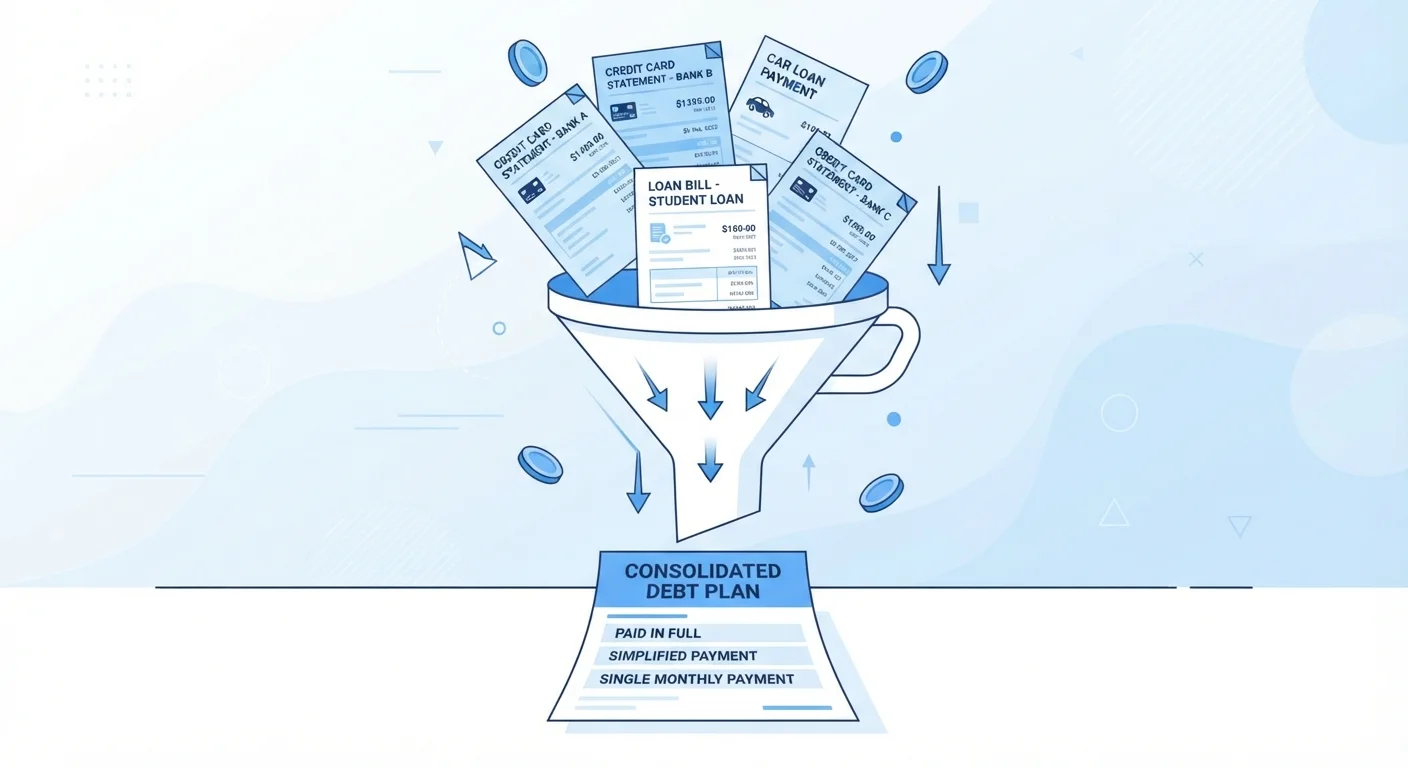
What Debt Consolidation Actually Means
Debt consolidation is the process of combining multiple existing debts - such as credit card balances, medical bills, or personal loans - into a single new debt, typically with one monthly payment and one interest rate. The goal is usually to reduce the interest rate you're paying, simplify repayment, or both.
It's important to understand what consolidation is not: it does not erase or reduce your principal balance. You still owe the same amount; you're simply restructuring how you repay it. Common consolidation methods include taking out a personal loan to pay off existing debts, using a balance transfer credit card, or enrolling in a nonprofit debt management plan. Each approach works differently and suits different financial profiles. For a deeper look at one popular route, see how personal loans work for consolidation.
The Advantages of Consolidating Debt
When used strategically, consolidation offers real, measurable benefits for the right borrower.
Single monthly payment replaces multiple due dates
Consolidating several debts into one eliminates the mental overhead of tracking different creditors, due dates, and minimum payments. This simplicity reduces the risk of accidentally missing a payment.
Potential for a lower overall interest rate
Borrowers with good credit may qualify for a personal loan or balance transfer at a rate well below the average credit card APR, which can meaningfully reduce the total interest paid over time.
Fixed payoff timeline creates a clear finish line
Unlike revolving credit card debt - where minimum payments can extend repayment by decades - an installment loan sets a defined end date, helping borrowers stay focused and motivated.
Can protect and gradually improve your credit score
Consolidating credit card debt with a personal loan lowers your credit utilization ratio, which is a significant factor in credit scores. On-time payments on the new loan further strengthen your credit profile.
20%+
Average credit card APR in the US
Federal Reserve data has shown average credit card interest rates exceeding 20%, making the rate difference with consolidation loans significant for qualified borrowers.
3-5%
Typical balance transfer fee
Most balance transfer offers charge a percentage of the transferred amount as an upfront fee, which must be factored into any interest savings calculation.
Beyond the numbers, consolidation reduces cognitive load. Managing one payment instead of five or six reduces the risk of missed due dates, which protects your credit score over time. A fixed payoff timeline - common with personal loans - can also provide a clearer sense of progress compared to revolving minimum payments that stretch debt out for years.
The Pitfalls You Need to Know
Consolidation carries meaningful risks that are easy to overlook when you're focused on short-term relief.
Does not reduce the amount you owe
Consolidation restructures debt; it does not forgive or reduce it. You'll still repay the full principal plus interest on the new loan, and fees can sometimes make the total cost higher.
Fees can offset interest savings
Origination fees on personal loans, balance transfer fees (typically 3-5% of the transferred amount), and prepayment penalties can erode the financial benefit of a lower rate if not accounted for upfront.
Qualification depends on credit health
Borrowers with poor credit may not qualify for a rate low enough to make consolidation worthwhile - or may not qualify at all. In some cases, the offered rate is comparable to or higher than existing debt rates.
Risk of accumulating new debt on cleared accounts
After consolidation pays off credit cards, those lines of credit remain open and available. Without disciplined spending, borrowers can run up new balances while still repaying the consolidation loan.
Longer repayment terms can increase total interest paid
A lower monthly payment spread over more years may feel manageable but can result in paying more total interest than the original debts would have cost - especially if the rate reduction is modest.
One often-overlooked risk: consolidating and then continuing to use the paid-off credit cards can leave you with more total debt than you started with. Consolidation is a financial tool, not a spending fix. If the habits that created the debt remain unchanged, the new loan becomes another layer of liability. Exploring complementary strategies - like balancing debt payoff with saving - can strengthen the overall plan.
How It Compares to Other Debt Relief Approaches
Debt consolidation sits in a specific category between DIY repayment strategies and more drastic debt relief options. Understanding how it compares helps you choose the right path.
The debt snowball method requires no new loan and builds motivation by eliminating small balances first - a strong option if your debts carry similar rates. Balance transfer cards offer a consolidation-like benefit with promotional 0% APR periods but carry transfer fees and revert to high rates if the balance isn't paid off in time.
At the other end of the spectrum, debt settlement and debt management plans address situations where debt levels are genuinely unmanageable. If you're unsure which path fits your situation, a session with a nonprofit credit counselor can provide objective guidance without a sales agenda.
Federal Student Loans Are a Special Case
Federal student loans have their own consolidation program through the U.S. Department of Education, which is separate from private-market debt consolidation. Federal consolidation preserves access to income-driven repayment plans and loan forgiveness programs that private consolidation loans would eliminate. If you carry federal student debt, research federal options independently before considering a private consolidation loan. Consult a student loan counselor or your loan servicer for guidance specific to your situation.
Who Should - and Shouldn't - Consider Consolidation
Consolidation is worth exploring if you meet several key criteria: you carry multiple debts with interest rates above what you'd qualify for on a new loan; your credit score is strong enough to secure a meaningfully lower rate; and your income is stable enough to support a fixed monthly payment for the loan term.
It's likely not the right move if your credit score is too low to qualify for a competitive rate, if your debt is primarily federal student loans (which have their own income-driven repayment programs), or if you're already struggling to cover basic expenses. In those cases, forcing a consolidation loan into a tight budget can accelerate financial stress rather than reduce it.
Use a clear monthly budget as your starting point - if a new consolidated payment fits within it while leaving room for savings, the math may work in your favor. If it doesn't, other solutions deserve priority.
This article is for general informational and educational purposes only and does not constitute personalized financial or legal advice. Consult a licensed financial professional regarding your specific circumstances.