What Each Approach Actually Does
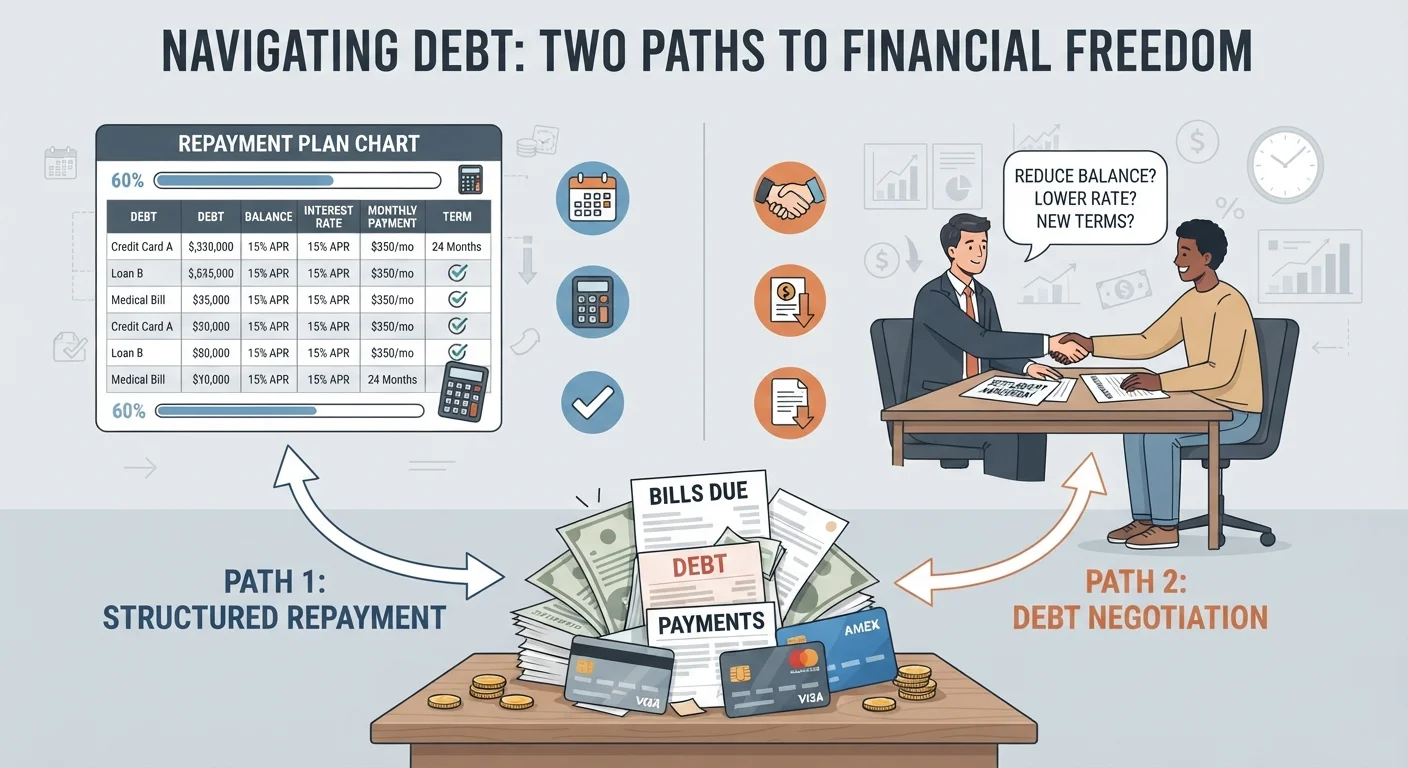
When debt becomes unmanageable, two options often come up: a debt management plan (DMP) and debt settlement. They sound similar but operate on fundamentally different principles.
A debt management plan is a structured repayment program, typically offered through a nonprofit credit counseling agency, in which you repay the full amount you owe - but often at a reduced interest rate negotiated with creditors. You make a single monthly payment to the counseling agency, which distributes funds to your creditors. DMPs usually run three to five years. To learn more about what these agencies provide, see what nonprofit credit counseling actually involves.
Debt settlement, by contrast, involves negotiating with creditors to accept a lump-sum payment that is less than the full balance owed. This can be done independently or through a for-profit debt settlement company. Creditors agree to settle only when they believe partial payment is preferable to no payment - often after accounts have gone delinquent. For a deeper look at when this path makes sense, see when debt settlement makes sense - and when it doesn't.
Side-by-Side Comparison
The table below highlights the most important differences across key decision criteria.
| Debt Management Plan | Debt Settlement | |
|---|---|---|
| Amount Repaid | Full balance owed | Less than full balance |
| Who Administers It | Nonprofit credit counseling agency | For-profit company or self-negotiated |
| Credit Score Impact | Moderate, improves over time | Significant, lasting up to 7 years |
| Typical Timeline | 3-5 years | Varies; often 2-4 years of saving |
| Tax Consequences | Generally none | Forgiven debt may be taxable income |
| Fees | Low, state-regulated nonprofit fees | High; often % of enrolled or settled debt |
| Creditor Cooperation Required | Yes, negotiated upfront | Not guaranteed; creditors may refuse |
Before choosing either path, it helps to conduct a thorough review of your debt situation. A structured debt self-audit checklist can clarify your balances, interest rates, and repayment priorities.
Credit Score and Long-Term Financial Impact
Credit impact is one of the starkest differences between these two approaches.
With a DMP, accounts are typically enrolled while still current or only slightly past due. Some creditors may note the DMP enrollment on your credit report, and you will usually be required to close enrolled credit card accounts - which can temporarily lower your score. However, because you are repaying the full balance and making consistent on-time payments, the long-term trajectory tends to be positive.
With debt settlement, the process often requires you to stop paying creditors so accounts become delinquent - making them more likely to settle. This deliberate delinquency causes significant credit score damage. Settled accounts are typically reported as "settled for less than the full amount," which remains on your credit report for up to seven years and signals risk to future lenders.
Deliberate Delinquency Carries Real Risk
Some debt settlement programs advise clients to stop paying creditors in order to prompt settlement offers. During this period, interest and penalties continue to accrue, creditors may sue for the full amount, and wage garnishment is possible. Weigh these risks carefully and consult a licensed professional before taking this approach.
It is also worth understanding the nature of your debt before pursuing either route. The framework in good debt vs. bad debt can help you think more clearly about which obligations to prioritize.
Tax Implications and Hidden Costs
A frequently overlooked consequence of debt settlement is its tax treatment. Under IRS rules, forgiven debt is generally considered taxable income. For example, if a creditor forgives $5,000 of a $12,000 balance, you may owe income tax on that $5,000 in the year it is forgiven. Creditors typically issue a Form 1099-C for cancelled debt amounts of $600 or more. There are exceptions - such as insolvency - but consulting a tax professional before settling is strongly recommended.
DMPs carry their own costs: most nonprofit agencies charge a modest setup fee and a monthly maintenance fee, though these are generally capped by state regulation and are far lower than the fees charged by for-profit debt settlement companies, which often take a percentage of enrolled debt or settled amount.
Always Get Fee Disclosures in Writing
Before enrolling in any debt management or settlement program, request a full written breakdown of all fees, including setup charges, monthly fees, and any performance-based costs. Nonprofit credit counselors are generally required by state law to provide fee disclosures upfront. For-profit settlement companies are not uniformly regulated the same way, so scrutinize contracts carefully and consider having an attorney review the terms.
Another option worth understanding before committing to either path is debt consolidation, which combines multiple debts into a single loan - a different mechanism that may suit borrowers with good credit and manageable balances.
Choosing the Right Path for Your Situation
Neither approach fits everyone. Your income stability, total debt load, credit standing, and financial goals all matter.
- Choose a DMP if: You have regular income sufficient to make monthly payments, want to protect your credit as much as possible, and are committed to repaying everything you owe with professional support.
- Consider debt settlement if: You face genuine financial hardship, cannot sustain full repayment even with reduced interest, and understand the credit, tax, and legal risks involved. Always consult a licensed financial or legal professional before proceeding.
If your debt challenges are tied to broader budgeting issues, revisiting your monthly plan is a smart first step. The budgeting basics hub offers practical strategies for tracking spending and building financial stability.
This article is for general informational and educational purposes only and does not constitute personalized financial, legal, or tax advice. Consult a qualified financial adviser, attorney, or tax professional before making decisions about your specific debt situation.