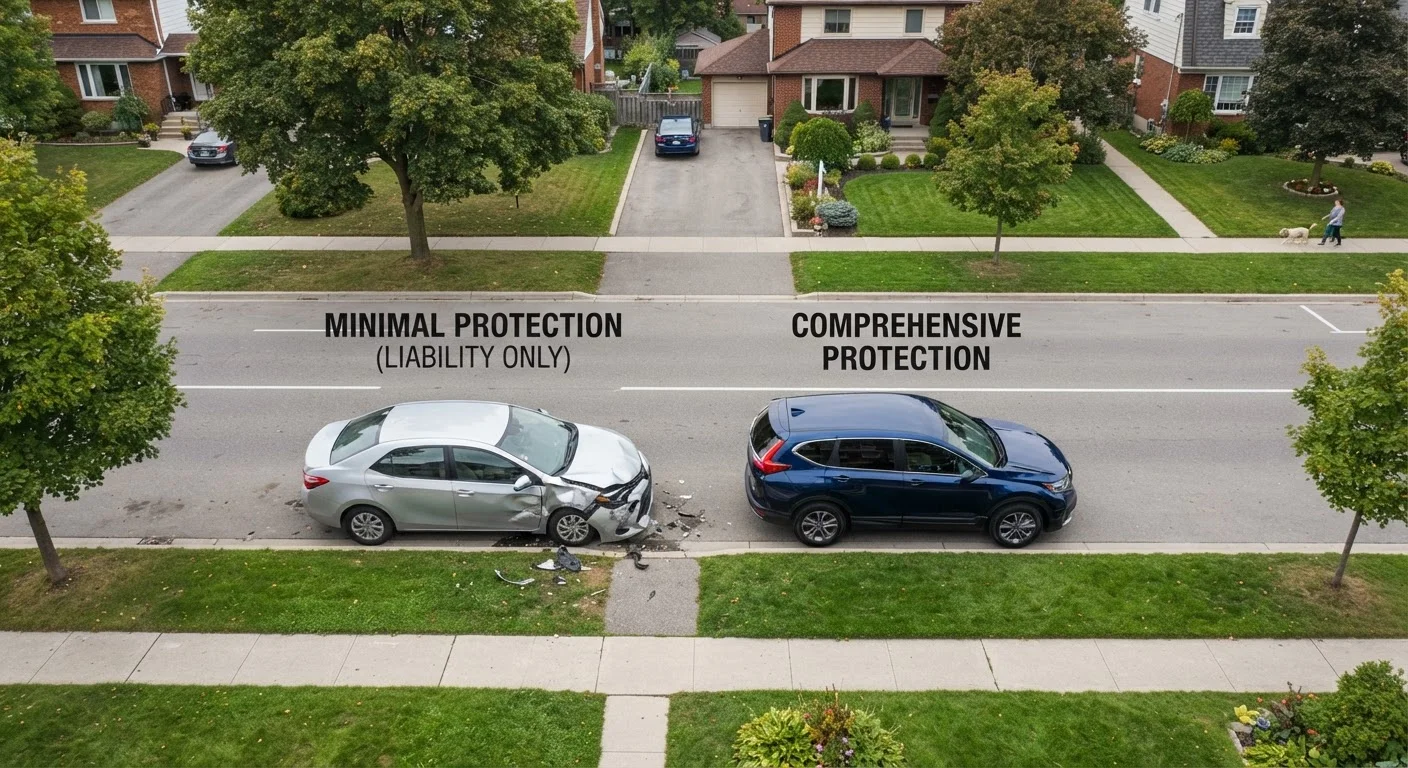
What Liability-Only Coverage Actually Does
Liability coverage is the foundation of nearly every auto insurance policy - and in most states, it is the only coverage the law requires you to carry. As explained in our overview of liability coverage, this protection is outward-facing: it pays for bodily injury and property damage that you cause to other people in an accident where you are at fault.
A standard liability-only policy typically includes two components:
- Bodily injury liability - covers medical expenses, lost wages, and related costs for people you injure in a crash you caused.
- Property damage liability - covers repair or replacement of another driver's vehicle or other property you damage.
What liability coverage does not pay for is equally important to understand: your own vehicle repairs, your own medical bills, and any damage to your car from non-collision events such as theft, weather, or fire are all outside its scope. If you cause an accident, your car is simply your financial responsibility.
Because liability limits can be exhausted by a serious incident, some drivers supplement their policy with an umbrella policy - see when umbrella coverage fills liability gaps for context.
Liability Limits Are Set by You - Up to a Point
When you purchase a liability-only policy, you choose your coverage limits - for example, $25,000 per person / $50,000 per accident for bodily injury and $25,000 for property damage. State laws set the minimums you must carry, but those minimums are often lower than the actual costs of a serious accident. Carrying only the state minimum may satisfy the law while still leaving you personally responsible for amounts above your policy limit.
What 'Full Coverage' Adds - and What That Term Really Means
The term full coverage is widely used but has no official policy definition. As our article explaining why 'full coverage' isn't a real policy term details, it is shorthand for a combination of coverages - most commonly liability, collision, and comprehensive - bundled together on one policy.
Here is what each added layer does:
- Collision coverage - pays to repair or replace your vehicle after a crash with another car or object, regardless of fault.
- Comprehensive coverage - covers damage to your vehicle from events other than collisions: theft, vandalism, hail, flooding, falling objects, and animal strikes. See the collision vs. comprehensive breakdown for a full comparison.
Many full-coverage policies also include optional add-ons such as medical payments (MedPay) or personal injury protection (PIP). These cover occupant medical costs regardless of fault - a meaningful distinction from liability coverage, which only addresses the other party's injuries. Our article on MedPay vs. PIP explains how those coverages compare.
Even so, full coverage leaves gaps. It generally does not cover mechanical breakdown, rideshare-related incidents without an endorsement, or the difference between what you owe on a loan and what your car is worth after a total loss. That last gap is addressed by gap insurance.
| Criterion | Liability-Only | Full Coverage |
|---|---|---|
| Covers damage you cause to others | Yes | Yes |
| Covers your own vehicle after a crash | No | Yes (collision) |
| Covers theft, weather, animal damage | No | Yes (comprehensive) |
| Covers your own medical costs | No | Only with MedPay/PIP add-on |
| Required by state law | Yes (at minimum limits) | Not by law (by lenders) |
| Required for financed/leased vehicles | Typically insufficient | Yes, typically required |
| Relative premium cost | Lower | Higher |
| Covers loan/value gap if totaled | No | No (gap insurance needed) |
How to Think Through the Decision for Your Situation
Choosing between liability-only and a broader policy is ultimately a question of financial risk tolerance and vehicle value. A few considerations can help frame the decision:
- Your vehicle's actual cash value (ACV): Insurers pay out based on your car's depreciated market value, not replacement cost. If your car's ACV is low relative to the combined annual cost of collision and comprehensive premiums plus your deductible, the math may favor dropping those coverages.
- Loan or lease obligations: If a lender has a security interest in your vehicle, you generally have no choice - full coverage is contractually required until the loan is paid off.
- Your emergency reserves: Could you absorb the cost of repairing or replacing your car out of pocket? If not, collision and comprehensive coverages act as a financial buffer.
- Your state's rules: Whether you live in a no-fault or at-fault state affects how medical costs are handled after a crash. Our guide to no-fault vs. at-fault states outlines how those systems work.
For a broader look at evaluating your options, the Choosing Coverage hub walks through key factors across policy types. And if you want a complete picture of every standard coverage type on an auto policy, see auto insurance coverage types explained.
~30%
U.S. drivers estimated to carry only minimum coverage
Industry research consistently estimates that roughly a quarter to a third of drivers carry only state-minimum liability coverage, leaving their own vehicles unprotected.
~13%
Estimated share of U.S. drivers who are uninsured
According to the Insurance Research Council, approximately one in eight drivers on American roads carries no insurance at all, underscoring the importance of uninsured motorist coverage.
This article is for general informational and educational purposes only. It does not constitute personalized insurance, financial, or legal advice. Coverage terms, limits, exclusions, and requirements vary by insurer and by state. Always read your actual policy documents and consult a licensed insurance agent or adviser for guidance specific to your situation.