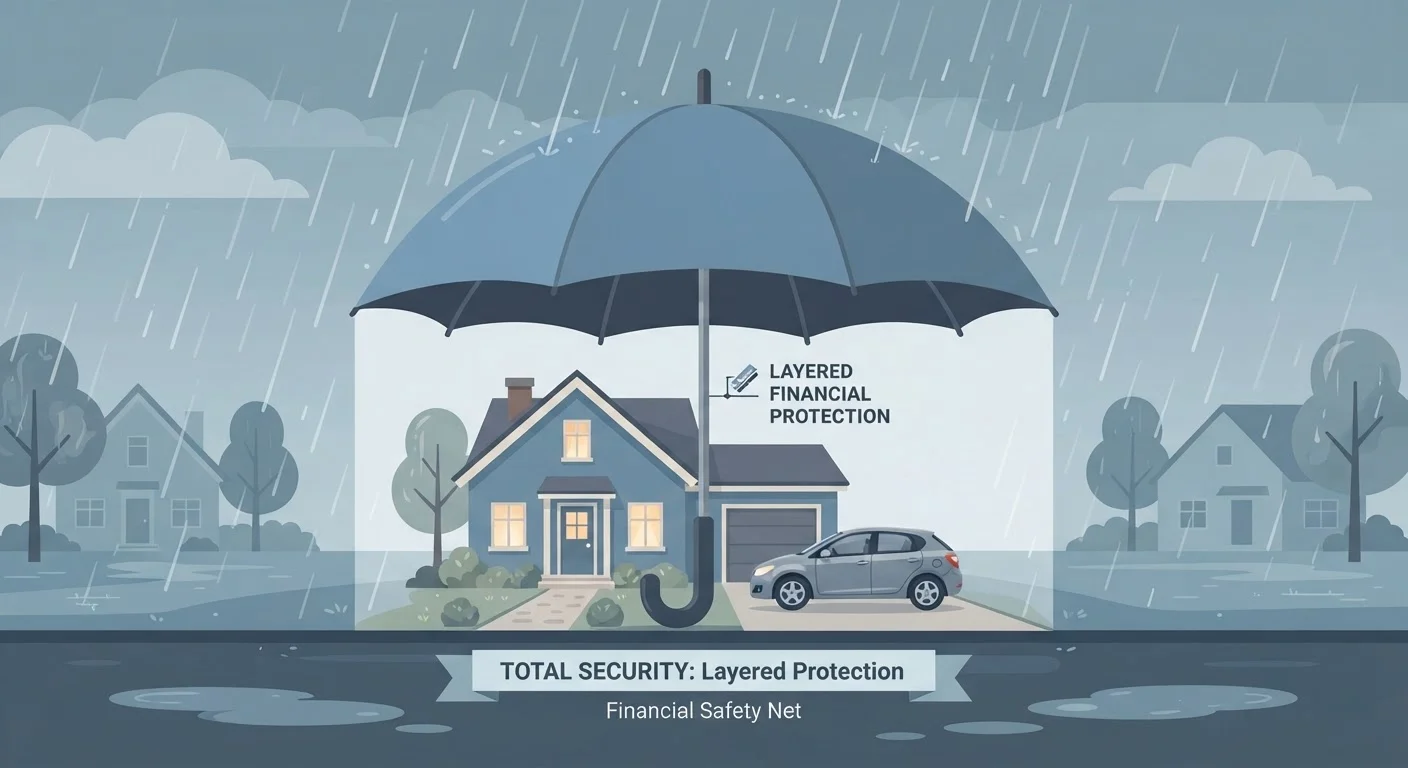
The Liability Gap Most People Don't See Coming
Your auto policy carries a liability limit. So does your homeowners policy. Those limits feel substantial - until a serious incident tests them. A multi-vehicle accident that sends three people to the hospital, or a guest who suffers a severe injury at your home, can generate medical bills, lost-wage claims, and legal fees that move well past standard coverage ceilings.
Liability coverage is designed to pay for harm you cause to others, not damage to your own property or vehicle. Once the limit stated in your policy is reached, any remaining judgment or settlement typically becomes your personal responsibility. That gap - the distance between your policy limit and the actual cost of a claim - is exactly what umbrella insurance is built to bridge.
Umbrella vs. Excess Liability: A Terminology Note
The terms "umbrella" and "excess liability" are sometimes used interchangeably, but they can differ in scope. True umbrella policies may cover some risks not included in underlying policies, while pure excess liability policies simply add limits on top of existing coverage without broadening what is covered. When reviewing any policy, confirm which type you are being offered and what it includes.
How Umbrella Coverage Stacks on Top of Core Policies
Umbrella insurance is often described as "excess liability" coverage because it only activates after an underlying policy's limit has been exhausted. If your auto policy carries a $300,000 liability limit and a court awards $900,000 in damages, your auto policy pays its $300,000 maximum and your umbrella policy would be responsible for the remaining $600,000 - up to its own coverage ceiling.
To understand how this layering works in practice, it helps to review how umbrella policies sit above your other coverage. Most umbrella insurers require your home and auto policies to carry specified minimum liability thresholds as a condition of issuing an umbrella policy. This requirement ensures the underlying layers do meaningful work before the umbrella is called upon.
$1M+
Typical starting coverage for umbrella policies
Most umbrella policies begin at $1 million in additional liability protection, with options to extend further depending on the insurer and applicant's needs.
~5%
Share of households with umbrella coverage
Industry estimates suggest a relatively small share of U.S. households carry umbrella insurance, even among those with significant liability exposure.
$300K
Common auto liability limit on standard policies
Many standard personal auto policies top out at $300,000 in liability coverage - a figure a single serious multi-party accident can readily exceed.
Coverage Areas That Standard Policies Often Miss
One underappreciated feature of umbrella insurance is that it can cover certain liability categories that standard home and auto policies exclude or handle inadequately. Common examples include personal liability for incidents that occur away from your property, claims involving libel or slander, and some landlord-liability situations. For a detailed look at these distinctions, see what umbrella insurance covers that your other policies don't.
Importantly, umbrella policies are not a catch-all. They typically exclude intentional harm, business-related liabilities, and damage to your own property or vehicle. Reading policy exclusions carefully - and asking a licensed agent to walk through them - is essential before relying on any umbrella policy for specific protection.
Review Your Underlying Limits First
Before purchasing umbrella coverage, pull out your current home and auto declarations pages to confirm your existing liability limits. Umbrella insurers typically require minimums - often $300,000 on home liability and $250,000/$500,000 on auto - before they will issue a policy. Knowing your current limits helps you have a more informed conversation with a licensed agent.
Who Should Evaluate Umbrella Coverage
Umbrella insurance is often associated with high-net-worth individuals, but the underlying risk it addresses is not income-dependent. Anyone who could face a liability claim that exceeds their standard policy limits has a potential coverage gap. Several characteristics tend to increase that exposure:
- Owning a home where guests are regularly invited
- Having teenage or newly licensed drivers in the household
- Owning a pool, trampoline, or other premises features that raise injury risk
- Owning rental property
- Significant personal assets that could be targeted in a lawsuit
It is also worth understanding how your existing auto liability structure affects your exposure. Liability-only auto coverage provides no protection for your own vehicle damages, which can compound financial strain when an accident is serious.
This article is for general informational and educational purposes only and does not constitute personalized insurance, financial, or legal advice. Coverage terms, eligibility, exclusions, and premiums vary by insurer and state. Always read actual policy documents and consult a licensed insurance professional before making coverage decisions.