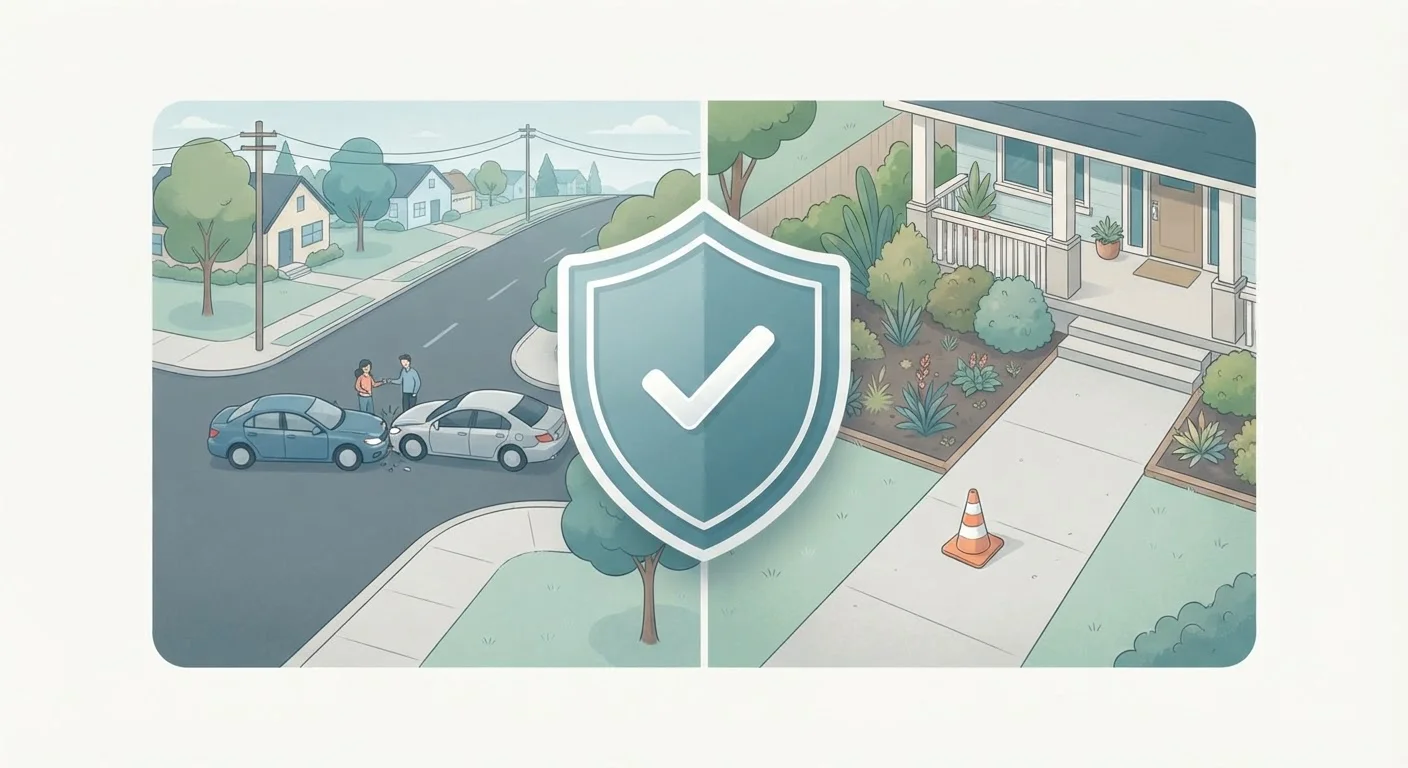
What Liability Coverage Actually Does
At its core, liability coverage answers a straightforward question: If I accidentally harm someone or damage their property, who pays? Without liability coverage, the answer is: you do - out of pocket, potentially through a lawsuit.
Liability coverage shifts that financial burden to your insurer, up to the policy's stated limit. It generally covers three categories of costs:
- Bodily injury to others: Medical treatment, rehabilitation, lost income, and pain-and-suffering claims if someone is hurt due to your actions.
- Property damage to others: Repair or replacement costs for someone else's car, fence, building, or belongings that you damage.
- Legal defense costs: Attorney fees, court costs, and settlements or judgments - even if you're ultimately found not at fault in court.
Liability coverage is a core feature of most standard insurance policies, appearing in auto, homeowners, renters, and commercial policies alike. The mechanics are similar across policy types, though the specific scenarios covered differ.
Liability vs. Other Coverage Types
Liability coverage is specifically third-party protection - it pays for harm done to others, not to you. It contrasts with coverages like collision (your vehicle), medical payments (your injuries), and property insurance (your belongings). Some insurance types, such as workers' compensation, operate under an entirely separate legal framework. See how workers' compensation functions for comparison.
Where Liability Coverage Shows Up
Understanding that liability isn't one policy but a component of many policies helps clarify how you may already have coverage in multiple areas of your life.
Auto Liability
Auto liability is typically structured as two sub-limits: one for bodily injury per person, one for bodily injury per accident, and a third for property damage. For example, a policy written as 100/300/100 means $100,000 per injured person, $300,000 per accident for bodily injury, and $100,000 for property damage. See how auto coverage types break down for a full picture of what each component does.
Homeowners and Renters Liability
Personal liability on a homeowners or renters policy covers situations like a guest slipping on your icy walkway or your dog biting a neighbor. This coverage often extends beyond your property's physical boundary, providing personal liability protection in everyday situations.
Business Liability
Small business owners often access liability protection through a Business Owner's Policy. You can learn about what a BOP bundles and why it matters for small operations. Commercial general liability is also available as a standalone product for larger exposures.
Check Your Declarations Page First
Your declarations page - the summary document at the front of your policy - lists your liability limits clearly alongside your premium. If you're unsure what limits you currently carry, start there before speaking with an agent. Reviewing it annually, especially after major life changes like buying a home or adding a driver, helps ensure your limits keep pace with your actual exposure.
What Liability Coverage Does Not Protect
Knowing what liability coverage excludes is just as important as understanding what it covers. Common exclusions include:
- Your own injuries and property: If you're hurt or your car is damaged in an accident you caused, liability coverage does not apply to your losses. Those are addressed by other coverages like collision or health insurance.
- Intentional acts: If you deliberately cause harm or damage, your insurer will not cover resulting claims. Insurance is designed to address accidents, not deliberate wrongdoing.
- Business activities under personal policies: Running a business from home or using your personal vehicle for delivery work typically voids liability coverage for those activities unless you have appropriate business coverage added.
- Contractual liability: Obligations you voluntarily take on through contracts may not automatically be covered under standard liability.
- Certain excluded perils: Policies often list specific exclusions - such as liability arising from certain animals, trampolines, or pools - depending on the insurer and jurisdiction.
Always read the exclusions section of your policy document carefully. If something you care about protecting falls into a gap, ask your agent whether an endorsement or separate policy can address it.
Why Your Coverage Limit Is the Most Critical Number
A liability policy is only as strong as its limit - the ceiling your insurer will pay per occurrence or per policy period. Once that ceiling is reached, you are personally on the hook for every additional dollar a claimant is owed.
Consider a scenario in which you cause a multi-vehicle accident resulting in $350,000 in medical and property damage claims. If your auto liability limit is $100,000, you may face a personal judgment for the remaining $250,000. That exposure can reach savings accounts, investment accounts, and future wages.
$15K-$25K
Typical state minimum auto liability limit for bodily injury per person
Many states set auto liability minimums that are far below the average cost of a serious injury claim, which can reach six figures in medical expenses alone.
~50%
Share of U.S. civil lawsuits involving personal injury or property damage
Personal injury and property damage claims constitute a substantial portion of civil litigation in the U.S., underscoring the frequency with which liability exposure becomes a real financial event.
$300K+
Common recommended personal liability limit for homeowners
Insurance industry guidance often suggests homeowners carry at least $300,000 in personal liability coverage, though individual circumstances may warrant higher amounts.
Selecting a limit isn't arbitrary. A reasonable starting point is assessing what you own and earn - because those are the assets a plaintiff's attorney will target. The guide to understanding coverage limits walks through how to think about your real exposure versus the minimums most people default to.
State-mandated minimums for auto liability are often far lower than what a serious accident actually costs. Choosing the minimum required by law may satisfy the legal requirement while leaving you significantly exposed. And if you're considering a liability-only auto policy versus broader coverage, it helps to understand how liability-only auto coverage differs from a full-coverage policy before deciding.
This article is for general informational and educational purposes only and does not constitute personalized insurance, financial, or legal advice. Coverage terms, limits, and exclusions vary by policy and provider. Always read your actual policy documents and consult a licensed insurance professional for guidance specific to your situation.