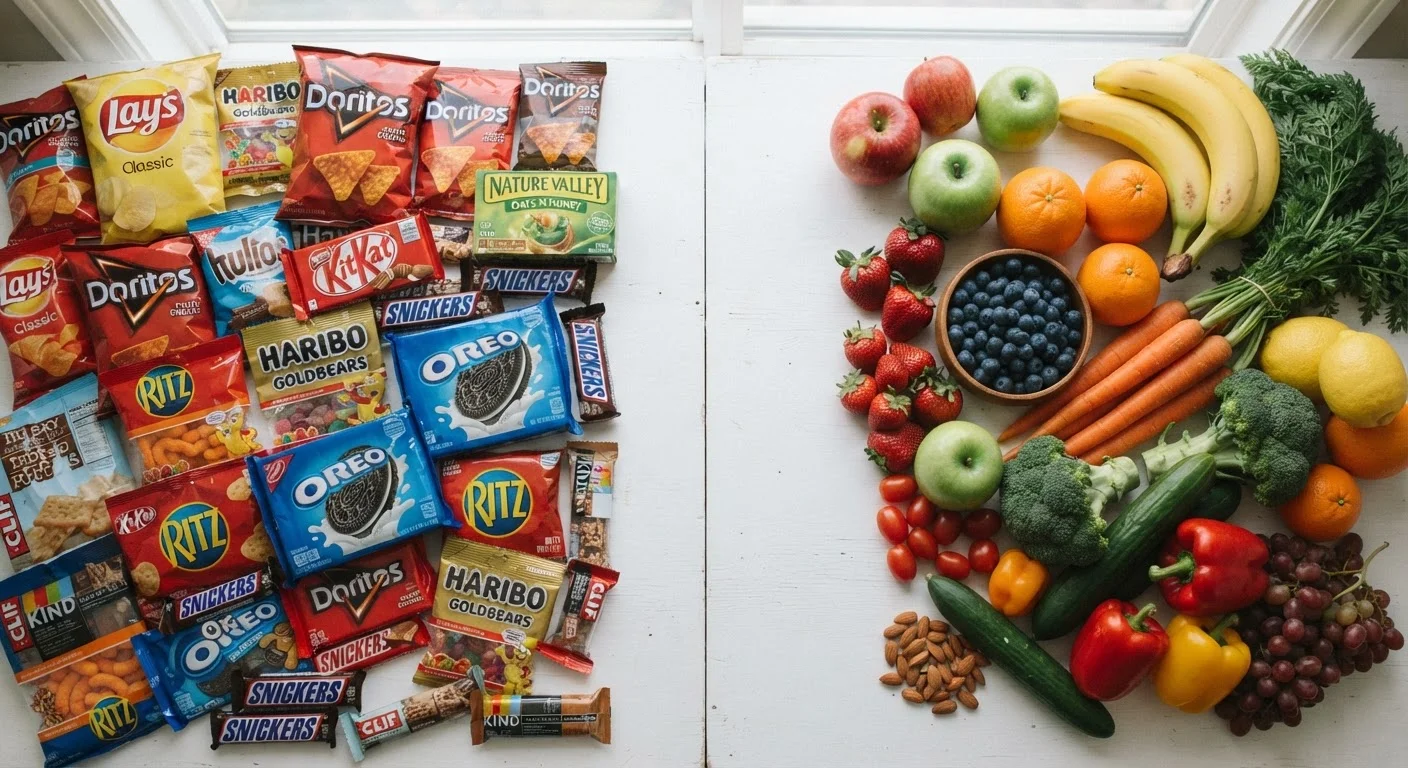
The NOVA Classification: A Research Tool, Not a Food Label
When nutrition researchers talk about ultra-processed foods, they are referencing a specific academic framework - the NOVA classification system - developed in the early 2010s by a team at the University of São Paulo. NOVA divides foods into four groups based on the extent and purpose of processing applied to them:
- Group 1: Unprocessed or minimally processed foods (e.g., fresh fruit, plain meat, dried legumes)
- Group 2: Processed culinary ingredients (e.g., flour, oil, salt, butter)
- Group 3: Processed foods (e.g., canned fish, cheese, cured meats)
- Group 4: Ultra-processed food and drink products
The fourth group is the focus of most public health research. What distinguishes it isn't just the presence of fat or sugar - it's the industrial nature of the formulation. These products are typically assembled from substances derived from foods (like whey protein isolate or modified starches) and combined with additives including emulsifiers, stabilizers, artificial colorings, and flavor enhancers that have no equivalent in a home kitchen.
Because NOVA classifies by process rather than nutrients, some products with reasonable calorie and macronutrient profiles still land in Group 4. This makes the framework quite different from standard food labeling, which focuses on nutrients per serving. For a deeper look at how food label language works in practice, see how food marketing language can mislead shoppers.
NOVA Is Not an Official Regulatory Standard
The NOVA system is an academic research classification, not a framework recognized by the FDA, USDA, or other regulatory bodies for food labeling purposes. You will not find NOVA group designations on food packages. It is used primarily in scientific literature and public health research to study dietary patterns at a population level.
What Researchers Are Actually Investigating
The scientific interest in ultra-processed foods goes beyond confirming that soda and chips aren't optimal choices. Researchers are using the NOVA lens to explore whether the category of ultra-processed food carries health associations that simple nutrient analysis would miss.
Large observational studies - including cohort research conducted in Europe, the United States, and Brazil - have examined associations between high ultra-processed food consumption and outcomes such as cardiovascular disease markers, metabolic indicators, and certain dietary patterns. These are population-level associations in epidemiological data, not clinical trials proving cause and effect.
~57%
Share of U.S. adult caloric intake from ultra-processed foods
Research published in BMJ Open estimated that ultra-processed foods accounted for more than half of daily caloric intake in a nationally representative U.S. dietary survey sample.
4 groups
Categories in the NOVA classification system
The NOVA framework, developed at the University of São Paulo, organizes all foods by degree and purpose of processing rather than by nutrient content.
One reason researchers find this classification useful is that ultra-processed diets tend to be calorie-dense, low in fiber, and high in additives whose long-term combined effects are not yet fully understood. Some scientists are also investigating whether properties like texture, palatability engineering, and rapid digestibility - common to ultra-processed products - influence satiety signals and eating behavior in ways that nutrient composition alone doesn't capture.
It's important to read any single study in this area with care. To build a stronger framework for evaluating nutrition headlines, navigating conflicting nutrition headlines offers useful guidance on interpreting food research coverage critically.
Why This Matters for Everyday Food Choices
Understanding the NOVA framework isn't about adopting a new diet - it's about becoming a more informed reader of both food products and nutrition news. Several practical implications follow from knowing how the system works:
- Marketing terms are separate from NOVA classification. A product labeled 'natural,' 'multigrain,' or even 'organic' can still meet the criteria for ultra-processed. The ingredient list typically reveals more than the front of the package.
- Not all processing is harmful. Groups 1 through 3 in NOVA include many foods that form the backbone of healthy diets globally - canned tomatoes, olive oil, aged cheese, and whole-grain bread all fall outside Group 4. Whole foods vs. processed foods explores these distinctions clearly.
- Pattern matters more than single items. Most nutrition researchers and dietitians emphasize overall dietary patterns rather than demonizing individual foods. The research on ultra-processed food is most relevant at the level of habitual, high-frequency consumption across the diet as a whole.
Use the Ingredient List as Your Guide
When trying to gauge where a food might fall under NOVA thinking, scan the ingredient list for substances you wouldn't find in a typical home kitchen - things like 'modified food starch,' 'carrageenan,' or 'artificial flavor.' The more of these appear, and the earlier they appear in the list, the more industrially formulated the product tends to be. This won't give you a formal NOVA classification, but it sharpens your awareness of how a product is made.
Interestingly, the NOVA framework has also influenced how researchers approach animal nutrition labeling - similar questions about industrial formulation and ingredient sourcing apply when reading a pet food label.
This article is for general informational and educational purposes only. It is not medical or dietary advice. Consult a qualified healthcare professional or registered dietitian for guidance specific to your health and nutritional needs.