Why the Nutrition Facts Label Exists
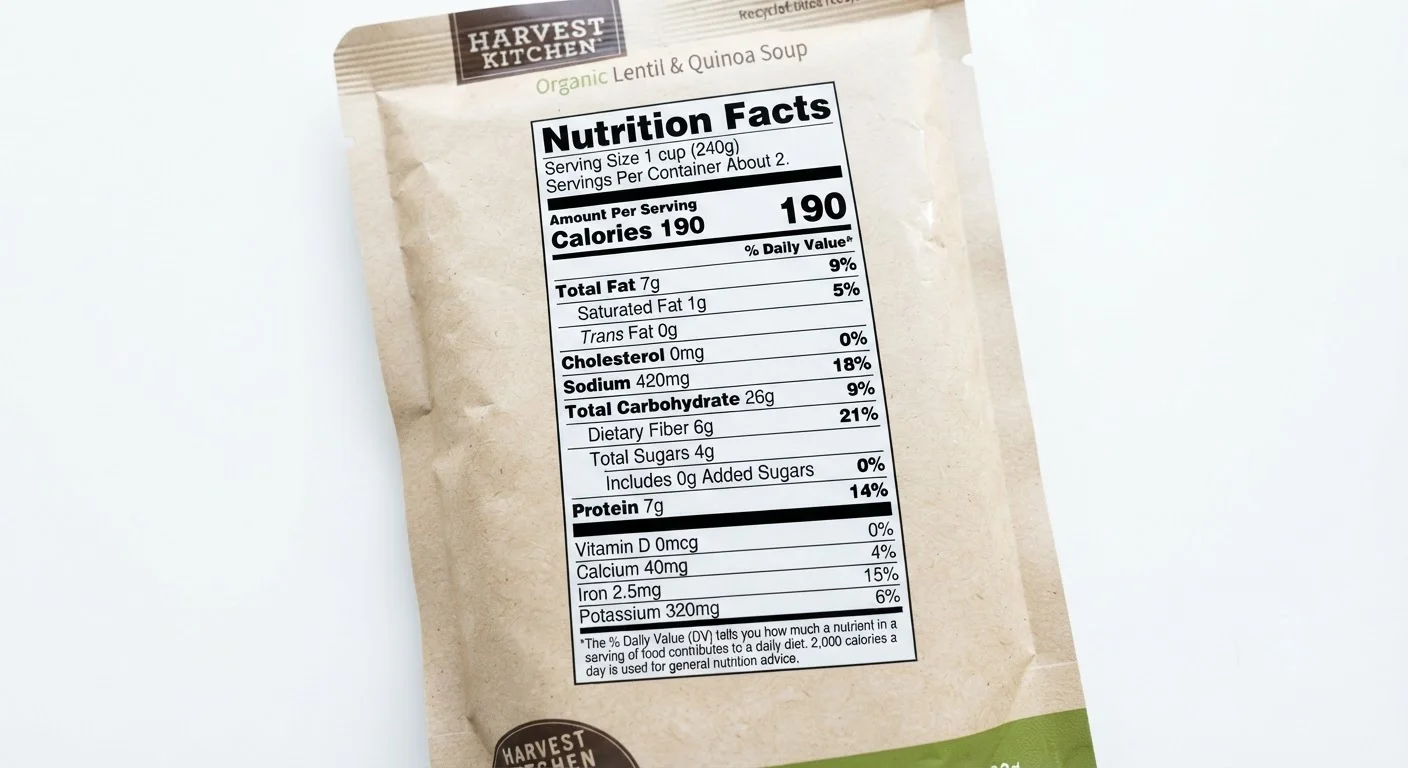
The Nutrition Facts label was introduced by the FDA in 1994 and substantially updated in 2020. Its purpose is straightforward: give consumers standardized, comparable nutritional data for every packaged food sold in the United States. Despite that, many shoppers glance at it and feel more confused than informed - partly because the label packs a lot of data into a small space, and partly because front-of-package marketing language often tells a different story than the fine print inside.
Understanding the label doesn't require a nutrition degree. It requires knowing what each section actually measures and what its limitations are. As you develop this skill, it also helps to think critically about the broader food environment - our guide on how food marketing language can mislead shoppers covers the gap between packaging claims and nutritional reality in more depth.
What you will need
How to Read the Label, Section by Section
Work through the Nutrition Facts panel from top to bottom. Each section builds on the one above it.
Start with serving size and servings per container
This is the most critical line on the entire label. Every calorie count, gram, and percentage below it is calculated for one serving - not the whole package. If a bag of chips lists a serving size of 1 oz (about 28g) and contains 3.5 servings, eating the full bag means multiplying every number by 3.5.
The FDA updated serving sizes in 2020 to reflect amounts people realistically eat, so they're more accurate than older labels - but they still may not match your actual portion.
Read calories in context of the serving
Calories represent total energy per serving. As a general reference point, the FDA uses a 2,000-calorie daily diet for %DV calculations, though individual calorie needs vary considerably based on age, activity level, body size, and health status. A registered dietitian can help determine an appropriate range for your situation.
Calories alone don't tell you whether a food is nutritious - a 200-calorie food could be rich in fiber and protein or mostly refined sugar and fat. Use calories alongside the rest of the label.
Scan total fat, saturated fat, and trans fat
Total fat encompasses all fat types. Of greater concern are saturated fat and trans fat, listed beneath it. Dietary guidelines from the U.S. government recommend limiting saturated fat and avoiding artificial trans fat (partially hydrogenated oils), which the FDA has largely phased out of the food supply but may still appear in trace amounts.
Not all fat is harmful - unsaturated fats from sources like nuts and fish are associated with heart health - but the label doesn't distinguish these by name, so use this line directionally rather than as an absolute cutoff.
Understand total sugars vs. added sugars
Total sugars includes all sugars - those naturally present in ingredients like fruit and milk, plus any added during manufacturing. Added sugars appear as a sub-line and represent only what was introduced in processing: cane sugar, high-fructose corn syrup, honey, and similar sweeteners all count.
The %DV for added sugars is based on no more than 50g per day for a 2,000-calorie diet. A food with 20% DV of added sugars in one serving is contributing meaningfully to that ceiling.
Use %DV as your quick-comparison tool
Percent Daily Value (%DV) tells you what share of the daily recommended amount one serving provides, based on a 2,000-calorie reference diet. The FDA's rule of thumb: 5% DV or less is low; 20% DV or more is high.
This makes %DV useful for rapid comparison shopping - you can quickly see whether Food A has more sodium than Food B without converting grams. For nutrients you want to limit (saturated fat, sodium, added sugars), look for low %DV. For nutrients you want more of (fiber, vitamin D, calcium, iron, potassium), look for higher %DV.
Nutrients Worth Watching Closely
Once you're comfortable with the structure, a few specific nutrients deserve extra attention in most American diets.
The 5/20 Rule Is Your Shortcut
When scanning a label quickly, use the FDA's %DV guideline: 5% or less is considered low, 20% or more is considered high. Apply this to decide whether a nutrient level is worth paying attention to. It works for both nutrients to limit (like sodium) and nutrients to seek out (like fiber and calcium).
Sodium: The FDA's reference value is 2,300 mg per day, but the average American exceeds this significantly - often from packaged foods that don't taste overtly salty. Our article on sodium in the American diet breaks down where it comes from and why it matters long-term.
Fiber: Most Americans fall well short of the recommended daily intake. The %DV for fiber is based on 28 grams per day. Foods with 10% DV or more per serving are considered good sources. For a deeper look, see our piece on fiber: the nutrient most Americans consistently undereat.
Added sugars: Total sugars include naturally occurring sugars from fruit or dairy; added sugars are those introduced during processing. The American Heart Association recommends limiting added sugars substantially, though exact personal targets should be discussed with a healthcare provider. The distinction between natural and added sugar matters nutritionally in ways the total sugar line alone can't show you.
Labels Reflect One Serving, Not One Package
Many single-serve-looking packages actually contain two or more servings per the label. If you eat the entire container without checking, you may be consuming double the calories, sodium, or added sugars shown. Always confirm servings per container before using any other number on the panel.
This article is for general informational and educational purposes only and is not a substitute for professional medical or dietary advice. Consult a registered dietitian or qualified healthcare provider before making significant changes to your diet.