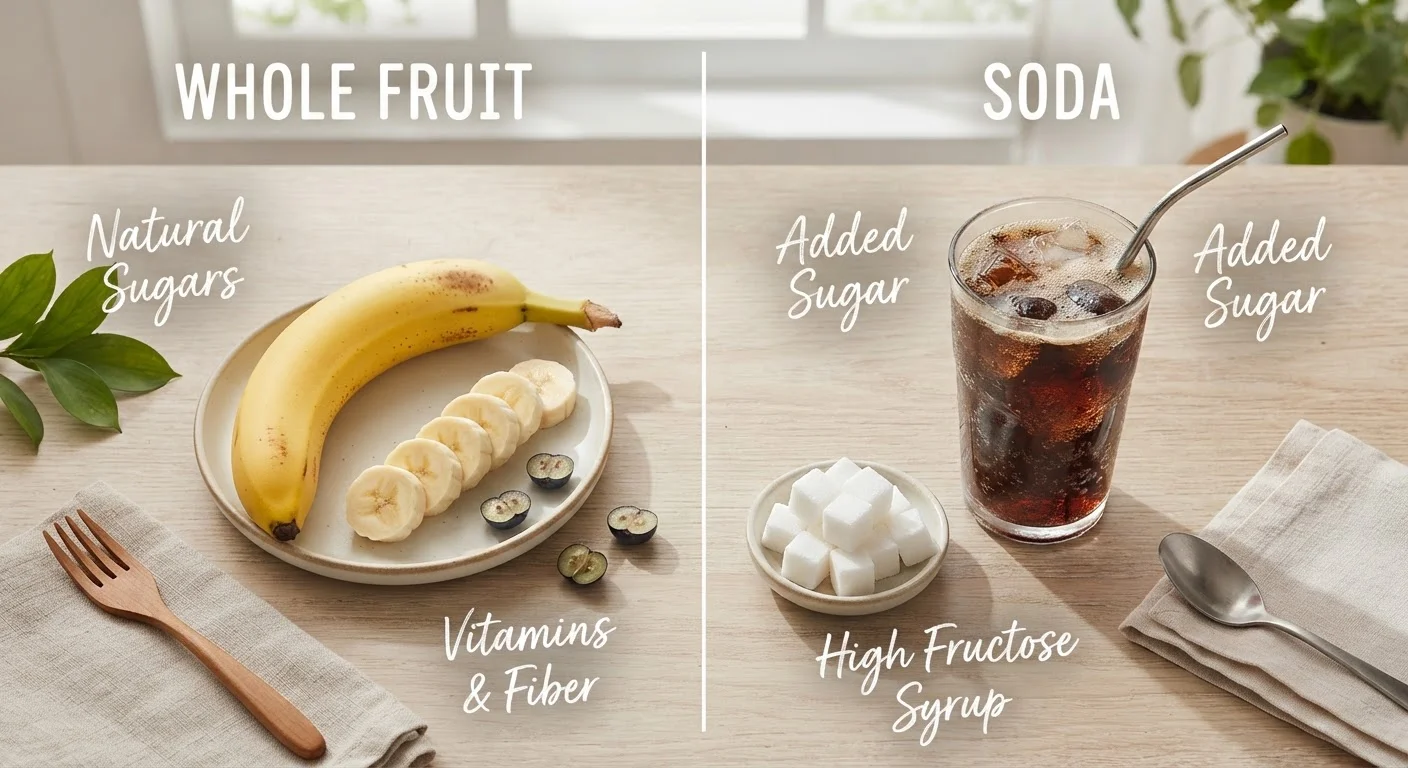
Same Molecule, Very Different Story
A glucose molecule extracted from a grape and one extracted from a candy bar are chemically identical. Yet nutritionists, dietitians, and public health guidelines treat them very differently - and for good reason. The distinction between natural and added sugar isn't really about chemistry; it's about context.
When you eat a piece of fruit, the sugar arrives alongside dietary fiber, water, vitamins, and phytonutrients. That fiber slows the rate at which sugar enters your bloodstream, moderating the glycemic response. When you drink a sweetened beverage, the sugar arrives largely alone - absorbed quickly, with few accompanying nutrients to offset it.
This is why public health guidance focuses so heavily on added sugars specifically, rather than total sugar intake as a single number. Understanding the difference helps you read food information more critically and make dietary choices grounded in evidence rather than fear or confusion.
“The problem with added sugar isn't sugar itself - it's that when sugar is stripped of its natural context, we lose all the benefits that come with whole food and keep only the calories.”
— Walter Willett, Professor of Epidemiology and Nutrition, Harvard T.H. Chan School of Public Health
Where Added Sugars Hide
Added sugars are far more pervasive in the American food supply than most people realize. The obvious culprits - sodas, candy, and pastries - account for a portion of intake, but added sugars also turn up in foods that seem wholesome: flavored yogurts, breakfast cereals, granola bars, pasta sauces, salad dressings, and even bread.
17 tsp
Average daily added sugar intake for U.S. adults
According to CDC data, American adults consume roughly 17 teaspoons of added sugar daily - nearly double the American Heart Association's recommended limit for men.
~40%
Share of added sugar from beverages
The CDC estimates that sugar-sweetened beverages account for approximately 40% of added sugar intake among U.S. adults, making them the single largest source.
10%
Recommended added sugar cap (of daily calories)
The 2020-2025 Dietary Guidelines for Americans recommend that added sugars make up less than 10% of total daily caloric intake for adults and children over age 2.
Ingredient labels list added sugars under many names: sucrose, high-fructose corn syrup, dextrose, maltose, cane juice, fruit juice concentrate, and more. Recognizing these synonyms is a practical skill for any grocery shopper. For a broader guide on decoding what's printed on packaging, see how to read a Nutrition Facts label.
Since 2020, the FDA has required manufacturers to list added sugars as a distinct line item on the Nutrition Facts panel - separate from total sugars. This regulatory change gives consumers a meaningful, standardized tool to gauge added sugar content at a glance.
Why Whole-Food Sugars Are Treated Differently
The key advantage of natural sugars in whole foods is the nutritional matrix they arrive in. Consider dairy: milk contains lactose (a natural sugar), but also protein, calcium, phosphorus, and fat - all of which influence how the body processes it. Similarly, an apple's fructose is accompanied by pectin (a soluble fiber) and a range of micronutrients.
Research consistently shows that consumption of whole fruits and dairy is associated with neutral or positive health outcomes, even though these foods contain sugar. The same cannot be said for foods with large amounts of added sugar. This distinction is central to understanding why whole foods and processed foods affect health differently.
A Simple Rule for Whole-Food Sweetness
When you want something sweet, reach for whole fruit first. It satisfies a craving, delivers fiber and micronutrients, and contributes far less to your added sugar total than processed snacks or beverages. This is one of the most consistently supported dietary habits in nutritional research.
None of this means natural sugars are unlimited or that all processed foods are equally harmful. Portion size and overall dietary pattern still matter. But framing sugar choices around food quality - not just grams - gives a more useful and realistic lens for everyday decisions.
Practical Steps for Reducing Added Sugar
Reducing added sugar doesn't require eliminating entire food categories. Small, consistent adjustments tend to be more sustainable than strict restriction. A few evidence-informed approaches:
- Swap sweetened drinks for water, sparkling water, or unsweetened beverages - liquid calories from added sugar are easy to overlook and contribute significantly to daily intake for many Americans.
- Check the added sugars line on Nutrition Facts panels before purchasing packaged foods, especially items marketed as healthy.
- Choose plain versions of foods like yogurt, oatmeal, and nut butters, then add fruit for natural sweetness.
- Read ingredient lists with an eye for multiple sweetener names appearing near the top.
These habits are practical starting points for most adults. Individuals managing specific health conditions - including diabetes, heart disease, or metabolic disorders - should work with a registered dietitian or physician to set personalized goals. General population guidance is not a substitute for individualized care.
This article is for general informational and educational purposes only and does not constitute medical or dietary advice. Consult a qualified healthcare professional before making significant changes to your diet.