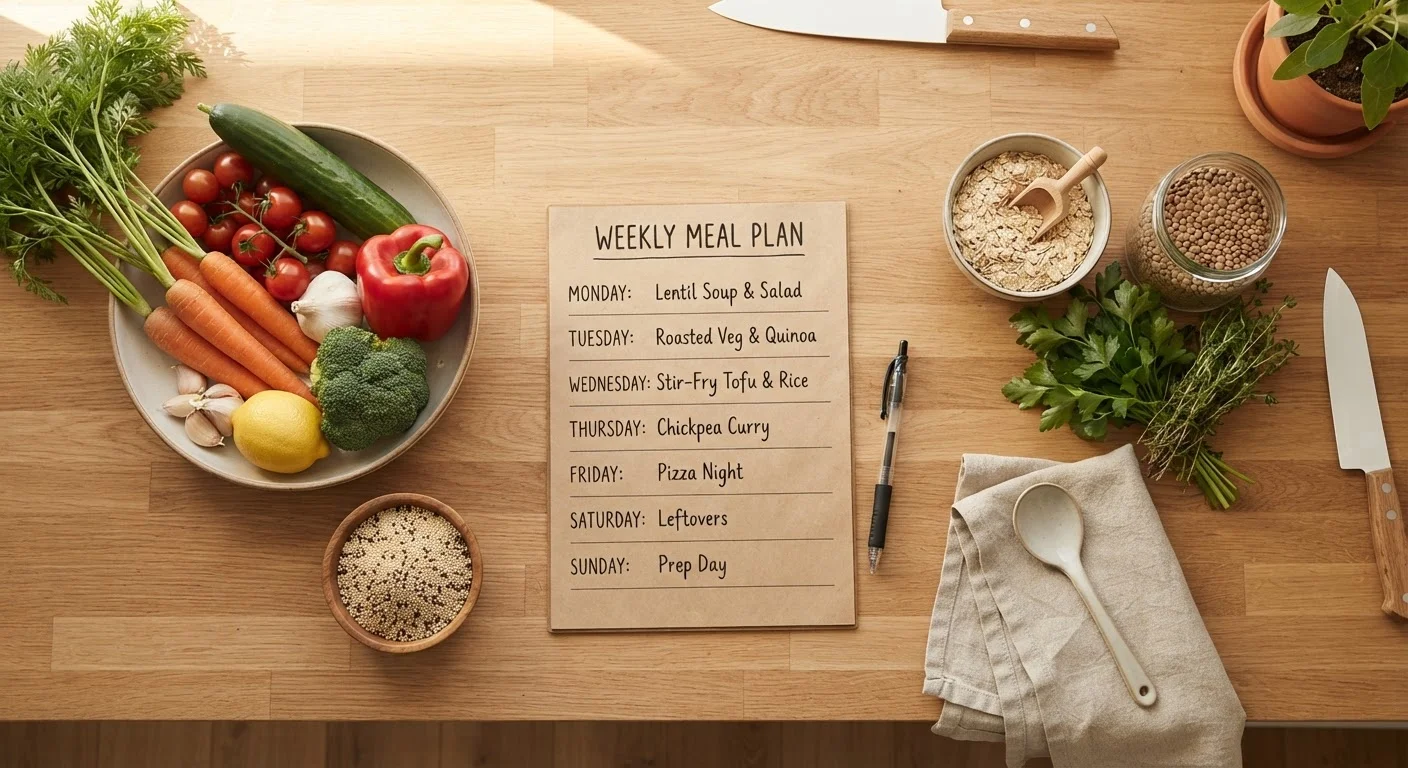
Why Meal Planning Is Worth the Upfront Effort
Most people's nutritional habits don't fall apart because of a lack of intention - they fall apart under the pressure of Tuesday at 6 p.m. when hunger, fatigue, and an empty fridge collide. Meal planning addresses that moment before it happens.
Research consistently links eating patterns to health outcomes, and one of the strongest predictors of a balanced diet is simply having food available and ready. Planning creates that availability intentionally. It also reduces the cognitive load of daily food decisions, which tends to get harder as the day progresses.
Beyond nutrition, meal planning has practical financial benefits. When you know what you'll eat, you buy what you need - and less of what you won't use. For readers interested in how food budgeting connects to broader financial habits, Budgeting Basics offers useful complementary strategies.
Meal planning also pairs naturally with other health routines. Just as a weekly exercise schedule works best when it fits your real life rather than an idealized version of it, the same principle applies here.
Start With Three Dinners, Not Seven
If meal planning is new to you, begin by planning only three dinners per week rather than every meal. This lower commitment builds the habit without overwhelming your schedule or requiring a dramatic change to how you currently shop. Once three feels effortless, expand gradually.
What You'll Need Before You Start
Getting organized upfront saves significant time during the planning process itself. Before writing a single meal idea down, gather a few basic inputs.
What you will need
Once you have these in hand, you're ready to work through the planning steps without backtracking. For further guidance on translating a plan into an efficient grocery trip, see Building a Grocery List That Reflects Good Nutrition.
Step-by-Step: Building Your First Weekly Meal Plan
Follow these steps in order the first time through. As the process becomes familiar, you'll naturally adapt it to your household's rhythm.
Audit your week before writing a single meal
Look at the next seven days honestly. Identify which evenings you'll realistically cook, which will require quick assembly or reheating, and which might be takeout or eating out. Planning against your actual schedule - not your ideal one - is the single most important factor in follow-through.
Choose two or three anchor proteins for the week
Rather than planning every meal from scratch, select two or three versatile proteins - such as eggs, chicken thighs, canned beans, or ground turkey - that can be used across multiple meals. This reduces shopping complexity and supports nutritional consistency without requiring a different recipe every night.
Plan carbohydrates and vegetables in batches, not per meal
Cook a grain - such as brown rice, quinoa, or farro - in a larger quantity at the start of the week. Roast a sheet pan of whatever vegetables are in season or on sale. These components become flexible building blocks rather than ingredients tied to a specific recipe, reducing waste and prep time throughout the week.
Map meals to days, not just a list
Assign specific meals to specific days based on what you've learned about your schedule. Put the most hands-on meals on your freest evenings. Place simple assembly meals - grain bowls, wraps, eggs - on your busiest nights. Write this down where you'll actually see it, whether that's a notepad on the fridge or a phone note.
Build your grocery list from the plan, not from memory
Go through your mapped meals and write down every ingredient you'll need that isn't already in your pantry or fridge. Organize the list by store section (produce, proteins, dry goods) to make shopping faster. Buying only what the plan requires is one of the most effective ways to control food costs and reduce waste.
Do a short prep session, not a full meal-prep marathon
On your most available day - often a Sunday or another weekend day - spend 30 to 45 minutes on foundational prep: wash and chop produce, cook your batch grain, and portion proteins if needed. Avoid the temptation to cook every meal in advance; this often leads to flavor fatigue and abandoned containers by Thursday.
Food Safety Applies to Prepped Meals Too
Batch-cooked foods should be cooled promptly and refrigerated within two hours of cooking. Most prepped proteins and grains are best consumed within three to four days. When in doubt about whether something is still safe to eat, discard it - foodborne illness risks are real and not worth ignoring. The USDA FoodKeeper resource provides reliable, free guidance on food storage timelines.
Keeping It Realistic: Common Pitfalls to Avoid
Meal planning fails most often not because the plan was wrong nutritionally, but because it was incompatible with real life. Planning seven elaborate dinners when you typically cook three nights a week almost guarantees abandonment by Wednesday.
A few patterns to watch for: over-planning variety (rotating five proteins and four grains per week is ambitious - two or three of each is far more sustainable), ignoring your energy levels at different points in the week, and treating leftover nights as failures rather than features.
If budget is a constraint, eating well on a budget outlines how to prioritize nutritional quality without premium ingredients. If you're exploring plant-forward meals, plant-based eating research is a grounded starting point.
This article provides general nutrition information for educational purposes only and is not a substitute for personalized dietary advice. Consult a registered dietitian or qualified healthcare provider before making significant changes to your diet, particularly if you have a medical condition or specific nutritional needs.