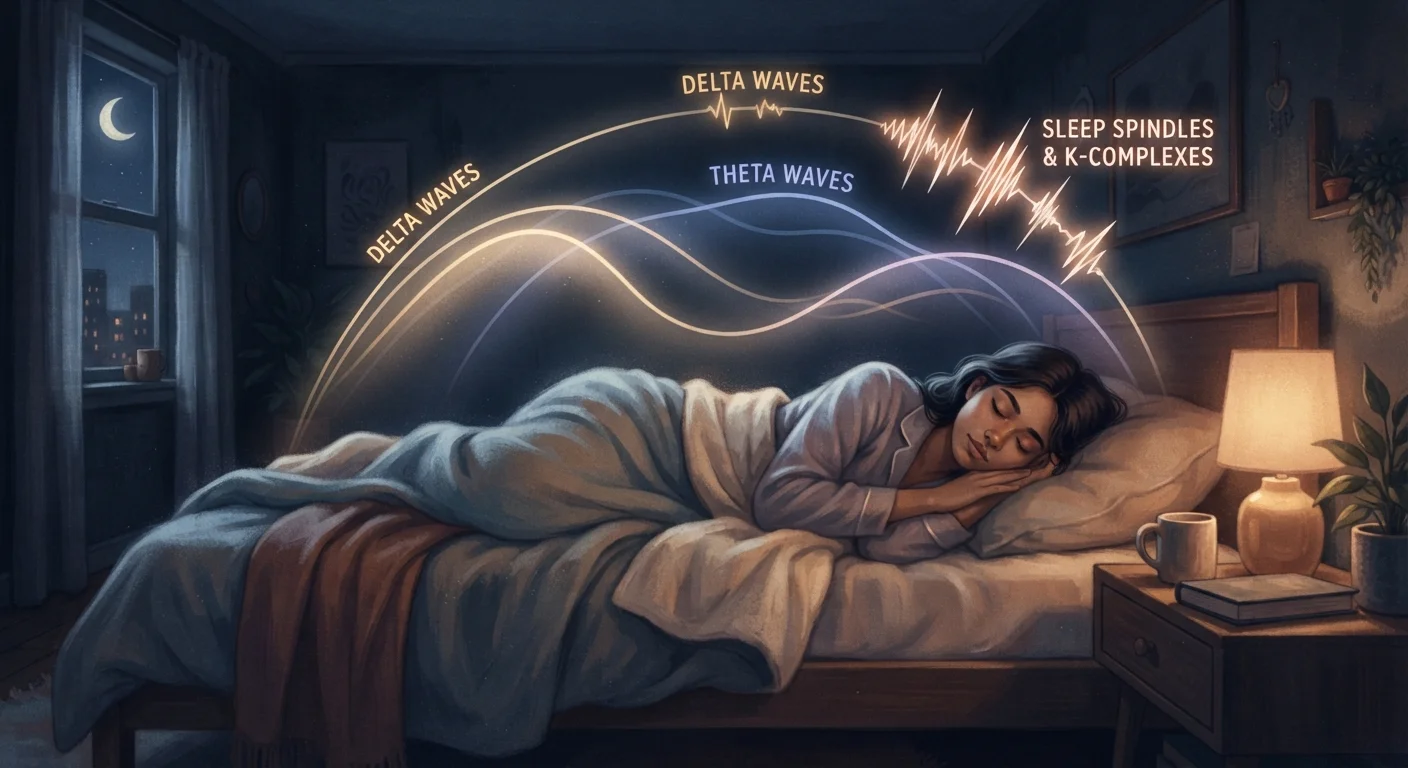
How a Single Night of Sleep Is Structured
Sleep is not a single uniform state - it's a carefully sequenced series of stages that your brain cycles through repeatedly. Each cycle contains four stages: N1, N2, N3, and REM. Together they form a roughly 90-minute arc that your brain repeats, with meaningful variation, throughout the night.
In the first half of the night, cycles lean heavily on N3 slow-wave sleep - the stage most people associate with "deep" sleep. By the second half, particularly in the hours before waking, REM sleep stretches longer, sometimes lasting 45 minutes or more per cycle. This front-loaded, back-loaded architecture isn't random; it reflects the brain's sequential repair priorities.
~50-60%
Share of sleep spent in light (N1/N2) stages
According to sleep stage research, light sleep constitutes the majority of a typical night - making it the most common stage, not a marginal one.
90 min
Average length of one complete sleep cycle
Research consistently shows a sleep cycle - from N1 through REM - averages approximately 90 minutes, though individual variation is normal.
4-6
Sleep cycles completed on a typical night
A standard seven-to-nine-hour night yields roughly four to six full cycles, with each cycle's stage composition shifting as the night progresses.
Understanding this structure matters because it reframes what a "good night's sleep" actually looks like. Cutting sleep short - even by an hour - disproportionately trims REM sleep, since those longer REM episodes are concentrated near morning.
What Each Sleep Stage Is Actually Doing
N1 (Light sleep, transition): This stage lasts just a few minutes and marks the drift from wakefulness into sleep. Muscle activity slows, and you may experience hypnic jerks - those sudden twitches that sometimes jolt you awake. N1 is a brief gateway, not a destination.
N2 (Light sleep, consolidation): This is where you spend the most time - roughly half of your total sleep. N2 is characterized by sleep spindles and K-complexes, patterns of brain activity associated with memory consolidation and the suppression of external stimuli. Far from passive, N2 is where motor skills rehearsed during the day are quietly refined and locked into long-term memory.
N3 (Deep sleep, slow-wave): The stage most people prize. N3 is dominated by slow delta waves and is when physical repair accelerates - growth hormone is released, immune function is supported, and the brain clears metabolic byproducts accumulated during waking hours. It's hardest to wake from and delivers the most physically restorative effects.
REM (Rapid Eye Movement): Brain activity during REM resembles wakefulness in many ways. This is the stage most closely tied to vivid dreaming, emotional memory processing, and creative thinking. Research suggests REM plays a role in regulating mood and integrating emotionally charged experiences.
Prioritize Consistent Timing Over Stage Percentages
Waking and sleeping at consistent times each day is one of the most evidence-supported ways to stabilize your sleep architecture. A regular schedule helps synchronize your circadian rhythm, making it easier for your brain to reach all stages efficiently - without micromanaging any individual one.
Why Light Sleep Deserves More Credit
The rise of consumer sleep trackers has created a cultural fixation on deep sleep percentages - a number that, in isolation, tells an incomplete story. Light sleep, particularly N2, is frequently mischaracterized as filler between the "important" stages. The science doesn't support that framing.
Sleep spindles generated during N2 are among the most studied phenomena in sleep neuroscience. Research published in journals such as Sleep has linked spindle density to declarative memory performance - the kind of memory involved in recalling facts and events. N2 also provides critical transitions that allow the brain to move smoothly between deep and REM sleep without waking.
“The brain during sleep is not simply resting - it is performing complex operations that support memory, emotional regulation, and physical health. Every stage contributes to that work in ways that are difficult to fully replicate when any stage is consistently cut short.”
— Matthew Walker, Professor of Neuroscience and Psychology, University of California, Berkeley, and author on sleep science
Perhaps most importantly, anxiety about light sleep itself can become a problem. Orthosomnia - a term used by sleep researchers to describe the preoccupation with achieving perfect sleep metrics - can paradoxically worsen sleep quality. If your tracker tells you that your deep sleep was low, that data point deserves context, not panic.
For a grounded look at which sleep habits genuinely help and which ones are overblown, see our guide to sleep hygiene habits worth keeping.
When to Look Beyond Sleep Cycle Basics
Understanding sleep cycles is empowering - but it has limits. Some sleep difficulties reflect underlying conditions such as sleep apnea, restless leg syndrome, or circadian rhythm disorders that no amount of sleep hygiene optimization will resolve on its own.
If you consistently wake unrefreshed despite adequate hours, snore loudly, or experience significant daytime impairment, these patterns warrant professional evaluation. Our article on when sleep problems signal something more than poor habits outlines specific signs that go beyond routine habits.
It's also worth noting that sleep and other aspects of daily health interact in meaningful ways. Even your skin's overnight recovery draws on the same restorative processes active during sleep - something explored in our piece on why morning and nighttime skincare routines serve different purposes.
This article is for general informational and educational purposes only and is not a substitute for professional medical advice, diagnosis, or treatment. If you have concerns about your sleep health, consult a qualified healthcare provider.