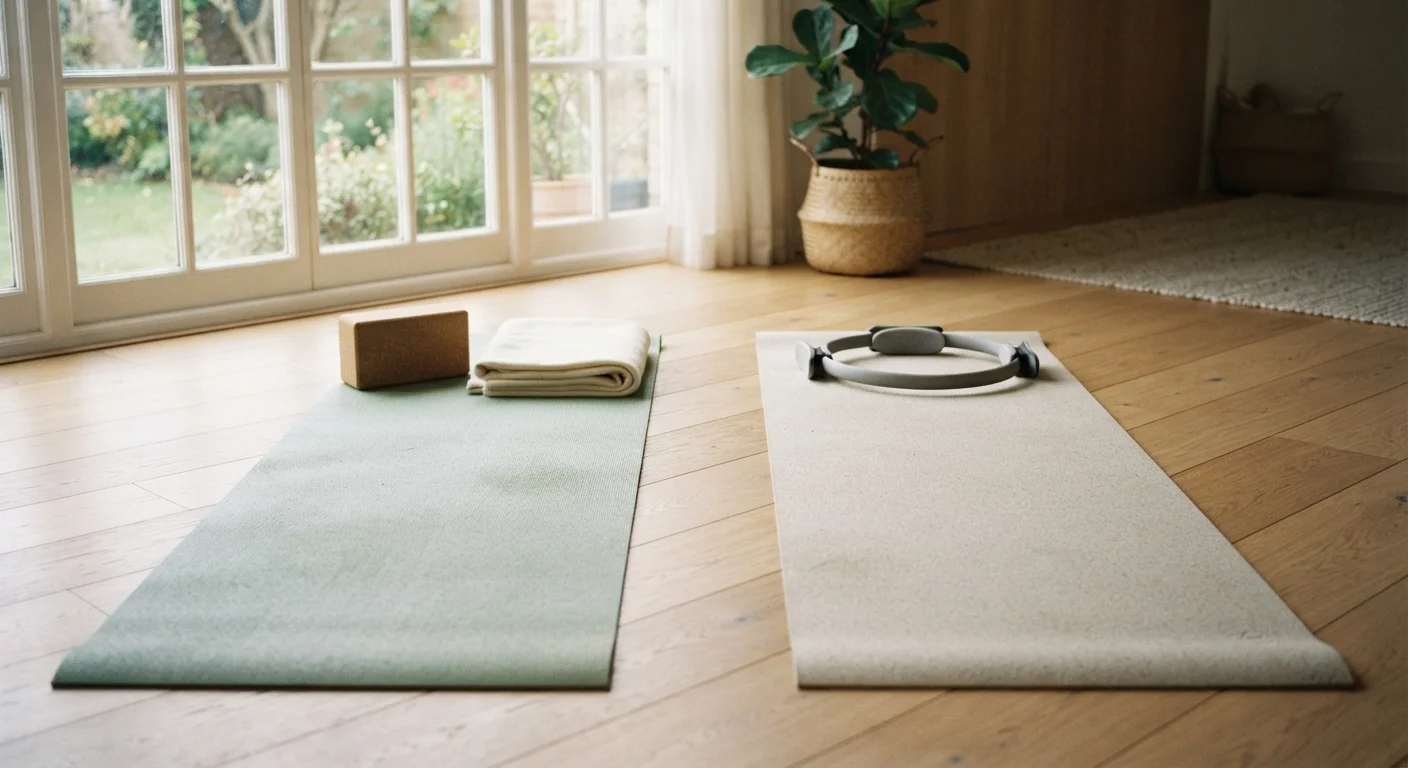
Origins and Philosophy: Where Each Practice Comes From
Yoga is a practice with roots stretching back thousands of years in Indian tradition. Its classical framework, codified in texts such as Patanjali's Yoga Sutras, describes an eightfold path that includes ethical guidelines, breathwork (pranayama), and meditation - physical postures (asanas) are one component of a much broader system. Modern Western yoga typically foregrounds the physical practice, but philosophical dimensions remain present in most lineages.
Pilates, by contrast, is a 20th-century invention. Joseph Pilates, a German-born physical trainer, developed his method - originally called "Contrology" - in the 1920s, initially to rehabilitate injured dancers and war internees. His approach drew on gymnastics, boxing, and anatomy, with a strong emphasis on conscious, controlled movement and the connection between mind and muscle. It was never intended as a spiritual practice.
Understanding these origins helps set realistic expectations. Yoga asks practitioners to engage with breath and awareness as central elements, not afterthoughts. Pilates asks for precision and intention - each repetition is deliberate, never casual.
What Each Practice Actually Emphasizes
Yoga classes vary enormously by style - from the slow, floor-based stretches of Yin yoga to the vigorous sequences of Ashtanga or Vinyasa. What most share is an emphasis on breath-linked movement, held postures, and transitions that build flexibility and mobility simultaneously. Many styles also close with a meditative rest pose (savasana), reinforcing the mind-body integration that defines the tradition.
Pilates - whether performed on a mat or on equipment such as the Reformer - centers on core strength in its fullest anatomical sense: the deep spinal stabilizers, pelvic floor, and surrounding musculature. Movements are typically smaller and more controlled than yoga postures, with great attention paid to alignment and the quality of each repetition over quantity or range of motion alone.
| Criterion | Yoga | Pilates |
|---|---|---|
| Origin | Ancient India (thousands of years old) | Early 20th-century Europe/USA |
| Primary focus | Mind-body integration, flexibility, breath | Core stability, postural alignment, controlled strength |
| Philosophical dimension | Yes - ethics, meditation, breathwork | Minimal - movement-focused |
| Typical equipment | Mat, blocks, straps (minimal) | Mat; optionally Reformer or other apparatus |
| Style variety | High (Yin, Vinyasa, Ashtanga, Restorative, etc.) | Moderate (mat, Reformer, clinical) |
| Rehab application | Some styles, with modifications | Widely used in physical therapy settings |
| Stress reduction emphasis | Central to practice | Secondary benefit |
Both practices improve body awareness and complement other forms of training. If you're weighing these against more cardiovascular-focused options, our overview of cardio vs. strength training provides useful context for building a balanced routine.
Practical Considerations for Everyday Americans
Accessibility matters. Mat yoga requires very little equipment and is offered at gyms, community centers, and online platforms at a wide range of price points. Pilates mat work is similarly low-cost, though equipment-based Pilates (Reformer classes) is generally more expensive and typically offered at dedicated studios.
Both practices can be adapted for beginners, older adults, and people with certain physical limitations - though anyone with a medical condition, recent injury, or chronic pain should consult a qualified healthcare professional before starting either. Neither yoga nor Pilates is a substitute for medical treatment.
21M+
Americans practicing yoga regularly
According to a national survey published by Yoga Alliance and Yoga Journal, over 21 million Americans reported practicing yoga.
~12M
Americans practicing Pilates
Industry estimates from the Sports & Fitness Industry Association place regular Pilates participation in the United States at approximately 12 million people.
If you're deciding between a class-based environment and training independently, our comparison of home workouts vs. gym workouts and the trade-offs of group vs. solo training can help you structure your approach. Many people ultimately find value in both yoga and Pilates - practiced on different days or in combination - rather than treating them as mutually exclusive.
This article is for general informational purposes only and does not constitute medical or fitness advice. Always consult a qualified healthcare or fitness professional before beginning a new exercise program, especially if you have an existing health condition.