The Core Is Not Just Your Abs
When most people hear "core," they picture a flat stomach or the burning sensation from a set of crunches. But anatomically, the core is a complex group of more than 20 muscles that wrap around your trunk like a natural weight belt. These muscles span from your diaphragm down to your pelvic floor, and from the front of your abdomen around to the deep muscles flanking your spine.
Key players include:
- Transverse abdominis - the deepest abdominal layer, responsible for compressing and stabilizing the trunk
- Multifidus - small, deep back muscles that provide segmental spinal support
- Diaphragm - your primary breathing muscle, which also regulates intra-abdominal pressure
- Pelvic floor muscles - a hammock of muscles at the base of the pelvis that support organs and coordinate with breath
- Internal and external obliques - responsible for rotation and lateral flexion
- Erector spinae - the long muscles running along the spine that extend and stabilize the back
The rectus abdominis - the muscle behind those coveted six-pack lines - is actually one of the more superficial and functionally limited members of this group when it comes to everyday stability.
The Pelvic Floor Is Part of Your Core
Many people - particularly women who have experienced pregnancy - are familiar with the pelvic floor, but it is rarely discussed in mainstream fitness conversations about core strength. These muscles form the base of the core cylinder and coordinate with breathing and abdominal pressure. Dysfunction in the pelvic floor can affect core stability, and vice versa. A pelvic floor physical therapist can assess and address this often-overlooked component.
Why Core Stability Matters More Than Core Strength Alone
Strength and stability are related but distinct. You can have muscles capable of generating considerable force and still lack the coordination to use that force safely. Core stability refers specifically to the core's ability to maintain a neutral spine position under load or during dynamic movement - resisting unwanted motion rather than creating it.
This distinction matters practically. When you reach overhead to grab something from a shelf, your core fires first to brace the spine before your arm moves. When you carry groceries, it prevents your torso from collapsing to one side. When you run, it transfers force efficiently between your lower and upper body. Poor core stability in these scenarios can lead to compensatory patterns, increased joint stress, and over time, injury.
“The core is not a group of muscles you train in isolation - it is a system of muscles that work together to transfer force, protect the spine, and support every movement the body makes. Training it as a system changes everything.”
— Stuart McGill, Professor Emeritus of Spine Biomechanics, University of Waterloo, and widely cited researcher in spinal health and core function
For those interested in how different types of training interact, our overview of cardio vs. strength training explains how resistance work and aerobic exercise each contribute to overall fitness.
Moving Beyond Sit-Ups: More Effective Core Training Approaches
Traditional sit-ups and crunches train the rectus abdominis through spinal flexion - a useful motion, but only one of many the core must handle. Functional core training emphasizes anti-movement patterns: resisting extension, resisting rotation, and resisting lateral flexion. Exercises that embody this approach include:
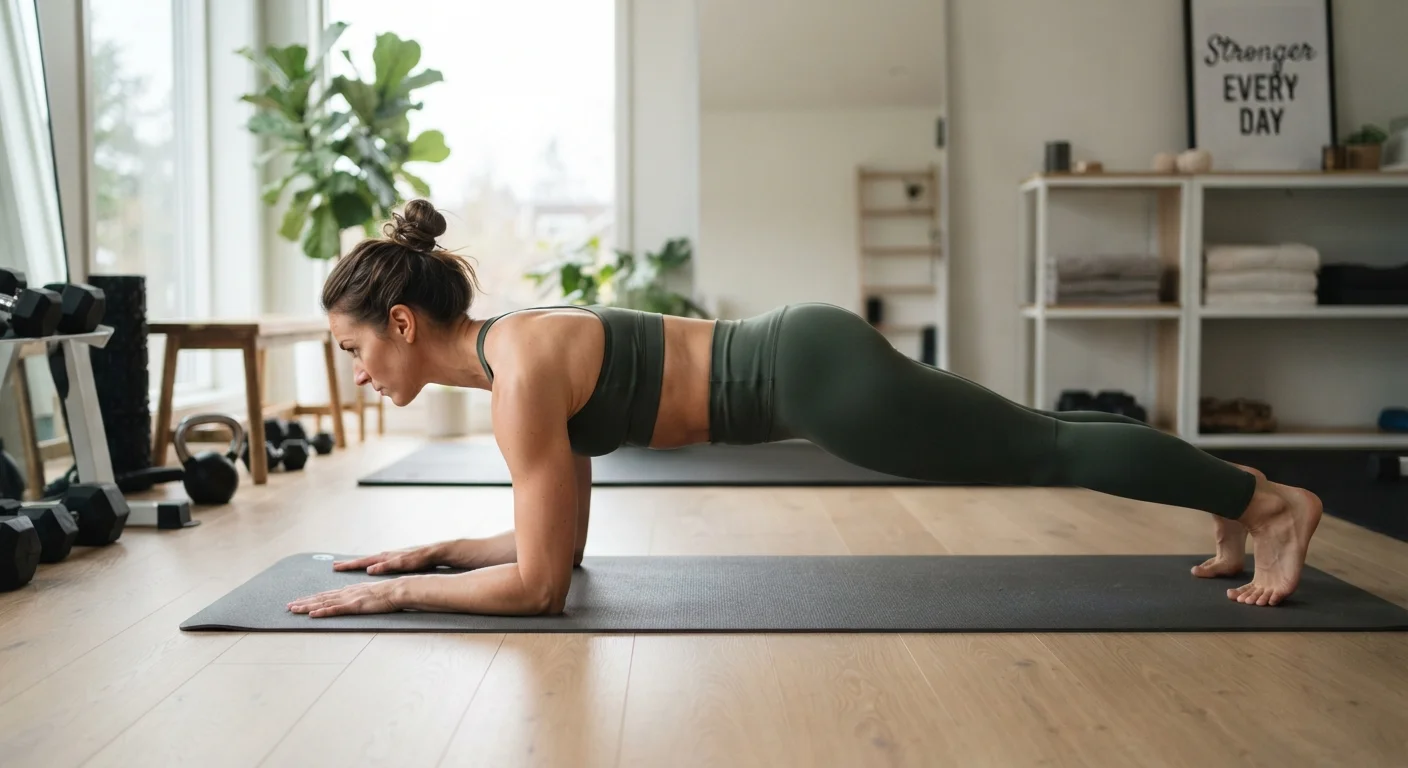
- Plank variations - train anti-extension and full-trunk isometric endurance
- Dead bug - coordinates opposite arm and leg movement while the spine stays neutral
- Bird-dog - challenges rotational stability on all fours
- Pallof press - uses cable or band resistance to train anti-rotation
- Glute bridges - engage posterior chain muscles including the gluteus maximus, which anchors pelvic stability
If you are new to structured exercise, our introduction to bodyweight training covers how movements like planks and bridges can be scaled for beginners with no equipment needed.
Start With the Basics Before Adding Complexity
If you are new to core training, mastering form in foundational movements like the dead bug or a standard plank is more valuable than attempting advanced variations too soon. Focus on maintaining a neutral spine - neither arched nor rounded - and breathing steadily throughout each exercise. Quality of movement always outweighs quantity of repetitions.
Practices like Pilates place significant emphasis on controlled core engagement and breath coordination. Our article comparing yoga and Pilates can help you understand which approach might complement your fitness goals.
Putting Core Training Into Your Routine
Core training does not need to be a standalone session. Many strength training programs naturally incorporate core demand through compound lifts - a principle covered in our strength training fundamentals guide. Dedicating 10-15 minutes of focused core work two to three times per week, combined with full-body movement, is a practical starting point for most adults.
Progression matters as much as it does with any other muscle group. Start with foundational positions that allow you to maintain a neutral spine, then gradually increase hold duration, repetitions, or movement complexity over time. If you experience pain during any exercise - especially in the lower back - stop and consult a qualified healthcare or fitness professional before continuing.
This article is for general informational purposes only and does not constitute medical or professional fitness advice. Always consult a qualified healthcare provider or certified fitness professional before beginning a new exercise program, especially if you have existing health conditions or injury history.