Why the Choice Matters More Than You Think
Choosing how you exercise isn't just a logistics question - it shapes whether you keep going at all. Research published in health and behavioral science journals has repeatedly found that adherence, not intensity, is the single greatest predictor of long-term fitness outcomes. A moderately effective program you follow consistently outperforms an optimal program you abandon after three weeks.
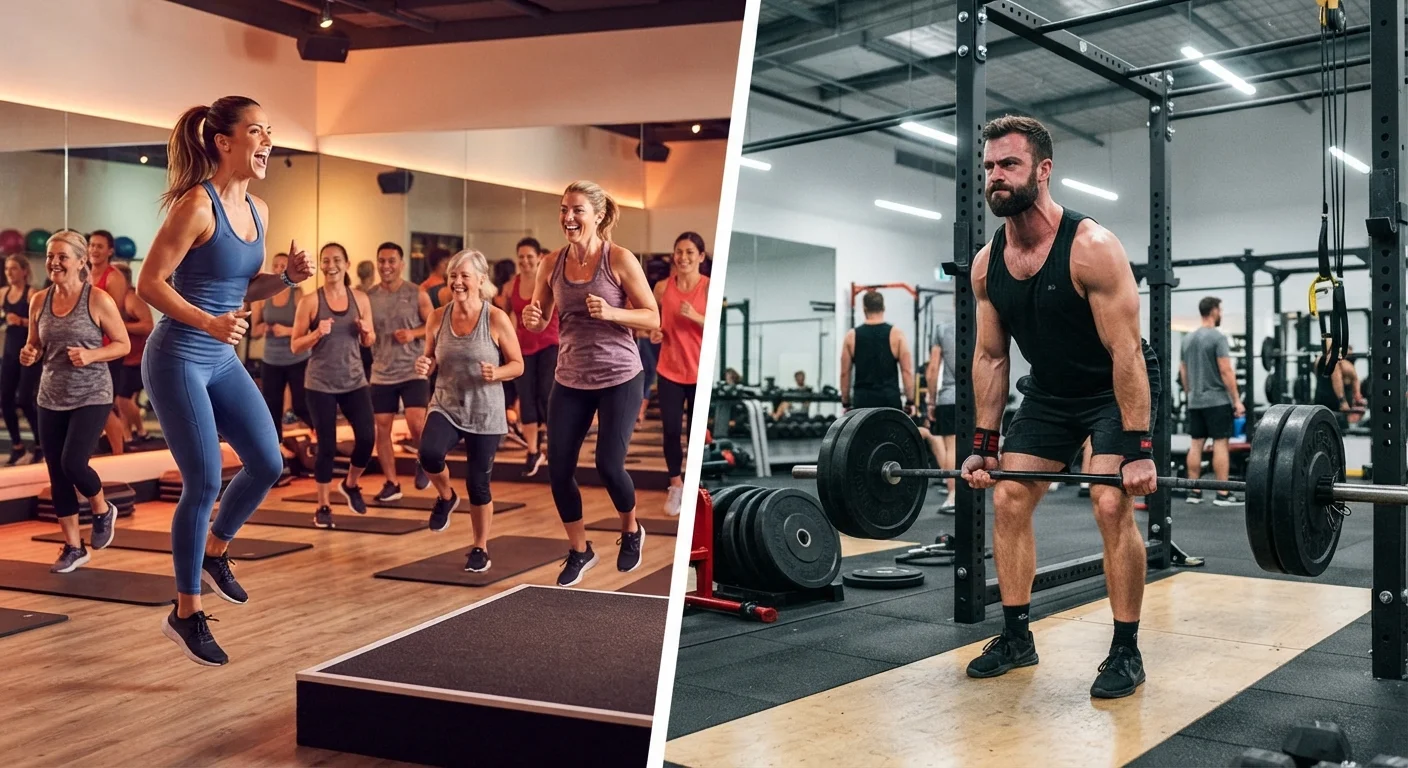
Group fitness classes and solo training represent two genuinely different psychological and structural environments. Understanding what each actually offers - beyond surface-level convenience - helps you make a choice grounded in how you realistically behave, not how you hope you'll behave. For a broader look at organizing your week around these choices, see building a weekly exercise schedule that fits real life.
What Group Fitness Classes Do Well
Group classes provide a ready-made structure: a fixed time, a pre-planned workout, and an instructor guiding every movement. For people who find it hard to self-direct or who underestimate how much effort a workout should involve, that structure is genuinely valuable.
Social dynamics also play a measurable role. Studies on exercise behavior suggest that working out alongside others - even strangers - can increase effort and duration through a process sometimes called the Köhler effect, where individuals perform better in groups than alone. The scheduled commitment of a class also creates a soft social contract: people feel a stronger pull to show up when they know an instructor and familiar faces expect them.
Group classes tend to suit:
- People who are energized by social environments
- Those new to exercise who want guided form correction
- Anyone who has historically struggled to start workouts without an external prompt
- Exercisers who enjoy variety and don't want to plan their own sessions
Talk to the Instructor Before Class
If you're new to a class format or returning after a health issue, introduce yourself to the instructor before the session starts. A brief conversation allows them to offer modifications during the workout and reduces the risk of pushing through movements that aren't appropriate for your current fitness level. This simple step makes group classes significantly safer and more effective.
One important limitation: group classes move at the instructor's pace. If you're recovering from an injury or have specific mobility restrictions, that pace may not match your needs. Always inform the instructor of any physical limitations before class begins, and consult a healthcare professional before starting a new exercise program.
What Solo Training Does Well
Training on your own offers something no group class can fully replicate: complete control. You choose the exercises, the load, the rest intervals, and the timing. That flexibility matters enormously for people with unpredictable work schedules, childcare responsibilities, or specific performance goals that don't map neatly onto a general class format.
Solo training also allows for progressive overload - systematically increasing challenge over time - in a more precise way. If you're working toward a defined goal like improving a particular lift or building aerobic capacity in a specific heart-rate zone, a self-directed program can be calibrated to your exact starting point and rate of progress. Pairing solo sessions with occasional professional guidance can accelerate that process; see what to expect before your first session with a personal trainer for how to get started.
| Group Fitness Classes | Solo Training | |
|---|---|---|
| Scheduling flexibility | Fixed class times | Fully flexible |
| Motivation support | High - instructor and peers | Self-generated |
| Program personalization | Low - instructor sets the plan | High - fully customizable |
| Typical cost | Moderate to high per session | Lower ongoing cost |
| Guidance and form correction | Instructor-led, general cues | Self-monitored or trainer-guided |
| Social component | Built-in community | Limited unless sought out |
| Best for beginners | Yes - structure is helpful | Depends on self-direction ability |
Solo training tends to suit:
- Self-motivated individuals who prefer quiet, focused environments
- Those with fixed performance targets (strength, endurance milestones)
- People whose schedules require workout timing flexibility
- Exercisers who have already built a consistent habit and know what they're doing
Cost, Commitment, and Practical Realities
Group fitness classes typically carry a higher per-session cost than independent gym use, especially if you're attending boutique studios. That cost can act as a motivator - sunk-cost psychology makes people more likely to attend something they've already paid for - but it can also become a barrier if life gets busy and sessions go unused.
Solo training at a standard gym is generally more cost-effective over time, and home-based solo training can be done with minimal equipment. Resources like comparing home and gym workouts and resistance bands vs. free weights can help you evaluate lower-cost solo setups. The tradeoff is that without a class structure, you'll need to invest time in planning and self-assessment.
~40%
Adults who cite accountability as key to exercise consistency
Multiple behavioral health surveys indicate that social accountability is among the top-cited reasons people maintain exercise habits over time.
2-3x
Longer workout duration reported in social exercise settings
Research on the Köhler motivation effect suggests individuals often exercise longer and harder alongside others compared to working out alone.
Mixing Both Approaches
The framing of group vs. solo as an either/or decision is largely artificial. Many consistent exercisers use group classes for certain modalities - spin, yoga, HIIT - while doing solo sessions for others, such as strength training or running. This hybrid approach captures accountability benefits where motivation is lower while preserving flexibility where it's needed most.
If you're exploring different modalities, understanding the differences between yoga and Pilates can help you decide which group-class formats align with your goals. Similarly, how cardio and strength training affect the body differently provides useful context for deciding which training types to prioritize in either format.
The practical question isn't which format is better in the abstract - it's which combination creates a routine you'll sustain for months and years. Start there, and adjust based on real evidence about your own behavior.
This article is for general informational purposes only and does not constitute medical or fitness advice. Consult a qualified healthcare professional before beginning any new exercise program, particularly if you have an existing health condition or injury.