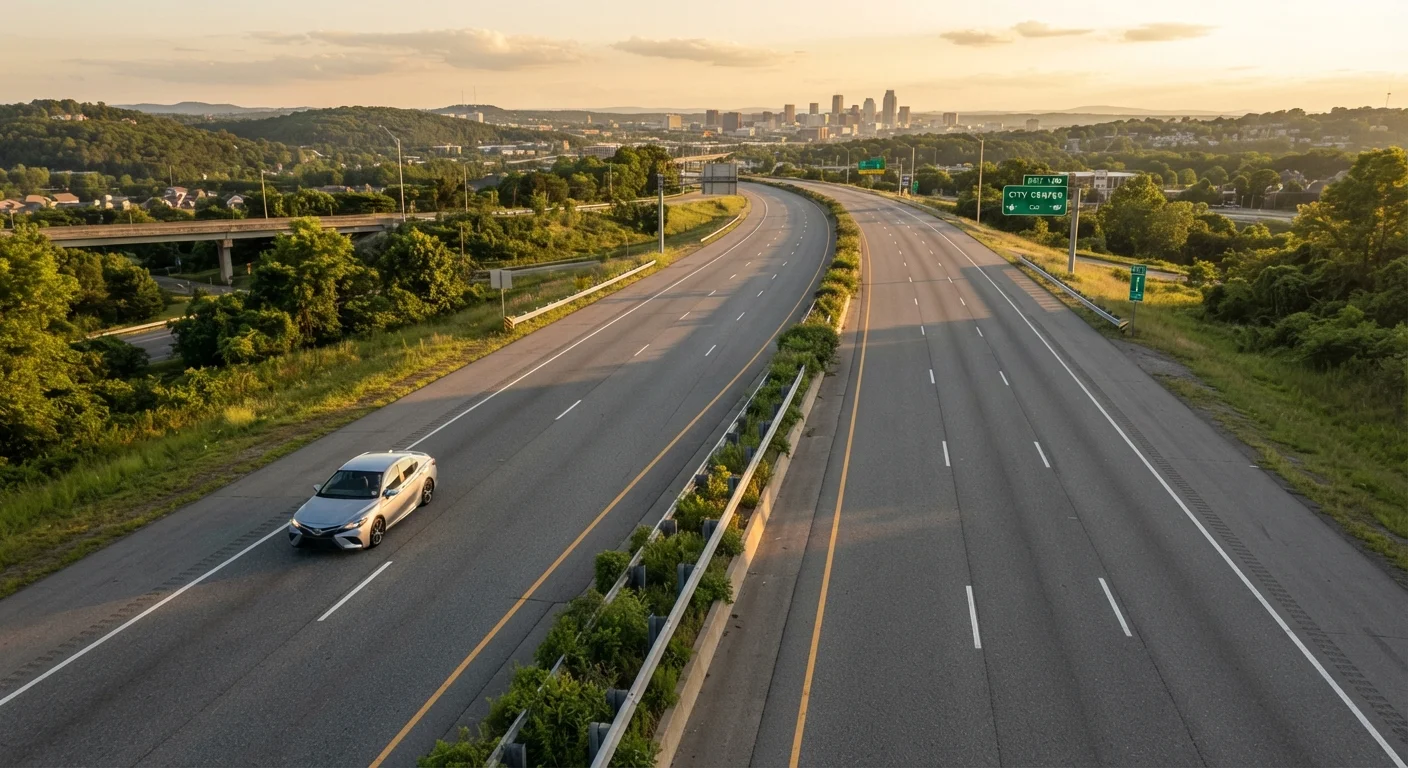
The Left Lane Is a Passing Lane, Not a Travel Lane
Many American drivers treat the left lane as a premium travel lane - a place to cruise at highway speed and avoid merging traffic. Legally, that understanding is wrong on most U.S. highways.
The overwhelming majority of states designate the leftmost lane on multi-lane roads as a passing lane. The standard legal obligation is expressed as keep right except to pass - a driver should occupy the left lane only long enough to overtake a slower vehicle, then return to the right. This rule exists for traffic flow and safety, not as a courtesy suggestion.
Understanding this distinction matters because it changes how you should think about highway driving entirely. The left lane is a tool you use briefly, not a lane you inhabit. For a broader view of how traffic laws shape safer driving habits, see our guide on defensive driving on American roads.
A Simple Rule to Remember
Think of the left lane the way you'd think of a passing zone on a two-lane road - you enter it to get around a slower vehicle, then you exit it. If you're not in the act of passing someone, you shouldn't be in the left lane on most American highways. When in doubt, move right.
What State Laws Actually Say
Traffic law is state law in the U.S., so no single federal rule governs left-lane use nationwide. That said, the legal landscape is more uniform than many drivers realize.
According to legislative tracking by transportation policy organizations, more than 30 states have some form of keep-right statute that specifically prohibits driving in the left lane except when passing. States including Georgia, Indiana, Illinois, and New Jersey have either strengthened these laws or increased enforcement in recent years. Georgia's law, for example, applies even if you're traveling at the posted speed limit - if you're not actively passing, you must move right.
Other states rely on slower traffic keep right language, which is slightly less strict: it requires slower-moving vehicles to yield the left lane but doesn't mandate that all drivers vacate it. Even under this framework, blocking the flow of traffic can result in a citation for impeding traffic - a separate but related offense.
30+
States with explicit keep-right statutes
Transportation policy researchers estimate more than 30 U.S. states have laws specifically prohibiting left-lane travel except when passing.
$50-$200+
Typical fine range for left-lane violations
Fines for left-lane camping vary considerably by state, with some jurisdictions imposing higher penalties for repeat offenses or violations in designated zones.
Speed limits, notably, apply equally across all lanes. Traveling at or above the speed limit in the left lane does not exempt a driver from keep-right requirements. For more on how speed law actually works, see U.S. speed limit laws.
The Safety Case Behind Lane Discipline
Left-lane laws aren't arbitrary. They address a measurable safety problem: when a driver occupies the passing lane without passing, traffic behind them tends to compress, leading to tailgating, sudden braking, and frustrated drivers attempting to pass on the right - a far more dangerous maneuver.
Road safety researchers have long documented that lane-blocking behavior is a contributing factor in aggressive driving incidents and rear-end collisions on highways. It also reduces the effectiveness of the left lane as a refuge for emergency vehicle passage. Proper lane discipline is a core component of what traffic engineers call traffic flow stability.
The frustration caused by left-lane camping is also a recognized trigger for road rage. Keeping right when not passing removes one of the most common sources of driver antagonism on American interstates. For a full picture of how right-of-way principles connect to crash prevention, see right-of-way rules drivers most frequently get wrong.
Check Your State's Specific Law
Because traffic laws are set at the state level, the exact wording and enforcement thresholds of keep-right rules differ. Your state's Department of Motor Vehicles (DMV) or driver's handbook is the authoritative source for local requirements. Some states post their statutes publicly online through official legislative websites.
Recognized Exceptions and Gray Areas
Even states with strict keep-right laws recognize situations where remaining in the left lane is legally defensible:
- Heavy congestion: When all lanes are stopped or slow-moving, the rule has little practical application and is generally not enforced.
- Left-side exits: If your exit or interchange is on the left, preparing to take it in the left lane is expected and legal.
- Construction zones: Lane configurations may require left-lane travel; always follow posted signs and flaggers.
- Emergency vehicles: You may be legally required to vacate the left lane to allow emergency vehicles to pass - see Move Over laws and emergency vehicle rules for details.
- Officer direction: Traffic control always supersedes lane markings.
These exceptions are narrow. They don't cover 'I'm going fast enough' or 'I'm about to exit in 10 miles.' When in doubt, keep right.