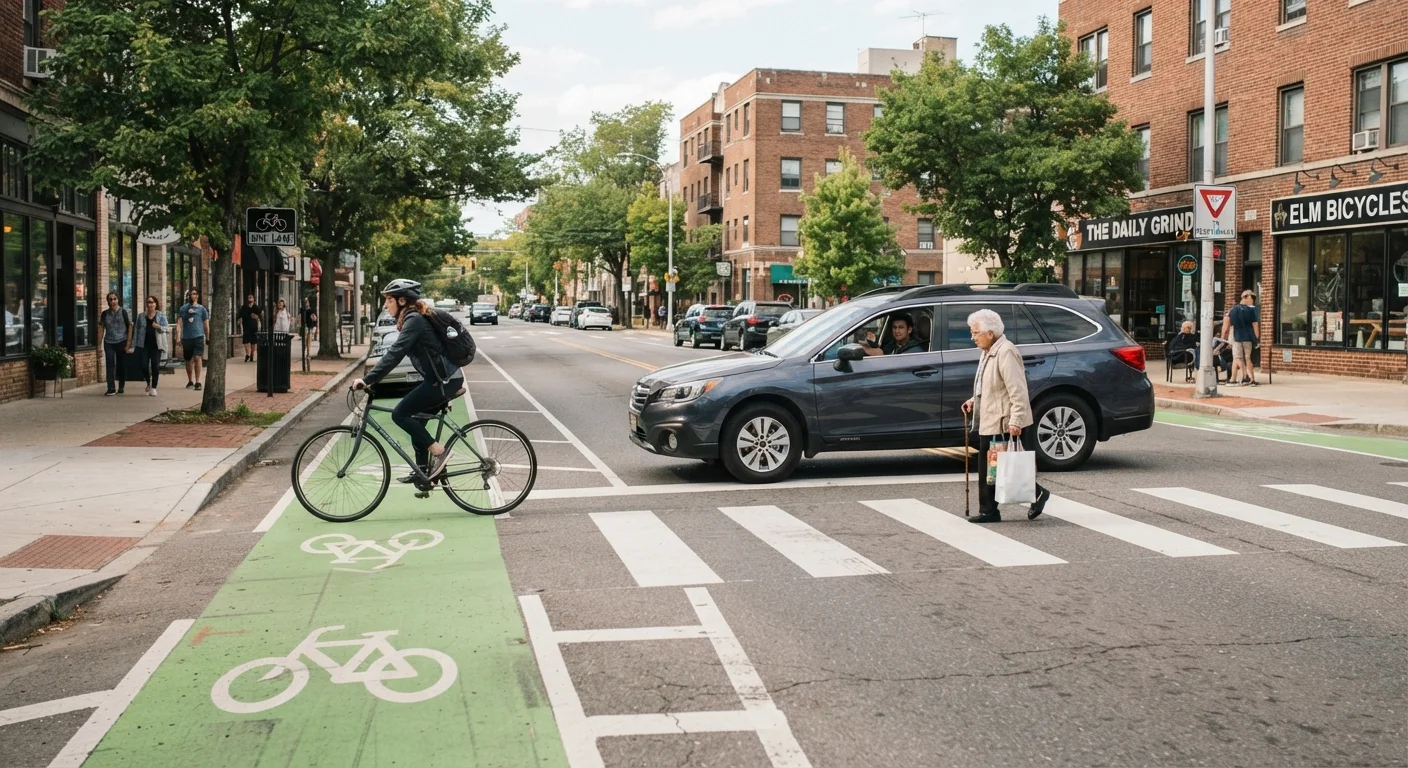
Why Vulnerable Road Users Deserve Extra Attention
Pedestrians and cyclists occupy the same roads as multi-thousand-pound vehicles, but without the structural protection that a car body provides. The consequences of a collision are rarely equal: according to the National Highway Traffic Safety Administration (NHTSA), pedestrians and cyclists consistently account for a disproportionate share of traffic fatalities relative to the miles they travel.
Drivers bear a particularly significant responsibility in these interactions. Speed, attention, and positioning decisions made inside the vehicle have direct and often irreversible consequences for people outside it. Understanding the specific rules and habits that apply when cars share space with bikes and walkers isn't just courteous - in many cases, it's the law.
For a broader look at where drivers most often misread legal obligations, see our guide to right-of-way rules drivers frequently get wrong.
7,388
Pedestrian fatalities in one recent year
According to NHTSA data, pedestrian deaths reached their highest level in four decades in recent reporting years.
1,105
Cyclists killed in traffic crashes annually
NHTSA reports that bicyclist fatalities represent roughly 2% of all U.S. traffic deaths each year.
3 feet
Minimum passing distance required in most states
Over 35 U.S. states have enacted laws requiring drivers to maintain at least three feet of clearance when overtaking a cyclist.
Best Practices for Driving Near Pedestrians
Pedestrian safety isn't just about marked crosswalks. Drivers should apply the following practices any time people on foot are present near the roadway.
Always yield to pedestrians at crosswalks - marked or unmarked
All 50 states require drivers to yield to pedestrians in marked crosswalks, and most extend this to unmarked crosswalks at intersections. Failing to yield is both illegal and a leading cause of pedestrian fatalities.
Reduce speed significantly in areas with high pedestrian activity
Physics makes speed reduction critical: a pedestrian struck at 40 mph faces a dramatically higher fatality risk than one struck at 20 mph. Lower speeds also give drivers more time to react.
Never block the crosswalk when stopping at a red light
When vehicles stop on or past the stop line, pedestrians are forced to walk around the front or rear of the car - putting them in the path of turning vehicles and reducing their visibility.
Maintain a minimum three-foot passing clearance when overtaking a cyclist
Most U.S. states have enacted "three-foot passing laws" requiring drivers to give cyclists at least three feet of lateral space when passing. Less space creates turbulence and significantly increases crash risk.
Check for cyclists before opening your vehicle door
"Dooring" - opening a car door into an approaching cyclist - can throw a rider into traffic and cause serious injury. It is preventable and in many jurisdictions constitutes a traffic violation.
Eliminate distractions in pedestrian-heavy environments
Even a brief glance at a phone at 30 mph covers roughly 132 feet - long enough to miss a pedestrian stepping off a curb. Distraction removes the reaction time that makes evasion possible.
Sharing the Road With Cyclists
Cyclists present a unique challenge because they occupy an in-between space - faster than pedestrians but far more vulnerable than motor vehicles. Their legal status as road users means drivers must adjust behavior accordingly.
Watch for the 'Right Hook' Crash
One of the most common car-bike collisions occurs when a driver turns right at an intersection and cuts across a cyclist traveling straight in the bike lane or on the right side of the road. Before any right turn, check your right mirror and blind spot specifically for cyclists. Yield to any rider who is already in or approaching the intersection before you complete the turn.
The "Dutch Reach" is one practical technique: when parked, open your driver's door with your far hand, which naturally turns your body toward oncoming bike traffic. It's a simple habit that can prevent a serious dooring crash.
Urban and suburban environments often require the most alertness - for guidance on how road type shapes your risk profile, see our piece on rural roads vs. urban streets driving hazards.
Intersections, Crosswalks, and High-Risk Zones
Intersections are where most serious crashes between vehicles, cyclists, and pedestrians occur. Many of these collisions share a common thread: the driver looked but failed to truly see the person in their path - a phenomenon researchers call "looked but failed to see" (LBFTS) error.
Key rules to remember:
- Yield to pedestrians at all marked crosswalks, even mid-block, and at unmarked crosswalks at intersections where no signal is present.
- Treat cyclists like slow-moving vehicles at intersections - do not cut across their path when turning right.
- Check twice before turning left across oncoming bike lanes, as cyclists may approach faster than expected.
Parking lots are another environment where pedestrian encounters are frequent and speeds are low but collisions are still common. Our article on parking lot accident prevention covers the specific hazards at play in those settings.
“The most dangerous combination on the road is speed and inattention. Most crashes involving pedestrians and cyclists are not inevitable - they reflect a failure of the driver to see what was there to be seen.”
— Traffic Safety Researcher, Road Safety Expert, referenced in NHTSA educational materials
Children present additional unpredictability near schools and bus stops. The rules governing school zones and bus stops carry serious legal weight and are worth reviewing separately.
This article is for general informational purposes only and does not constitute legal or safety certification advice. Traffic laws vary by state and locality - always consult your state's driver handbook or a qualified legal professional for guidance specific to your jurisdiction.