Two Terms That Are Often Confused - But Shouldn't Be
Most drivers use "road rage" and "aggressive driving" interchangeably. That's understandable - both involve dangerous behavior on the road, and both are fueled by frustration. But they are legally and behaviorally distinct categories, and understanding the difference matters when it comes to how you react, what to report, and what your own behavior actually constitutes.
The National Highway Traffic Safety Administration (NHTSA) defines aggressive driving as occurring when an individual commits a combination of moving traffic offenses that endangers other persons or property. Examples include speeding, tailgating, weaving between lanes, running red lights, and failure to yield. These are traffic violations - serious ones - but they fall under civil traffic law.
Road rage, by contrast, is a criminal offense in most U.S. states. It involves intentional, deliberate acts meant to intimidate, threaten, or harm another driver or their vehicle. Think: deliberately ramming another car, exiting your vehicle to confront another driver, brandishing a weapon, or throwing objects. Road rage is assault on wheels.
| Criterion | Aggressive Driving | Road Rage |
|---|---|---|
| Legal classification | Traffic violation | Criminal offense |
| Intent | Reckless or negligent | Deliberate and targeted |
| Common examples | Speeding, tailgating, unsafe lane changes | Ramming, threats, brandishing weapons |
| Directed at a specific person? | Not necessarily | Yes - intentionally |
| Potential consequences | Traffic fines, license points, civil liability | Arrest, criminal charges, imprisonment |
| Appropriate response | Increase distance, avoid engagement | Drive to safety, call 911 |
Why the Legal Distinction Changes Everything
The gap between a traffic ticket and a criminal charge is enormous - and so is the appropriate response from you as a driver on the receiving end.
An aggressive driver cutting through traffic may be oblivious, late, or stressed. Their behavior is reckless and dangerous, but it may not be specifically directed at you. The right move is to increase your following distance, avoid eye contact, and let them pass. Don't match their speed or respond with your horn. As our guide on defensive driving techniques explains, anticipating threats and creating space is far safer than reacting to them.
A road rage incident is categorically different. If a driver is pursuing your vehicle, brake-checking you repeatedly, blocking your exit, or making explicit threats, you are dealing with a criminal situation. Do not attempt to negotiate, retaliate, or "win" the confrontation. Drive to a police station, fire station, or populated area. Call 911 when it is safe to do so.
When Aggressive Driving Crosses the Line
State laws vary in how they define and penalize both aggressive driving and road rage. Some states have specific aggressive driving statutes; others prosecute under reckless driving or assault laws. If you're unsure how your state classifies a particular behavior, your state's Department of Motor Vehicles or a licensed attorney can clarify the relevant statutes. The line between a traffic citation and a criminal charge can be crossed quickly on the road.
It's also worth noting that aggressive driving can become road rage. A driver who starts out speeding and tailgating may escalate if they feel challenged or slighted. This is one reason why avoiding retaliatory behavior - even something as seemingly minor as holding your ground or flashing your lights - is so important.
Recognizing Your Own Role
It's easy to frame these issues as something that happens to you. But every driver is capable of aggressive driving, particularly under stress, fatigue, or time pressure. Behaviors like following too closely or making abrupt lane changes are forms of aggressive driving - even when they don't feel intentional in the moment.
Research consistently links certain everyday driving habits - including impatient merging, failure to signal, and excessive horn use - to higher crash risk and elevated conflict with other drivers. If you find your frustration building during a commute, that awareness itself is protective. Slow down, create buffer space, and give yourself permission to arrive a few minutes late rather than take a risk that can't be undone.
80%
Drivers who report aggressive driving
AAA Foundation for Traffic Safety research has found that roughly 80% of drivers report experiencing significant anger, aggression, or road rage behind the wheel at least once in the prior year.
56%
Road rage incidents involving firearms
Everytown for Gun Safety research found that firearms were involved in more than half of road rage incidents studied, highlighting the lethal potential of escalation.
The goal isn't perfection - it's proportionality. Understanding where your behavior falls on the spectrum from ordinary frustration to aggressive driving is the first step toward keeping yourself and others safe.
Practical Takeaways for Everyday Drivers
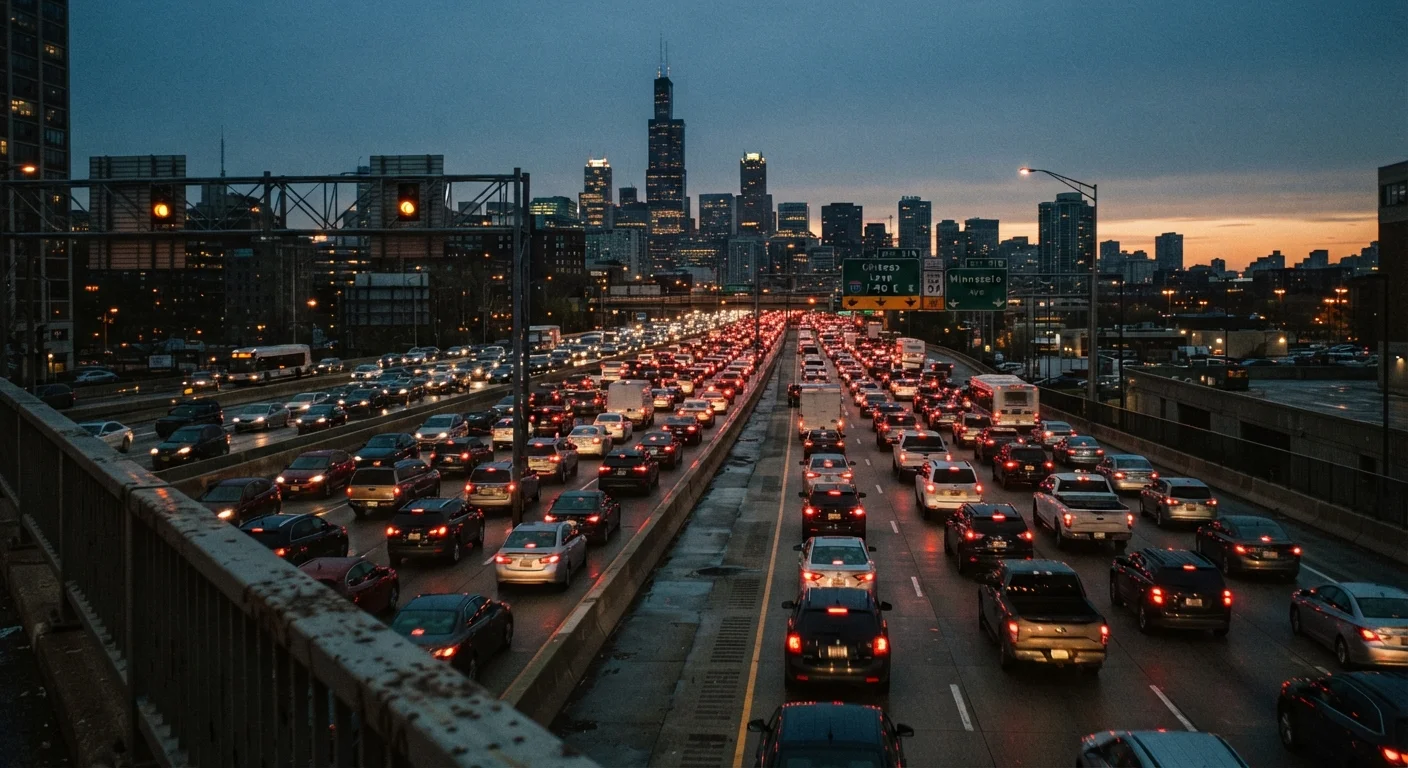
Whether you're navigating a congested urban corridor or a high-speed highway environment, the same principles apply: disengage, create space, and resist the urge to respond in kind.
- Don't make eye contact with an aggressive driver - it can be read as a challenge.
- Avoid retaliatory honking or gestures; these escalate rather than resolve situations.
- If followed or threatened, do not drive home. Head to a public, populated location and contact law enforcement.
- Document what you can safely - license plate, vehicle description, direction of travel - for a police report.
- After the incident, give yourself time to decompress before resuming normal driving.
Knowing the difference between aggressive driving and road rage doesn't just satisfy legal curiosity - it directly informs how you protect yourself and the people around you every time you get behind the wheel.