What Your Brakes Are Trying to Tell You
Your braking system communicates through sounds, sensations, and physical feedback. Most drivers encounter at least one warning sign before a brake problem becomes genuinely dangerous - the challenge is knowing what each signal typically means. This reference guide walks through the most common symptoms and what they generally indicate, so you can act before a minor issue becomes a costly or unsafe one.
For context on how brake inspections fit into your overall service schedule, see routine maintenance intervals every driver should know.
| Typical Brake Pad Lifespan | 25,000-70,000 miles depending on driving habits and pad type (General industry estimate; varies by vehicle and conditions) |
| Brake Fluid Change Interval | Every 2-3 years or per manufacturer recommendation (Varies by vehicle make and model) |
| Key Warning Sounds | Squealing (pad wear), grinding (metal-on-metal contact) |
| Pedal Feel Red Flag | Spongy or low pedal - seek immediate inspection |
| Rotor Condition Check | Thickness measured against manufacturer minimum at each service |
Common Brake Warning Signs Explained
Squealing or Squeaking
A high-pitched squeal when applying the brakes is often caused by a wear indicator - a small metal tab built into the brake pad that contacts the rotor when the pad material wears thin. This is intentional design, meant to alert you before damage occurs. Occasional squealing on cold or damp mornings can be normal, but persistent squealing during everyday braking warrants a professional inspection.
Grinding Noise
A grinding or metal-on-metal sound typically means the brake pad material has worn through completely, allowing the metal backing plate to contact the rotor directly. This causes rotor damage and significantly reduces stopping power. Grinding should be treated as urgent - continued driving in this condition can compromise braking capability.
Pulling to One Side
If the vehicle drifts left or right when you apply the brakes, a stuck caliper, uneven pad wear, or a collapsed brake hose may be responsible. A caliper that doesn't release properly can also cause the brake to drag, generating heat and accelerating wear unevenly. Pulling under braking is different from general steering pull, which may relate to tire pressure or alignment - see tire care and alignment habits for comparison.
Vibrating or Pulsating Pedal
A pedal that pulses or a steering wheel that shudders during braking often points to warped rotors. Rotors can warp from repeated heavy braking that generates excess heat, or from uneven torquing of wheel lug nuts. The pulsation you feel corresponds to the rotor's uneven surface passing under the brake pad.
Soft or Spongy Brake Pedal
A pedal that sinks closer to the floor than usual, or that feels mushy underfoot, may indicate air in the brake lines or a brake fluid leak. Hydraulic brake systems depend on incompressible fluid to transfer force - air in the line introduces compressibility that reduces pedal firmness. This symptom requires immediate professional attention.
Brake Warning Light
The brake warning light on your dashboard can indicate low brake fluid, an engaged parking brake, or a detected system fault depending on the vehicle. Never ignore it. Dashboard warning lights explained provides a broader reference for interpreting these signals.
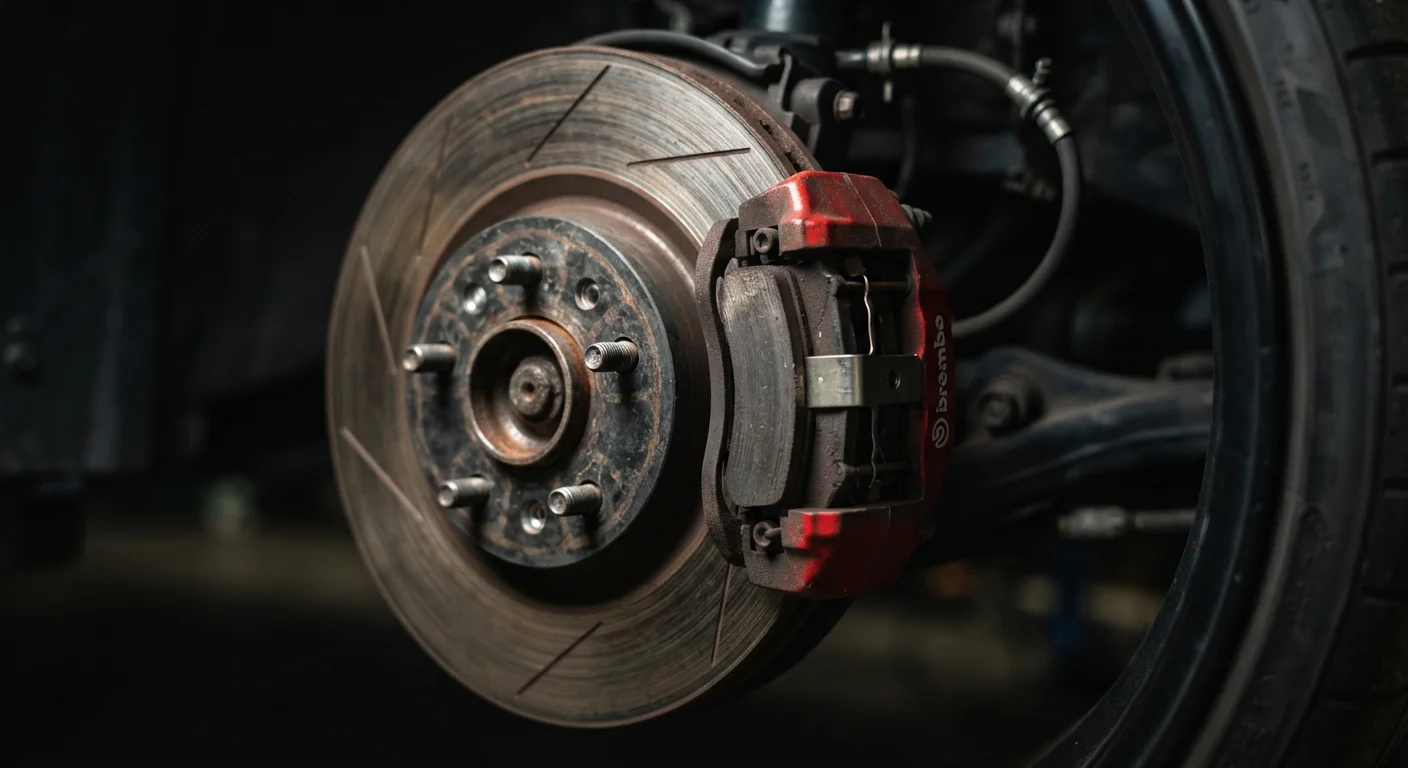
Brake Pad
A friction material pressed against the rotor to slow the vehicle. Pads wear down over time and must be replaced before the material is exhausted.
Rotor (Brake Disc)
The metal disc attached to the wheel hub that the brake pads clamp against to create stopping friction. Rotors can warp, score, or wear below minimum thickness.
Caliper
The hydraulic clamp that squeezes the brake pads against the rotor when you press the pedal. A stuck caliper can cause uneven braking or brake drag.
Wear Indicator
A small metal tab embedded in the brake pad designed to produce a squealing sound when the pad is near the end of its usable life.
Brake Fluid
The hydraulic fluid that transfers force from the brake pedal through the system to the calipers. Low or contaminated fluid can reduce braking effectiveness.
Brake Fade
A temporary reduction in braking power caused by excessive heat building up in the brake components, most commonly from repeated hard stops.
When to See a Mechanic - and What to Expect
Any symptom beyond occasional cold-morning squealing should be evaluated by a qualified mechanic. Brake work typically involves inspecting pad thickness, rotor condition, caliper function, brake fluid level and quality, and brake lines. A mechanic will measure rotor thickness against the manufacturer's minimum specification to determine whether resurfacing or replacement is needed.
DIY Inspection Has Limits
You can visually check brake pad thickness through the wheel spokes on many vehicles - if you see less than a quarter-inch of pad material, it's time for service. However, rotor condition, caliper function, and fluid quality require hands-on evaluation by a qualified mechanic. Never attempt brake disassembly without proper training, tools, and safety equipment.
If you're evaluating a used vehicle and notice brake symptoms during a test drive, those deserve serious attention. Our guide to test drive red flags buyers often overlook covers how to evaluate brake feel alongside other mechanical concerns.
Braking performance is also closely linked to overall vehicle control. Understanding how your car responds at its limits - such as during a skid - is part of being a prepared driver. For that context, see the difference between skidding and spinning out.