How the Color System Works
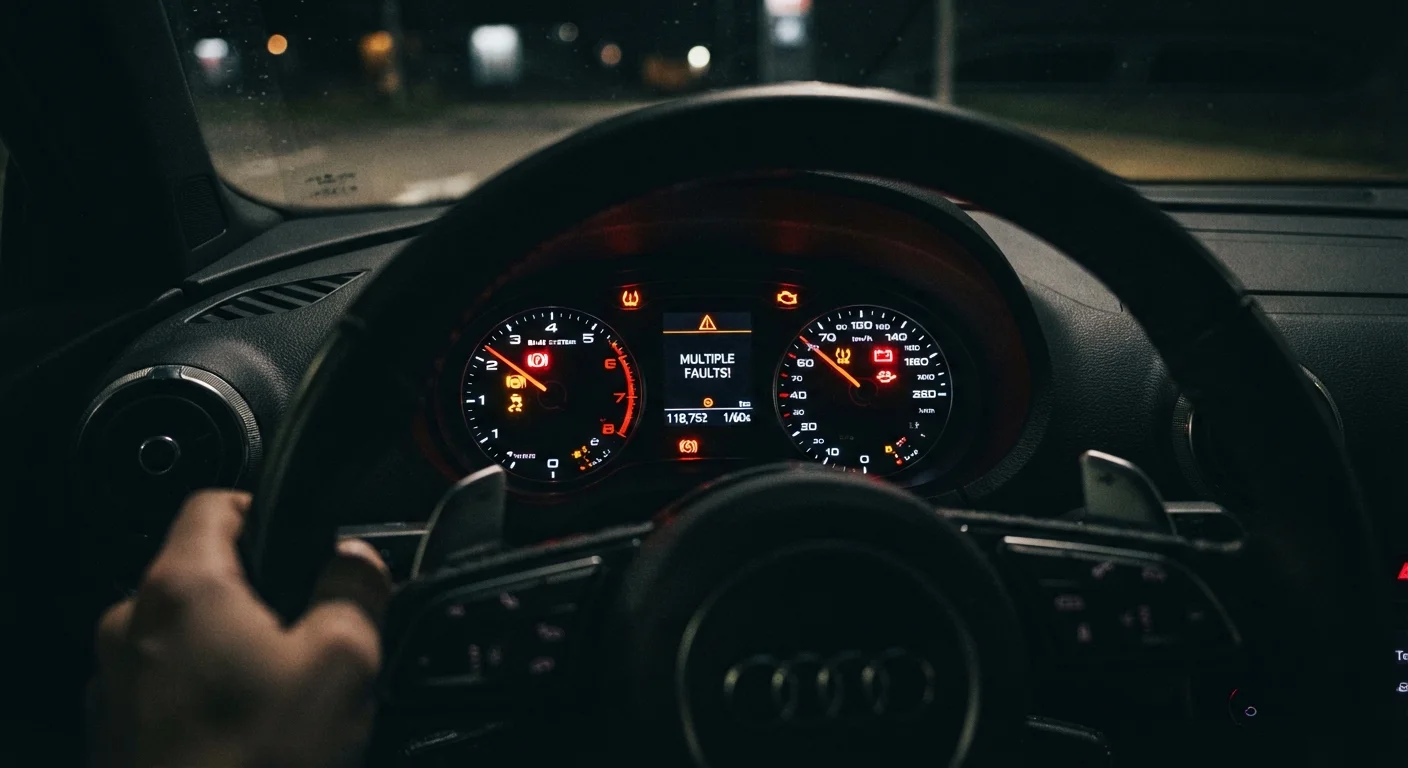
Modern vehicles use a standardized color hierarchy for dashboard warning lights that gives drivers an immediate sense of urgency - before they even know what the symbol means.
| Color coding: Red lights | Require immediate attention - stop driving when safe |
| Color coding: Amber/Yellow lights | Service needed soon - monitor and schedule repair |
| Color coding: Green/Blue lights | Informational only - system is active and normal |
| TPMS requirement | Mandatory on all new U.S. passenger vehicles since 2008 (NHTSA Federal Motor Vehicle Safety Standard No. 138) |
| OBD-II standard adopted | Required on all U.S. cars and light trucks from 1996 onward (U.S. EPA regulation) |
| Check engine light triggers | Hundreds of possible fault codes - scan tool required to identify |
Red lights signal conditions that can cause immediate harm to the vehicle or driver. If a red warning light appears, pull over safely as soon as possible and do not continue driving until the cause is understood. Amber or yellow lights indicate a fault that needs attention but is generally not an immediate emergency - schedule a service appointment soon. Green and blue lights are confirmatory: they tell you a system (like high beams or cruise control) is currently active.
This color logic is consistent across most manufacturers, though individual symbols vary. For a deeper look at how visual signals guide behavior on the road, see our guide to traffic signals beyond red, yellow, and green.
Red Lights: Stop and Act
These warning lights indicate conditions serious enough to warrant pulling over promptly and contacting a mechanic or roadside assistance.
- Oil Pressure (red oil can icon): Low or lost oil pressure can destroy an engine within minutes. Stop driving immediately. Do not confuse this with an oil life reminder, which is amber.
- Engine Temperature (thermometer in liquid): The engine is overheating. Continuing to drive risks warped cylinder heads and major internal damage. Pull over, turn off the engine, and allow it to cool before investigating.
- Battery / Charging System: The electrical system is not charging properly. The vehicle may continue running temporarily on battery reserve, but electrical systems will begin failing. Head toward a service facility.
- Brake System Warning: Could signal low brake fluid, a hydraulic failure, or that the parking brake is engaged. If the parking brake is off and the light remains on, treat this as urgent. For related symptoms like squealing or pulling, our article on brake warning signs covers what each symptom typically means.
Malfunction Indicator Lamp (MIL)
Commonly called the 'check engine light,' the MIL signals that the vehicle's onboard diagnostic system has detected a fault in the engine or emissions system. The fault is stored as a diagnostic trouble code that a technician can read with a scan tool.
OBD-II
On-Board Diagnostics II is the standardized system used in most vehicles sold in the U.S. since 1996. It monitors engine, transmission, and emissions components and stores fault codes when problems are detected.
TPMS
Tire Pressure Monitoring System - a sensor-based system required on all new U.S. passenger vehicles since 2008 that alerts the driver when one or more tires fall significantly below recommended inflation pressure.
Charging System
The network of components - primarily the alternator and battery - responsible for generating and storing electrical power. A charging system warning indicates the battery may not be receiving adequate charge from the alternator.
ABS
Anti-lock Braking System - a safety feature that prevents wheels from locking up during hard braking, helping drivers maintain steering control. An illuminated ABS light means the system may be inactive, though standard braking function typically remains.
Coolant Temperature
Engine coolant absorbs heat from the engine and dissipates it through the radiator. A high coolant temperature warning means the engine is running dangerously hot, which can cause severe internal damage if driving continues.
Amber Lights: Schedule Service Soon
Amber lights don't demand you pull over immediately, but they should not be ignored for weeks. Delayed attention often turns a minor repair into a major one.
- Check Engine / MIL (engine outline icon): Triggered by hundreds of possible OBD-II fault codes - from a loose gas cap to a failing catalytic converter. A steady light typically means schedule service soon; a flashing check engine light suggests an active misfire that can damage the catalytic converter and warrants prompt attention.
- TPMS (tire with exclamation point): One or more tires are significantly underinflated. Check and adjust tire pressure as soon as practical. Note that TPMS is a backup alert - regular manual pressure checks remain good practice.
- ABS Warning: The anti-lock braking system has detected a fault. Standard braking usually remains functional, but the ABS safety net may be inactive. Get it inspected before your next long trip.
- Traction Control / Stability Control: If illuminated continuously (not just flashing during wheel slip), the system may be disabled or faulty. Deactivating these systems increases skid risk in poor conditions.
- Transmission Temperature: The transmission fluid is running hot, often from towing, stop-and-go traffic, or low fluid. Allow the vehicle to cool and check fluid level when safe.
Your Owner's Manual Is the Definitive Reference
Warning light symbols and their meanings can vary between manufacturers and model years. While this guide covers common standards, always consult your vehicle's owner's manual for the exact definitions specific to your car. If you don't have a physical copy, most manufacturers provide digital versions on their websites.
Staying on top of amber warnings ties directly into your broader maintenance schedule. See our routine maintenance intervals reference for service timing guidance across common vehicle systems.
What To Do When a Light Comes On
The right response depends on the color and the symbol. As a general framework:
- Identify the color first. Red means stop soon; amber means monitor and schedule service.
- Check your owner's manual. Confirm the symbol's exact meaning for your vehicle before assuming.
- Note any accompanying symptoms. Unusual sounds, smells, or handling changes alongside a warning light give a mechanic valuable diagnostic context.
- Use an OBD-II reader for the check engine light. Inexpensive scan tools, available at auto parts retailers, can display the stored fault code and help you understand the issue before a shop visit.
- Don't ignore a flashing light. A flashing check engine light or any flashing red light is the vehicle's way of signaling an active, potentially damaging condition - not a routine reminder.
Prompt attention to warning lights is one of the most effective ways to avoid larger, more expensive repairs down the road. For a broader view of vehicle ownership costs and planning, the Saving & Debt hub offers practical financial guidance that applies to unplanned repair expenses too.