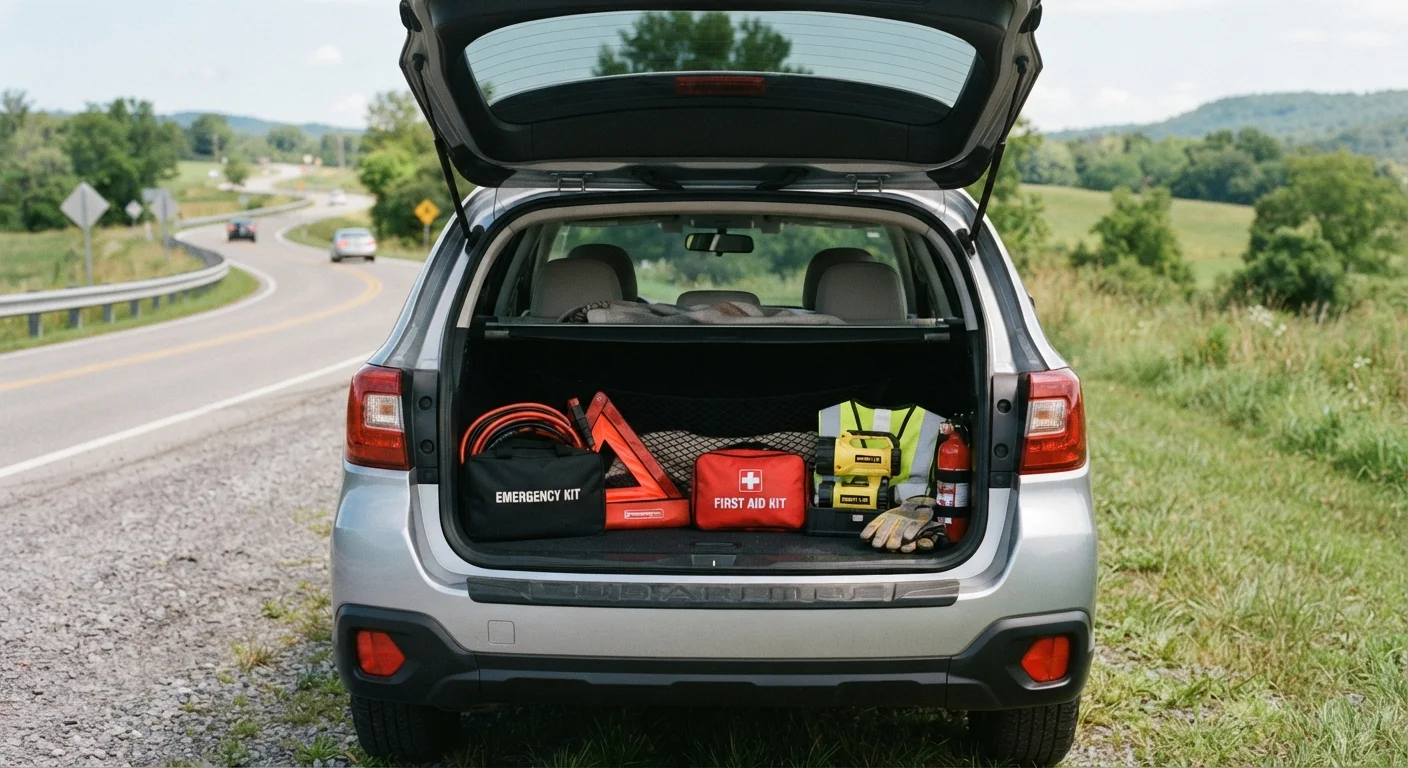
Why Every Driver Needs a Roadside Kit
A tire blowout on a dark highway. A dead battery in a parking garage. An overheated engine miles from the nearest exit. These aren't edge cases - they're everyday realities for American drivers. According to estimates from the automotive services industry, tens of millions of roadside service calls are made each year in the United States, and a significant share involve situations where a prepared driver could have managed safely while waiting for help - or resolved the issue independently.
Having the right gear in your vehicle doesn't require a large investment or mechanical expertise. It simply means thinking ahead. Whether you're commuting across town or heading out on a longer drive - see our road trip safety checklist for a full pre-drive walkthrough - the items below are the ones worth keeping on hand. Store them in a durable bag or bin in your trunk so they're easy to locate and grab under stress.
Roadside Assistance Memberships Have Limits
Many drivers rely on roadside assistance through their auto insurer, automaker, or a third-party membership plan. These services are valuable, but response times can vary widely based on location and demand. In rural areas or during peak times such as winter storms, waits can stretch to several hours. On-hand supplies bridge that gap and keep you safer while you wait.
The Essential Items
Jumper Cables or a Jump Starter Pack
A dead battery is one of the most common reasons drivers call for roadside assistance. A sturdy set of jumper cables (at least 12 feet long, with 4-6 gauge wire) allows another driver to help you restart your vehicle. If you'd prefer not to depend on a passing motorist, a portable lithium jump starter pack lets you jump-start your car independently - no second vehicle needed. These compact devices have become more affordable and reliable in recent years.
A portable jump starter lets you restart your vehicle without depending on another driver's help.
Reflective Warning Triangles or Road Flares
Visibility is your first line of defense when you're stopped on or near a roadway. Reflective triangles are reusable, weatherproof, and easy to deploy - place them 10, 100, and 300 feet behind your vehicle to warn approaching traffic. Traditional road flares burn bright but are single-use and require careful handling. LED flares offer a middle ground: reusable, visible in daylight, and safer to store. Whichever type you carry, using them is critical, especially at night or on high-speed roads.
Visibility warnings placed behind your vehicle can prevent a breakdown from becoming a collision.
A Reliable Flashlight and Extra Batteries
Breakdowns don't wait for daylight. A bright, durable flashlight helps you assess what's happening under the hood, signal for help, and navigate safely around your vehicle at night. LED flashlights are energy-efficient and long-lasting. Keep a spare set of batteries in the kit, or choose a model with a USB charging option. Avoid relying solely on your phone's flashlight - you'll want to preserve that battery for communication.
Never rely solely on your phone's flashlight - preserve battery life for calling for help.
A Basic First Aid Kit
Minor injuries can happen during any breakdown - from a scrape changing a tire to a cut from under-hood work. A compact first aid kit should include adhesive bandages in multiple sizes, gauze pads, antiseptic wipes, medical tape, and nitrile gloves. Pre-assembled vehicle first aid kits are widely available and designed to fit in a glove compartment or small bag. Check supplies periodically, as adhesives and sterile packaging degrade over time. For serious injuries, a kit is no substitute for professional medical care - call 911 immediately.
A compact first aid kit handles minor injuries, but always call 911 for anything serious.
A Fully Inflated Spare Tire, Jack, and Lug Wrench
Most vehicles come with these from the factory, but many drivers haven't verified they're in usable condition. Check your spare tire's pressure at least twice a year - a flat spare is useless when you need it most. Compact "donut" spares are for temporary use only and are typically rated for speeds under 50 mph and limited mileage. Familiarize yourself with your vehicle's jack points before you need them; your owner's manual will specify the correct locations to avoid chassis damage.
Check your spare tire's pressure twice a year - a flat spare offers no help at all.
Water and a Basic Food Supply
If you're stranded in a remote area or during extreme weather, water becomes a priority quickly. Carry at least one liter of water per person - more in summer or desert climates. A small supply of non-perishable snacks (energy bars, nuts) can sustain you during a long wait. Replace water bottles periodically, particularly if stored in a hot trunk, where high temperatures can affect plastic containers over time.
Water is your most critical supply if you're stranded in heat or a remote location.
A Multi-Tool or Basic Toolkit
A quality multi-tool - combining pliers, knife, screwdrivers, and wire cutters - handles a surprising range of minor fixes and preparatory tasks. Supplementing it with a small toolkit (adjustable wrench, zip ties, duct tape, and bungee cords) gives you additional capability. These items won't replace a mechanic, but they can help you manage small problems or secure a loose component safely until professional help is available.
Duct tape and zip ties have resolved more roadside problems than most drivers would expect.
A Phone Charger or Power Bank
Your smartphone is your communication lifeline during a breakdown - for calling roadside assistance, sharing your location, or looking up guidance. A car charger that works while the engine is running is useful, but a fully charged power bank ensures you stay connected even if the car won't start. Keep the power bank charged and include it in your regular kit maintenance checks.
A charged power bank keeps you connected even when your vehicle's power is completely out.
Review Your Kit Every Season
Set a recurring calendar reminder every three months to open your kit and check the basics: battery charge on your jump starter and power bank, flashlight battery life, first aid supply integrity, and spare tire pressure. A few minutes of inspection ensures your kit is actually ready when you need it - not just present.
Maintain What You Pack
Assembling a kit is a one-time task; maintaining it is an ongoing one. Inspect your kit every three to four months. Replace batteries, check that flares or warning triangles are undamaged, and restock any first aid supplies you've used. Extreme heat and cold - both common across much of the U.S. - can degrade certain items, especially adhesive bandages and battery-powered devices.
If you live in a region with harsh winters, consider supplementing your year-round kit with cold-weather extras. Our winter driving preparation guide covers what most drivers miss when getting their vehicle ready for cold months. And while physical preparedness matters, don't overlook the financial side: a car emergency fund can cover repair costs that no kit can handle. Together, these layers of readiness - equipment, knowledge, and savings - give you a genuinely confident foundation for vehicle ownership. For a broader look at driving and road safety, explore our full resource hub.