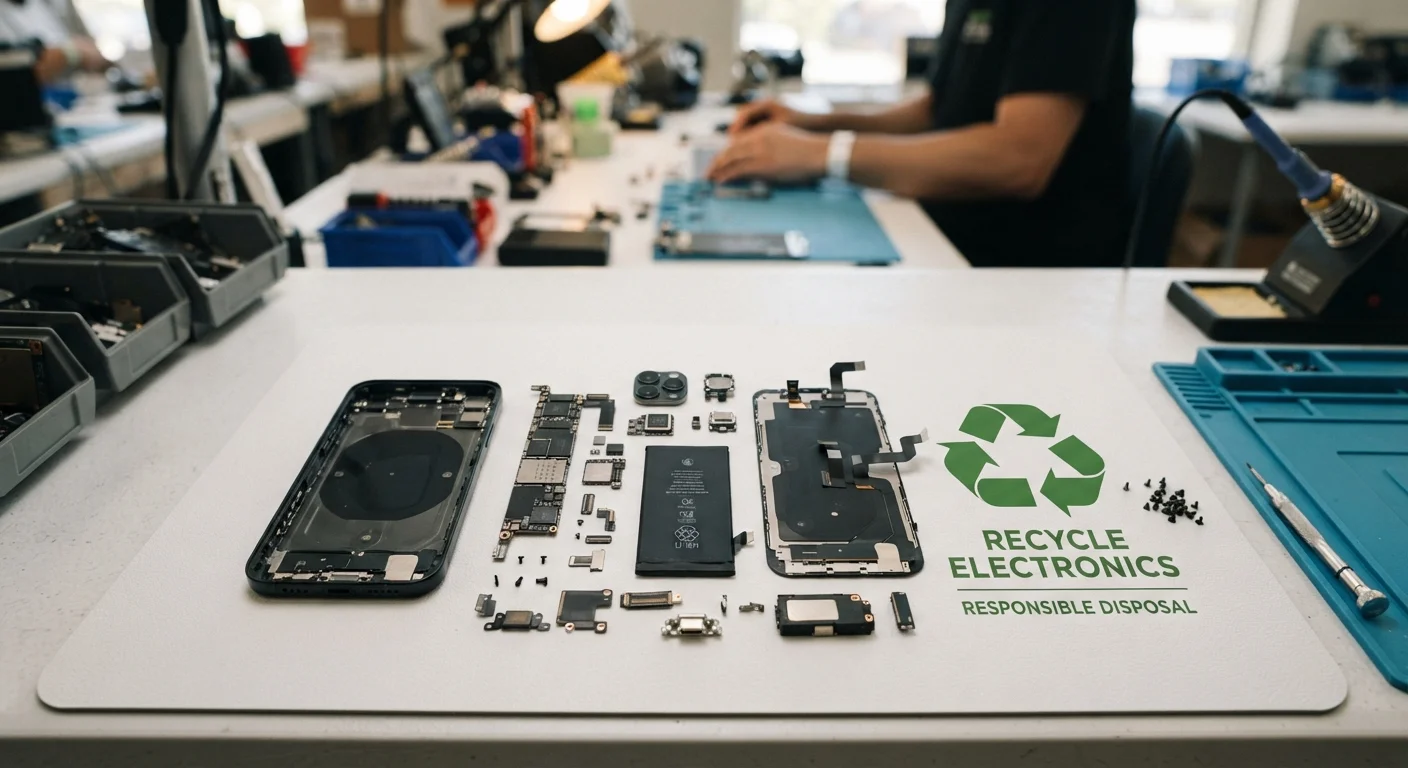
Where Traded-In Phones Actually Go
When you hand a phone to a trade-in program - whether through a carrier, a manufacturer, or a third-party service - the device doesn't simply disappear into a warehouse. It enters a graded processing pipeline. Staff or automated systems assess the phone's condition and sort it into one of a few categories: resalable as-is, in need of refurbishment, suitable for parts harvesting, or destined for material recycling.
Phones in good cosmetic and functional condition are the most valuable. After data wiping and light reconditioning, they're resold through certified pre-owned channels, secondary marketplaces, or exported to regions where demand for mid-range devices is high. This is the outcome trade-in programs are built around - refurbishment extends a device's useful life and reduces the environmental cost of manufacturing new hardware.
Devices with cracked screens, degraded batteries, or other damage may be partially refurbished, with working components harvested to repair other phones. This parts economy is a significant segment of the used-phone industry. To understand how this fits into a phone's broader journey, see the full smartphone life cycle from manufacturing through end of life.
~416,000
Cell phones discarded per day in the U.S.
The EPA has estimated that Americans discard hundreds of thousands of mobile devices daily, the majority of which could be recycled or refurbished.
17 grams
Gold recoverable per metric ton of circuit boards
According to the United Nations University, e-waste contains gold concentrations significantly higher than typical gold ore - making recovery economically viable.
Less than 20%
Global e-waste formally recycled
The Global E-waste Monitor has reported that only a small fraction of the world's electronic waste is formally collected and recycled through documented, safe processes.
How Phone Recycling Programs Recover Materials
When a device truly can't be refurbished or parted out, it goes to an e-waste recycler. The process is more sophisticated than crushing and dumping. Certified facilities systematically disassemble phones, separating the battery, display, circuit board, and housing. Each stream is processed differently.
Circuit boards are particularly valuable. They contain trace amounts of gold, silver, palladium, and copper - materials that can be smelted and re-entered into electronics manufacturing. Cobalt and lithium from batteries are also recoverable, which matters given the supply-chain importance of these materials for future battery production.
The environmental stakes are real: the U.S. Environmental Protection Agency has noted that improper disposal of electronics can leach toxic substances - including lead and mercury - into soil and groundwater. Certified recyclers operating under R2 or e-Stewards standards must document their material streams and avoid shipping hazardous waste to countries with weaker environmental protections.
Certification Standards to Look For
Not all recyclers operate under the same standards. R2 (Responsible Recycling) and e-Stewards are the two leading U.S. certification frameworks for e-waste processors. Both require audited data destruction, safe handling of hazardous materials, and restrictions on exporting waste to countries without adequate environmental controls. You can search for certified facilities on the R2 Solutions and e-Stewards websites.
Protecting Your Data Before You Hand Over Any Device
The single most important step before a trade-in or recycling drop-off is removing your personal data. This means more than a quick delete of photos - it requires a methodical process.
- Back up your data. Transfer contacts, photos, apps, and settings to your new device or cloud service. The guide to setting up a new smartphone without losing your old data covers this process in detail for both Android and iOS.
- Sign out of all accounts. Remove your Apple ID or Google account, and sign out of banking, email, and social apps. On iPhones, this also disables Activation Lock.
- Encrypt, then factory reset. Modern smartphones encrypt storage by default, but verifying encryption before resetting adds a layer of protection. A factory reset then wipes the decryption keys, making remaining data practically unreadable.
- Remove physical items. Take out your SIM card and any microSD card - these are not wiped by a factory reset.
Remove Your SIM Card Before Any Trade-In
A factory reset does not erase a SIM card or a microSD card - both must be physically removed before handing over your device. Your SIM card can be kept for use in your new phone or returned to your carrier. Treat any microSD card as you would a USB drive containing sensitive files.
Choosing Between Trade-In Programs and Independent Recyclers
Carrier and manufacturer trade-in programs are convenient and often offer the most straightforward credit toward a new device. However, they're designed to maximize the resale value of phones they accept, which means older or heavily damaged devices may receive minimal credit or be declined outright.
Independent e-waste recyclers and municipal take-back events accept a wider range of devices, including non-functional ones. If your phone has reached the end of its useful life, a certified recycler may be the more appropriate route than a trade-in program that will simply reject it.
Nonprofit refurbishers are a third option worth considering. Organizations that refurbish devices for low-income users or schools extend a phone's life while serving a social purpose. Many accept donations of working older models directly.
Whatever path you choose, confirm the program's data-destruction policy before handing anything over. Reputable programs will have a documented process - ask for it if it isn't readily available on their website.