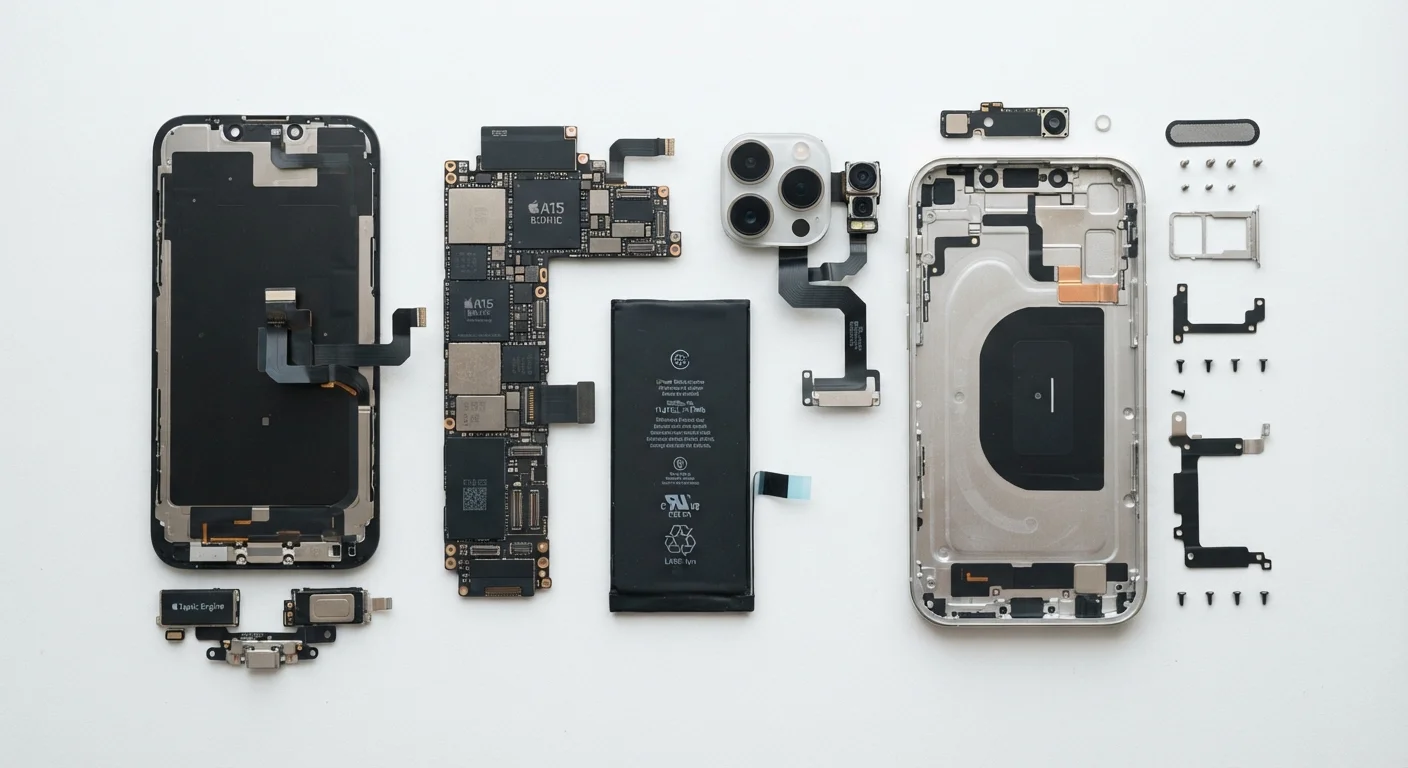
Stage One: Raw Materials and Manufacturing
A smartphone's life begins not in a factory, but in mines scattered across the globe. The average device contains more than 60 distinct elements from the periodic table. Cobalt - critical to lithium-ion batteries - is mined predominantly in the Democratic Republic of Congo. Rare earth elements used in speakers, vibration motors, and camera magnets come largely from processing facilities in China. Copper, aluminum, gold, and tin travel through additional supply chains before converging at component manufacturers.
Once raw materials are refined, they are shaped into chips, screens, camera sensors, and circuit boards - often at different facilities across Asia - before final assembly. This manufacturing phase is the most energy-intensive part of the entire life cycle. Studies using Life Cycle Assessment methodology consistently find that manufacturing alone can account for 70-80% of a smartphone's total greenhouse gas emissions over its entire life. This counterintuitive fact underscores why using a device longer is so environmentally significant.
70-80%
Share of lifetime emissions from manufacturing alone
Life Cycle Assessment studies consistently attribute the majority of a smartphone's total carbon footprint to its production phase, not its years of use.
~2-3 years
Average U.S. smartphone upgrade cycle
Industry research indicates American consumers replace their smartphones roughly every two to three years, though devices often remain functional well beyond that window.
53.6M tonnes
Global e-waste generated annually
According to the Global E-waste Monitor, electronic waste generation reached record levels in recent years and continues to grow faster than formal recycling capacity.
Stage Two: Distribution and First Use
After assembly, smartphones are packaged and shipped - typically by sea freight and then ground transport - to distributors and retailers worldwide. Transportation contributes a comparatively modest share of lifetime emissions, but the logistics network spans dozens of countries.
In consumers' hands, the use phase is where most people interact with the life cycle directly. Charging electricity accounts for ongoing energy use, though modern smartphones are far more energy-efficient than earlier generations. How a device is treated during this phase dramatically shapes how long stage two lasts. Screen protectors, cases, and thoughtful charging habits all extend functional life.
Battery health is one of the most critical factors determining when a phone feels "old." Lithium-ion batteries degrade with each charge cycle, gradually holding less charge. See our guide to keeping your phone battery healthy for practical habits that slow this process and help your device stay useful longer.
Extend Your Phone's Life With Simple Habits
Avoid charging your phone to 100% every night or letting it drain to 0% regularly - keeping the battery between roughly 20% and 80% reduces long-term degradation. Keep the device cool, use a protective case, and install software updates promptly. These habits cost nothing and can add meaningful months or years to a phone's functional life.
Stage Three: Aging, Repair, and the Upgrade Decision
Smartphones don't fail all at once - they slow gradually. Software updates grow heavier over time, batteries hold less charge, and cameras no longer match newer models. Manufacturers typically commit to security updates for three to seven years depending on the platform, and once those updates end, continued use carries security risks.
Before deciding to replace a device, repair is often a viable and lower-impact option. Battery replacement, screen repairs, and charging port fixes can meaningfully extend a phone's life at a fraction of replacement cost. Knowing when repair makes sense versus when a device has genuinely reached the end of its useful life involves weighing repair cost against performance limitations. Our article on signs it's time to replace your smartphone walks through those signals clearly.
When the upgrade decision is made, planning the transition carefully matters. Moving your data to a new phone without losing contacts, photos, or settings is straightforward with the right preparation.
Software Support Timelines Vary Widely
How long a manufacturer commits to delivering security updates varies significantly by platform and device tier. Some manufacturers now promise five to seven years of updates; others have historically offered fewer. Once security updates end, continued use of a device on unsecured networks carries increasing risk. Check your manufacturer's published support policy when evaluating whether to repair or replace an aging device.
Stage Four: End of Life - Disposal, Donation, and Recycling
Electronic waste is one of the fastest-growing solid waste streams globally. When smartphones end up in landfills, hazardous materials including lead, cadmium, and lithium can leach into soil and groundwater. At the same time, the valuable metals inside - gold, silver, copper, rare earths - are simply lost.
Responsible end-of-life options exist on a spectrum. Donating or reselling a working phone extends its useful life for another user, which is the highest-value environmental outcome. Manufacturer and carrier take-back programs are widely available. Certified e-waste recyclers - identifiable by e-Stewards or R2 certification - disassemble devices and recover materials for reuse in new products.
Understanding the full arc from mine to landfill - or mine to recycler - changes how a smartphone looks as a consumer product. It is not simply a piece of tech to be swapped out on a two-year cycle; it represents a significant draw on global resources. Treating it accordingly, through care during use and responsible disposal at the end, is one of the more impactful choices everyday consumers can make in the electronics category.