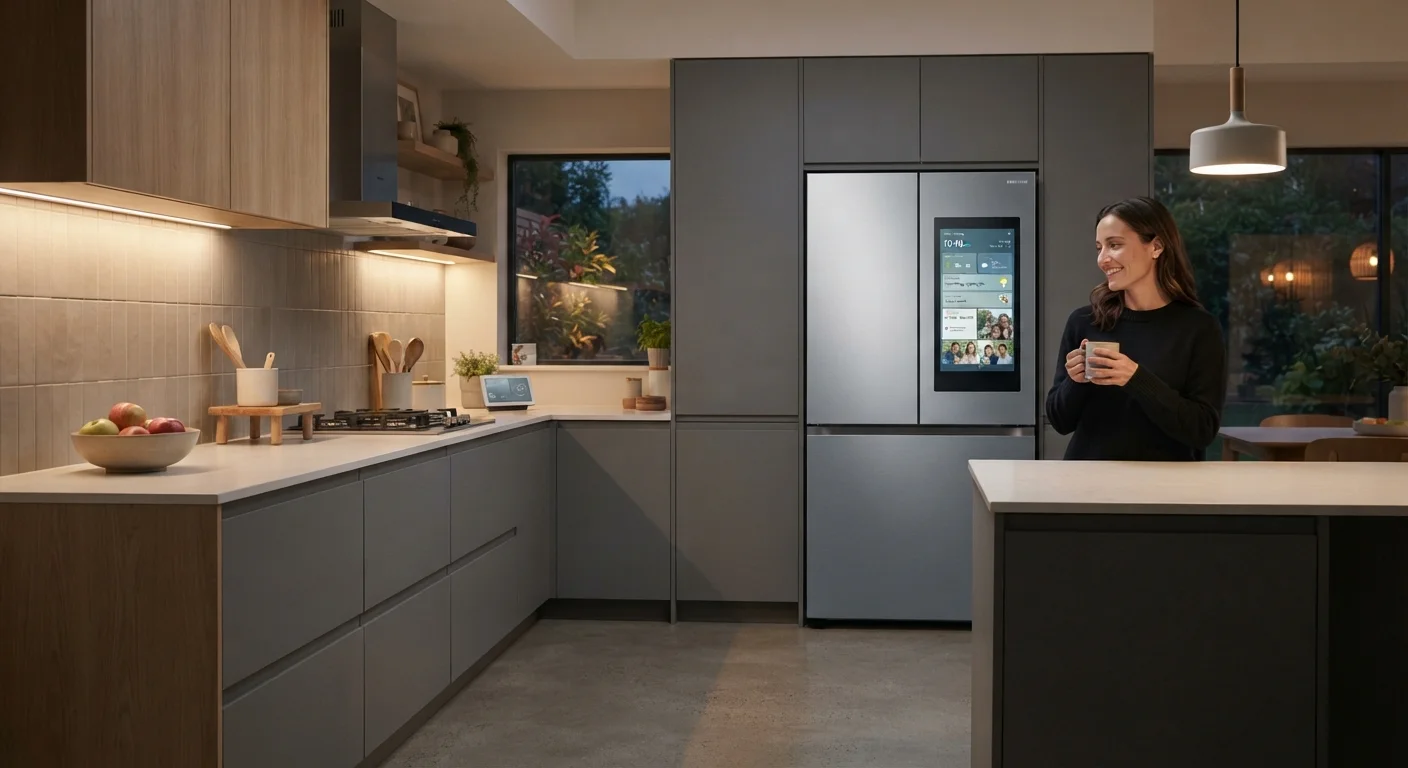
Why 'Smart' Is More Marketing Than Specification
Walk through any appliance aisle and you'll find the word 'smart' on everything from refrigerators to air fryers. But unlike terms such as 'Energy Star certified' or 'HEPA-filtered,' 'smart' carries no standardized technical definition. A manufacturer can apply the label to a product that simply connects to a Wi-Fi network with minimal additional capability - or to one that learns usage patterns and integrates into a fully automated home.
This ambiguity puts the burden on the consumer to look past the label. The first question worth asking isn't 'Is it smart?' but rather: what does it actually do that a standard appliance doesn't?
Connectivity Protocol Affects More Than You'd Think
The wireless technology a smart appliance uses - Wi-Fi, Bluetooth, Zigbee, or Z-Wave - affects its range, battery drain (for battery-powered devices), reliability, and which hubs or platforms it can integrate with. Wi-Fi is the most common but draws more power; Zigbee and Z-Wave form mesh networks that can be more reliable for whole-home setups. Check how smart home hubs work to understand how these protocols interact with centralized control systems.
For a deeper look at how connected devices work together - and why platform compatibility matters - see our guide on smart home ecosystems.
The Three Tiers of 'Smart' Capability
In practice, smart appliances tend to cluster into three functional tiers, and knowing which tier a product sits in helps calibrate expectations.
Tier 1 - Remote Control Only
The most basic tier adds Wi-Fi connectivity and a companion app, allowing you to control the appliance from your phone. This can be genuinely useful - starting a dishwasher cycle from the couch, for example - but it offers limited value if you're always near the appliance anyway. There is no automation; you are simply using your phone as a remote.
Tier 2 - Scheduling and Alerts
A step up, these appliances allow you to set timers, receive status notifications, and sometimes integrate with voice assistants. A washing machine that alerts you when a cycle is done, or a thermostat that follows a programmed schedule, falls here. This tier tends to deliver the most practical day-to-day benefit for the broadest range of households.
Tier 3 - Adaptive and Integrated Intelligence
The most capable tier includes appliances that learn from usage patterns, respond to external data (such as utility pricing or weather), or operate as part of coordinated automations with other devices. These features genuinely change how a home functions - but they also introduce the most complexity and the strongest dependency on ongoing software support.
57%
Smart appliance owners who rarely use advanced features
Consumer surveys consistently find that a majority of smart appliance owners revert to basic controls and rarely engage with app-based or automated features after the initial setup period.
3-5 years
Typical software support window for smart appliances
Industry observers note that many manufacturers provide active app and firmware support for smart appliances for roughly three to five years before features are deprecated or cloud services are retired.
Matter
Cross-brand interoperability standard now supported by major platforms
The Matter protocol, backed by Apple, Google, Amazon, and others, is designed to allow smart home devices from different manufacturers to work together, reducing ecosystem lock-in for consumers.
What to Actually Evaluate Before Buying
Once you understand the tier, several practical factors determine whether a smart appliance will add value to your household specifically.
- Ecosystem compatibility: Does it work with the voice assistant or smart home platform you already use? A device locked to a single manufacturer's app can become a silo in an otherwise connected home. The Matter standard is gradually reducing this fragmentation.
- Local vs. cloud dependency: Appliances that rely entirely on a manufacturer's cloud servers stop functioning as smart devices if that service is discontinued. Understanding this risk is part of evaluating long-term value - our article on the longevity problem with smart devices explores this in detail.
- Setup and maintenance complexity: Smart features require ongoing attention - app updates, network troubleshooting, occasional re-pairing after router changes. Factor in whether that overhead suits your household.
- Actual use-case fit: The most honest question is whether the connected features solve a real friction point in your daily routine, or whether they simply duplicate what the appliance already does with physical controls.
Read the Spec Sheet, Not the Box Copy
Marketing copy on appliance packaging rarely specifies which platform the device supports, whether it requires a hub, or whether core features need an active internet connection. Before purchasing, look up the product's technical specifications or companion app reviews - real user feedback often surfaces limitations that promotional materials omit. This is especially important for appliances you intend to integrate with an existing smart home setup.
When Smart Features Genuinely Earn Their Keep
Smart features tend to deliver the clearest value in situations where timing, monitoring, or coordination with other systems would otherwise require active effort. A smart thermostat that adjusts based on whether anyone is home reduces energy use without requiring daily input. A connected washer that delays its cycle to run during off-peak electricity hours can have a meaningful impact over time for households on time-of-use utility pricing.
Conversely, features like in-app recipe suggestions on a smart oven or inventory tracking on a refrigerator camera often sound compelling but see limited real-world use once the novelty fades.
For a practical breakdown of where connected devices genuinely help versus where they add friction, see our room-by-room guide to home technology value. And if you're planning to expand beyond a single appliance, understanding common smart home setup mistakes can save considerable frustration.
“The value of a connected appliance isn't in the connection itself - it's in whether that connection enables the device to do something genuinely useful that it couldn't do otherwise. Remote control of something you're always standing next to is a feature looking for a problem.”
— Consumer Technology Association, Industry body representing the consumer technology sector in the United States