Why a Mood Board Works as a Style Tool
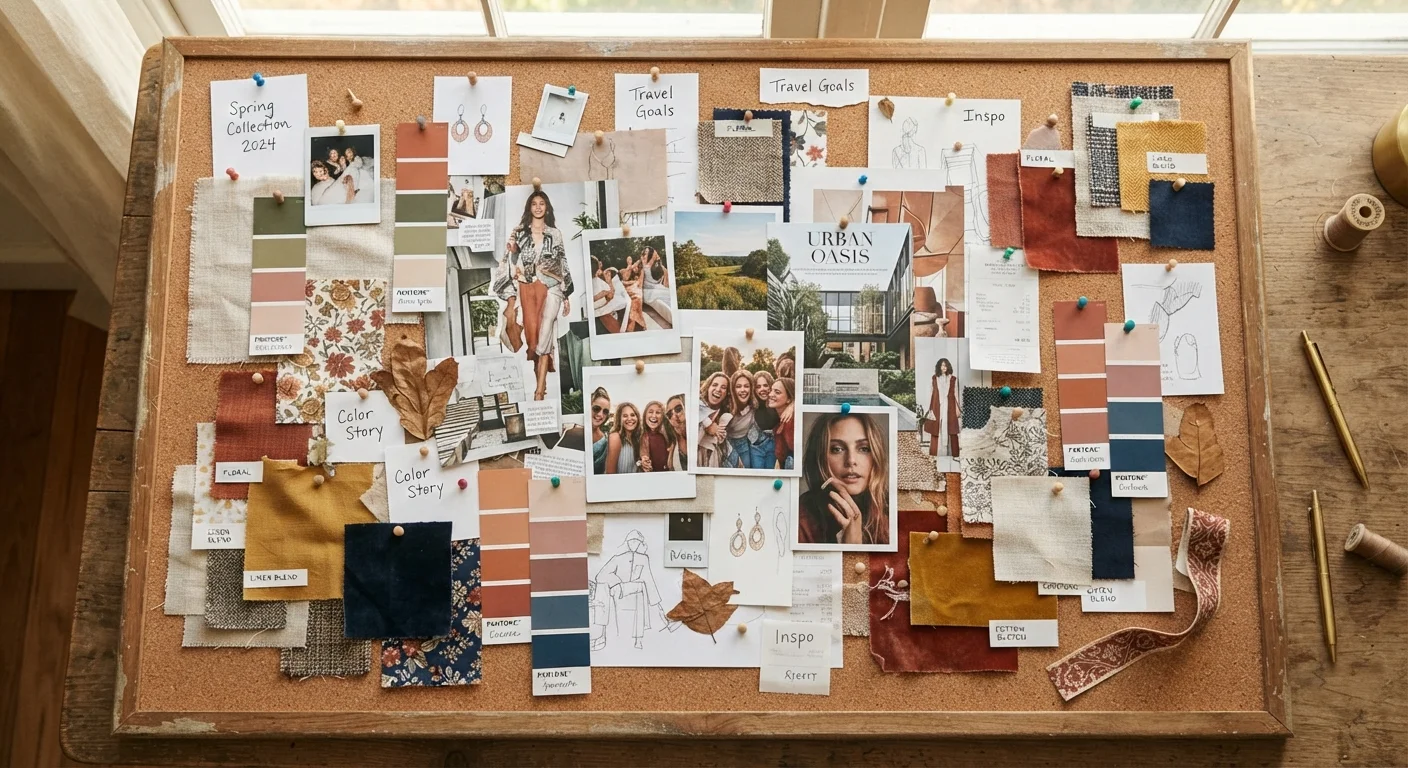
Most of us accumulate style inspiration without a system for making sense of it. Screenshots pile up, saved posts get forgotten, and magazine pages get torn out then lost. A mood board is simply a deliberate structure for doing what you're already doing - collecting images that appeal to you - and then actually looking at them together.
The power isn't in any single image. It's in the pattern that emerges when many images are viewed at once. You might realize you keep gravitating toward earthy terracotta tones, or that every outfit you love features some element of layering. These are clues your gut has been sending that your conscious mind hasn't fully registered yet.
If you're still building your broader sense of personal style from the ground up, the guide to finding your style identity is a helpful companion to this exercise. And if you'd like to understand how inspiration from public figures fits into the picture, using style icons as a reference point offers a grounded perspective on borrowing ideas without losing yourself in the process.
What you will need
Building and Using Your Board
The steps below work whether you prefer a digital board or a tactile, physical one. Both formats are equally valid - pick whichever feels more like play than work for you.
Collect images instinctively - no filtering yet
For your first pass, save anything that pulls you in visually: outfits, color palettes, textures, interiors, nature photography, even food styling. The subject matter is less important than the feeling it gives you. Aim for at least 30-50 images before you start curating.
Resist the urge to second-guess yourself. If you're drawn to it, it belongs on the board - at least for now.
Arrange the images together in one place
Whether you're working digitally or on a physical surface, lay everything out so you can see it all at once. Proximity matters - images interact with each other and patterns become visible only when you step back and look at the whole collection together.
Identify recurring themes and elements
Now look for patterns. Ask yourself: What colors appear most often? Are the silhouettes structured or relaxed? Do textures lean toward soft and natural or sleek and minimal? Are settings consistently urban, outdoors, cozy interiors?
Write down three to five recurring words or phrases - not style labels like "boho" or "minimalist," but descriptive words like loose, earthy, layered, clean, warm. These become the foundation of your personal aesthetic vocabulary.
Edit the board down to your most resonant images
Remove anything that feels aspirational but disconnected from how you actually live. A stunning gown may be beautiful, but if it doesn't relate to anything in your daily context, it muddies the picture. Keep the images that feel like you, not just images you admire from a distance.
Aim to cut the collection by roughly half. The images that survive the edit carry the most useful information about your genuine preferences.
Translate your board into wardrobe observations
Open your closet and compare what you see there against your mood board. Do your current clothes reflect the colors, textures, and silhouettes you were drawn to? Where are the biggest gaps? This comparison is where the mood board earns its keep - it turns visual inspiration into concrete, practical direction for how you dress every day.
For a deeper wardrobe evaluation, the style audit guide walks through a structured process for assessing what you own and what's actually being worn.
Keep Your Board Somewhere Visible
A mood board only works if you look at it. Set your digital board as a phone wallpaper, or hang a physical version near your closet. Regular, casual exposure reinforces the aesthetic instincts you're trying to develop, making getting dressed feel more intentional over time.
Once you've completed the process, your mood board becomes a living reference rather than a finished project. Revisit it every few months and notice what still resonates versus what feels dated or like someone else's taste. Swapping out images that no longer fit is a healthy sign that your style is evolving with you. If your aesthetic translates well across different contexts, you might also find building a style that travels well useful for seeing how your core preferences hold up away from home.