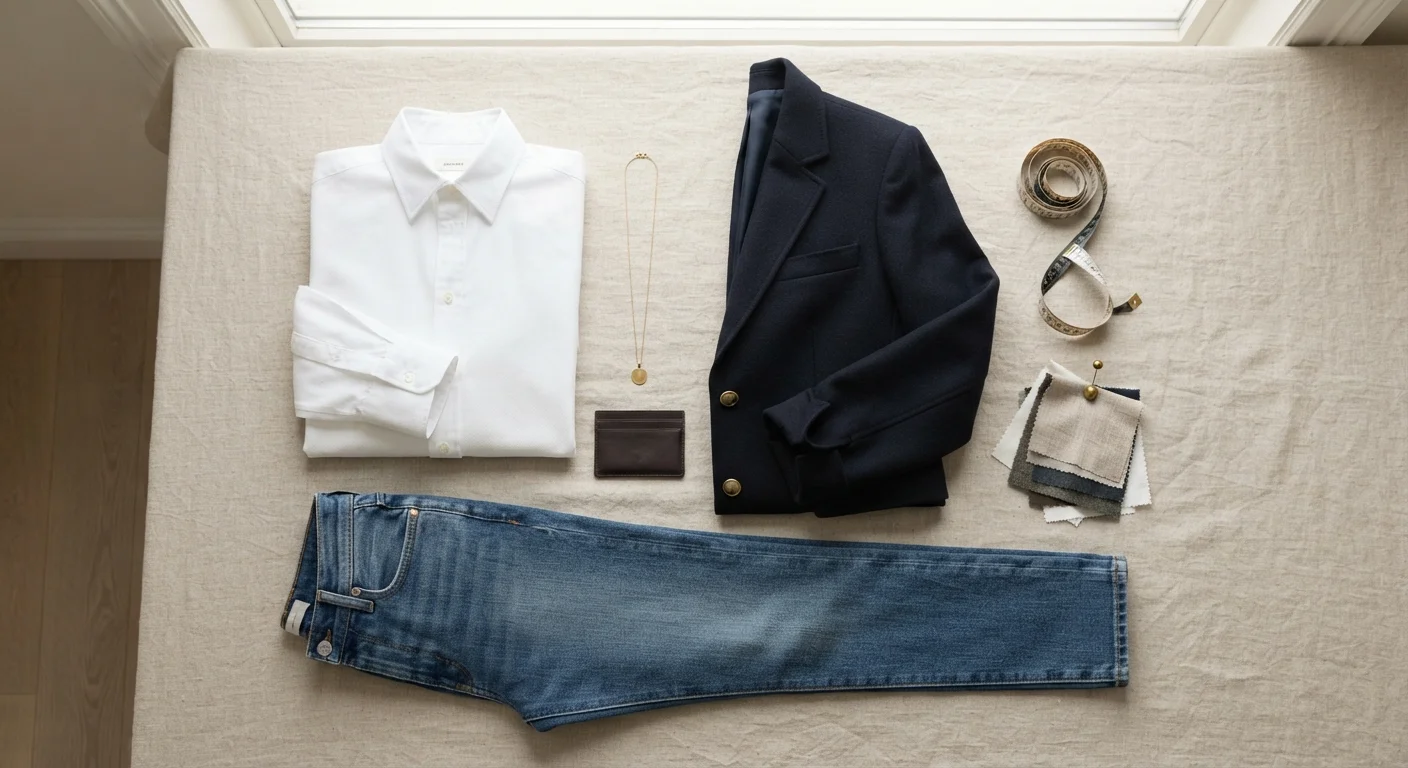
Why Fit Is the Foundation
You can put on the most on-trend outfit imaginable, but if it doesn't fit, something will feel off - and most people won't be able to articulate why. That vague sense of «almost right» usually comes down to fit. It's the invisible architecture of every outfit, and it's why a simple white T-shirt in the right cut can look sharper than an expensive designer piece that was made for a completely different body shape.
As explored in what personal style actually means, true style isn't about owning the right labels - it's about how you present yourself with intention. Fit is the most direct expression of that intention. It signals that you know your body, you've made thoughtful choices, and you're not just wearing clothes - you're wearing your clothes.
Start With the Shoulders
When trying on any structured top, jacket, or blazer, check the shoulder seam first. It should sit right at the edge of your shoulder - not drooping down your arm, not cutting across the top. This point is extremely difficult and costly to alter, so if the shoulders don't fit, move on. Everything else - waist, hem, sleeve length - is far easier to adjust.
What Good Fit Looks Like Across Different Garments
Fit benchmarks aren't universal - they shift depending on garment type. Here's a practical breakdown:
- Tops and blazers: The shoulder seam should sit at the edge of your shoulder joint - this is non-negotiable. If the seam droops down your arm or cuts across your shoulder, the garment doesn't fit, full stop. Chest and back should have just enough ease to move comfortably without excess fabric.
- Trousers and jeans: The waistband should sit where you intend it to - no gaping at the back. The seat should follow your shape without pulling or sagging. Inseam length is easy to alter, so don't let it be a dealbreaker when trying things on.
- Dresses and skirts: Side seams should hang vertically and straight. Hems should fall parallel to the floor (unless asymmetric by design). A hem that lifts at the front typically indicates a fitting issue at the hip or waist.
For a deeper look at how cut and fabric composition affect these outcomes, everything that affects how clothing fits is a thorough resource.
93%
Shoppers who say fit affects purchase decisions
Multiple consumer research surveys in the apparel industry consistently find that fit is the number one factor shoppers cite when deciding whether to keep or return a clothing item.
~30%
Online clothing purchases returned due to fit issues
Industry estimates suggest that poor fit is the leading driver of apparel returns in e-commerce, accounting for roughly a third of all items sent back.
Fit, Proportion, and the Bigger Picture
Fit and proportion are closely related but distinct. Fit is about how a garment sits on your body in isolation. Proportion is about how the pieces of an outfit relate to each other - lengths, volumes, and visual balance. Proportion and silhouette shape the overall way an outfit reads, but fit is what makes each individual piece work in the first place.
Think of it this way: a beautifully proportioned outfit built on poorly fitted garments is like a painting with a crooked frame. And as discussed in fit vs. style, a well-fitted basic will almost always outperform a trend-forward piece that isn't cut for your body.
Oversized Doesn't Mean Ill-Fitting
Relaxed and oversized silhouettes are a legitimate style choice with their own fit considerations. The shoulder seam should still sit at or very near your shoulder joint even in oversized styles - it just reads as deliberately dropped rather than accidentally too large. Volume in the body of the garment is intentional; a shoulder seam that falls halfway down your arm rarely is.
Making Fit Work for You
The most empowering shift you can make is to stop chasing size labels and start thinking in terms of fit. Measure yourself - chest, waist, hips, inseam - and use those numbers when shopping. When something is close but not quite right, consider whether a tailor could bridge the gap. Hemming, taking in a side seam, or adjusting sleeve length are among the most affordable alterations and deliver outsized results.
Style that feels consistent and authentically yours - the kind described in the difference between personal style and fashion trends - starts with clothes that actually fit. Everything else builds from there. For practical everyday wardrobe decisions, the Everyday Fashion hub is a great ongoing resource.
This article provides general style and fashion information for educational purposes only and does not constitute professional styling or tailoring advice.