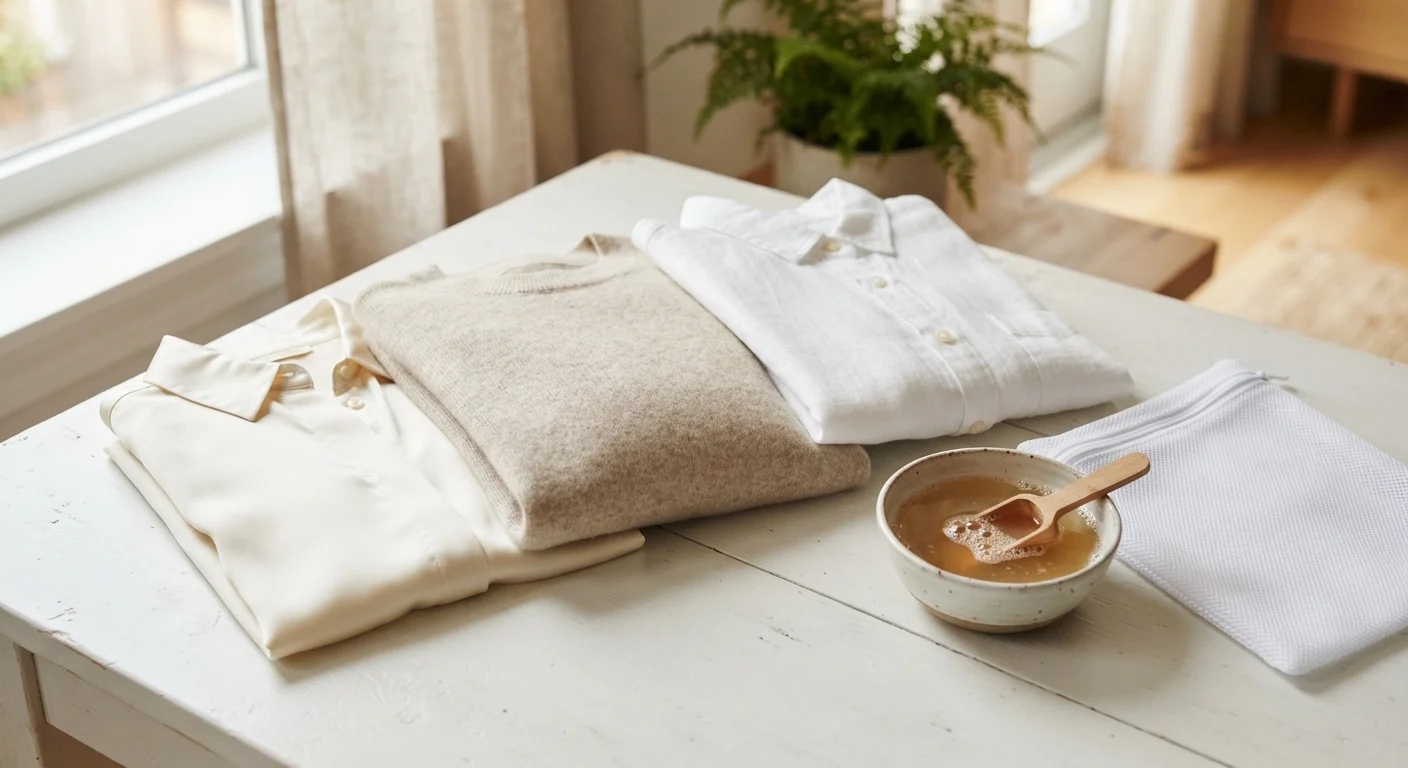
Why Delicate Fabrics Deserve Different Treatment
Silk, wool, and linen aren't just beautiful - they're structurally different from everyday cotton or polyester, which means they respond differently to heat, water, and agitation. Toss a silk blouse into a hot wash cycle and you may get back something stiff and shrunken. Run a merino wool sweater through a standard dryer and it can shrink a full size. These outcomes aren't mysterious; they're predictable, and entirely avoidable with a little know-how.
Before anything else, reading the care label is step one. That tiny tag is your manufacturer's honest guide to what a garment can handle. Once you understand those symbols, the rest of the process clicks into place. If you want to go deeper on how each material behaves, a plain guide to common fabric types is a useful companion read.
What you will need
Step-by-Step: Washing and Drying Delicate Fabrics
The following steps cover hand-washing - the safest method for most delicate items. Where machine washing is permitted on the label, always use a mesh laundry bag and the gentlest cycle available.
Read the Care Label
Before any water touches the garment, check the care label for washing temperature, drying method, and any dry-clean-only instructions. If the label says dry clean only, respect it - particularly for structured or lined garments where the shell fabric and inner layers may react differently to moisture.
Fill with Cool or Lukewarm Water
Fill your basin with cool to lukewarm water - never hot. Heat is the primary cause of shrinkage in wool and luster loss in silk. Linen tolerates slightly warmer water but still does best below 86°F (30°C) unless the label specifies otherwise.
Add a Small Amount of Gentle Detergent
Use a detergent specifically designed for delicates or wool - look for pH-neutral formulas. Add just a small capful to the water and swirl to dissolve before adding the garment. Avoid standard detergents, fabric softeners, and bleach, which can break down natural fibers or strip their natural oils.
Gently Submerge and Swirl the Garment
Lower the garment into the water and gently move it through the soapy solution using your hands. Do not scrub, twist, or rub the fabric together - especially with wool, which can felt (mat permanently) under agitation. For spot stains, dab gently with a soft cloth rather than rubbing.
Rinse Thoroughly
Drain the soapy water and refill the basin with clean, cool water at the same temperature. Gently press the garment through the rinse water. Repeat until the water runs clear and no suds remain. Temperature changes between wash and rinse water can shock wool fibers, so keep temperatures consistent.
Remove Excess Water Without Wringing
Never twist or wring delicate fabrics. Instead, gently press the garment against the side of the basin to push out excess water. Then lay it flat on a clean, dry towel, roll the towel and garment together, and press down firmly to absorb moisture. Unroll and transfer to a fresh dry towel or drying surface.
Dry Flat or Hang Correctly
Wool should always be dried flat to prevent stretching - reshape it gently to its original dimensions while damp. Silk can be hung on a padded or rounded hanger away from direct sunlight, which can fade and weaken the fiber. Linen dries well hung or flat and will soften as it air-dries. Keep all delicates away from radiators and direct heat sources.
Fabric Care and Your Wardrobe's Longevity
Treating delicate fabrics correctly isn't just about keeping them looking good - it's about getting full value from pieces you've invested in. Well-cared-for silk and wool garments can last decades. If you enjoy using fabric intentionally in your outfits, exploring how texture shapes an outfit is worth a read.
Storing Delicates So They Stay in Great Shape
How you store delicate fabrics matters just as much as how you wash them. Moisture, light, and pests are the main enemies.
- Silk: Fold loosely or hang on a padded hanger in a cool, dark space. Avoid wire hangers - they distort shoulder seams over time.
- Wool: Always fold; hanging causes wool to stretch out of shape. Store in a breathable cotton bag or cedar-lined drawer to discourage moths. Avoid plastic bags, which trap humidity.
- Linen: Linen actually benefits from light folding - it softens with use and washing. Store in a linen closet away from direct sunlight, which can yellow the fabric.
Taking care of these pieces pays off. Not only do well-maintained clothes look better for longer, but extending garment life is one of the simplest ways to get more value from your wardrobe - a point worth considering alongside any broader approach to everyday saving. For a deeper look at what causes fabric damage over time, understanding why clothes shrink, fade, and pill is a helpful next read.
When to Step Back and Go Professional
Some delicate garments - heavily beaded, structured, or lined pieces - are better left to professional dry cleaners even if the outer fabric seems hand-washable. When in doubt, the cost of professional cleaning is far less than replacing a damaged garment. Check the care label one more time before attempting home care on anything you're uncertain about.