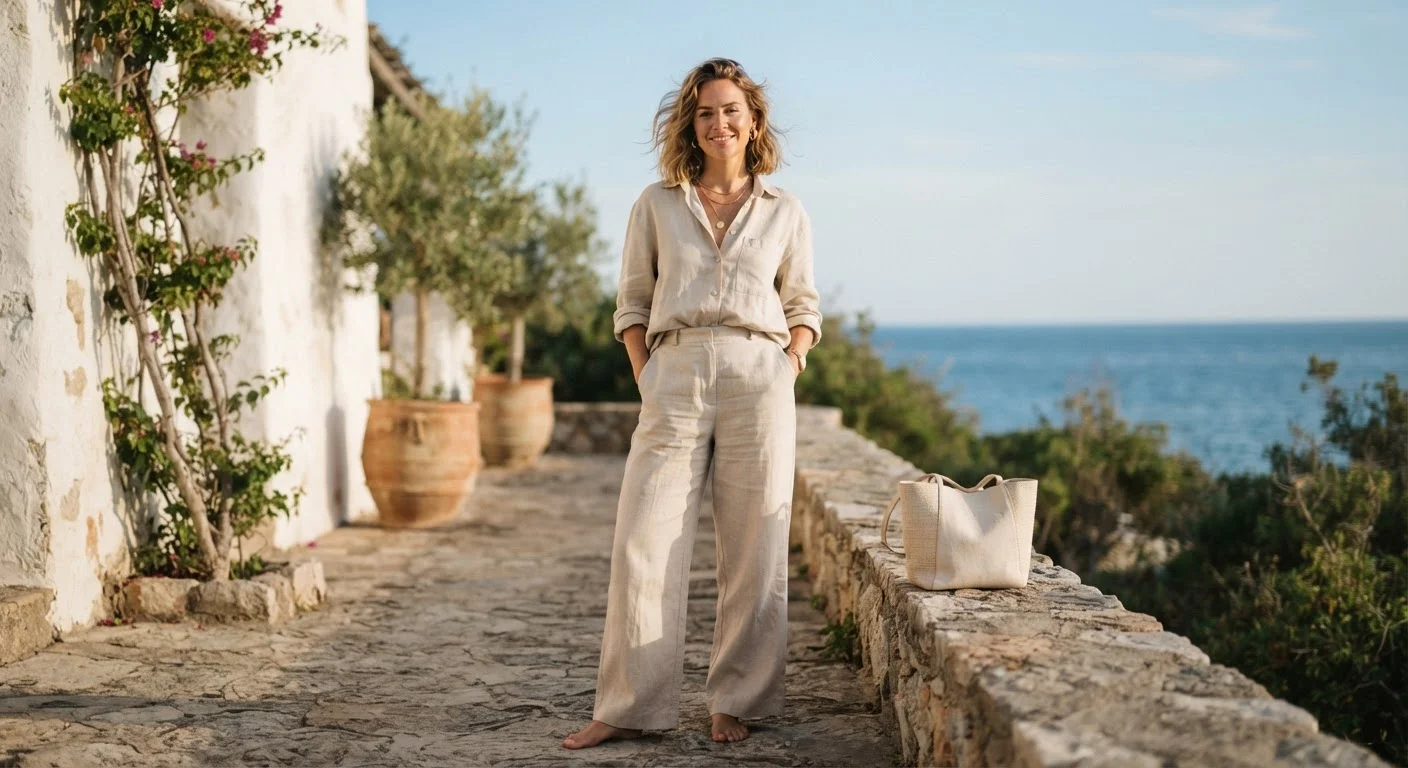
Why Hot Weather Makes Getting Dressed Harder
Summer heat has a way of pushing everyone toward the path of least resistance - oversized tees, saggy shorts, flip-flops that have seen better days. Comfort is a completely valid priority, but there's a common misconception that comfort and looking intentional are mutually exclusive. They're not.
The real issue is that most people reach for loose, casual pieces without thinking about fit, fabric, or proportion - and that combination is what creates the "sloppy" impression rather than the heat itself. Understanding a few key principles can transform your hot-weather wardrobe from reactive to genuinely thought-out. For a deeper foundation, explore building a coherent personal style that works across seasons.
Choose natural or moisture-wicking fabrics over synthetic blends whenever possible.
Linen, cotton, and bamboo allow air to circulate and absorb sweat without clinging or showing moisture the way polyester blends do. The visual result is cleaner and fresher even hours into a hot day.
Prioritize fit over coverage - wearing the right size matters more than wearing less fabric.
Oversized clothes read as intentional only when the proportions are deliberate. When everything is simply too large, the outfit loses structure and looks borrowed rather than chosen. A well-fitted piece in a breathable fabric keeps you just as cool.
Balance a loose top with a more fitted bottom, or vice versa.
Proportion is the key to keeping comfort dressing from looking shapeless. When you pair voluminous pieces together, the outfit loses definition. One structured element grounds the whole look.
Keep footwear intentional, even on the hottest days.
Shoes communicate effort more immediately than almost any other piece. Worn-out or purely utilitarian footwear can undermine even a carefully chosen outfit, while a clean, simple sandal or sneaker pulls things together.
Embrace monochromatic or tonal dressing to simplify and elevate.
When an outfit is built around one color family, the simplicity of the palette creates polish without any extra effort. This approach is especially effective in summer when silhouettes are at their most relaxed.
The Practices That Keep You Cool and Collected
These aren't complicated rules - they're small, repeatable decisions that add up to outfits that look like you tried, even when the goal was to stay as cool as possible.
The Details That Elevate a Simple Summer Outfit
Once you've got your fabric and silhouette working for you, a few finishing touches go a long way. A structured tote bag, a simple pair of leather sandals, or even a clean watch can shift a plain linen set from "lounging at home" to "ready for the day." Accessories don't need to be numerous - one or two considered pieces do the work.
Color coordination also matters more in summer than many people realize. When your outfit is minimal in structure, a tonal or monochromatic palette creates visual cohesion that reads as intentional. Mixing too many colors or patterns when the silhouette is already relaxed can push an outfit from casual to confused.
“Style is a way of saying who you are without having to speak. In the heat, that means making deliberate choices about what to simplify - not just what to remove.”
— Rachel Zoe, Fashion designer and stylist
If you're working out in the heat and thinking about performance fabrics, the overlap with activewear is real - see outdoor exercise safety in extreme heat for context on how fabric and hydration intersect in high temperatures. And if your style challenges run in the other direction, cold-weather layering follows many of the same proportion principles covered here.
Build a Capsule Hot-Weather Wardrobe
You don't need dozens of summer pieces to look consistently put-together. A handful of well-chosen basics - two or three linen or cotton tops, one or two pairs of well-fitted bottoms, a clean pair of sandals, and a simple layering piece for air-conditioned spaces - covers most everyday situations. Fewer, more intentional pieces also make it easier to get dressed quickly on hot mornings. For more on streamlining your wardrobe choices, see the habits that make getting dressed easier.