Why Dress Code Ambiguity Feels So Stressful
There's a particular kind of anxiety that comes with staring at an invitation that says "cocktail attire" or, worse, nothing at all. You don't want to show up in jeans while everyone else is in blazers - but you also don't want to be the overdressed one at a backyard cookout. That tension is real, and you're far from alone in feeling it.
The good news: dressing confidently under uncertainty isn't about having a limitless wardrobe or a sixth sense for social norms. It's about using a simple, repeatable decision framework - and building a small set of go-to pieces that flex across situations. If you want a deeper grounding in what various dress code labels actually mean, our complete dress code breakdown is a great place to start.
Confidence Is Part of the Outfit
How you carry yourself in what you're wearing matters as much as the garments themselves. Wearing something slightly imperfect with ease will almost always read better than wearing the "correct" outfit while visibly uncomfortable. If getting dressed stresses you out regularly, it may be worth exploring your personal style principles to build a wardrobe you actually feel good in day to day.
Read the Room Before You Open Your Closet
Before you pick a single item, gather context. These four clues will do most of your decision-making for you:
- Venue: A rooftop bar signals different expectations than a community center or a church hall. Upscale venues generally call for more polished attire.
- Host or organizer: Think about how the person or organization typically presents themselves. A creative agency's holiday party will differ from a law firm's.
- Time of day: Daytime events tend to lean more casual; evening events typically call for a step up.
- Occasion type: A retirement dinner, a baby shower, a networking mixer - each carries its own informal register even without a stated code.
Once you've assessed those four factors, you'll likely have a strong instinct. Trust it, then refine it using the steps below.
What you will need
Step-by-Step: Making the Call
Work through these steps in order. Most people find they don't need to reach the final few - the answer surfaces early.
Check the invitation language carefully
Read every word on the invitation, evite, or event description. Sometimes a dress code is implied rather than stated - phrases like "join us for an evening celebration" or even a venue name alone can signal the expected register. Look for adjectives (festive, elegant, relaxed) and don't over-read casual phrasing as an invitation to be sloppy.
Ask someone who already knows
This step is underused and wildly effective. If you know another guest, a quick message takes 30 seconds. If the event has a contact person, a polite inquiry is always appropriate. Hosts genuinely appreciate that you care enough to ask - and it removes all guesswork in an instant.
Identify the occasion's formality tier
Place the event into one of three broad buckets: relaxed (cookouts, casual get-togethers), mid-level (dinners out, work socials, milestone celebrations), or formal (galas, black-tie weddings, awards ceremonies). Most ambiguous events land in the mid-level tier, which is the easiest to dress for with a handful of versatile pieces.
Build your outfit around one anchor piece
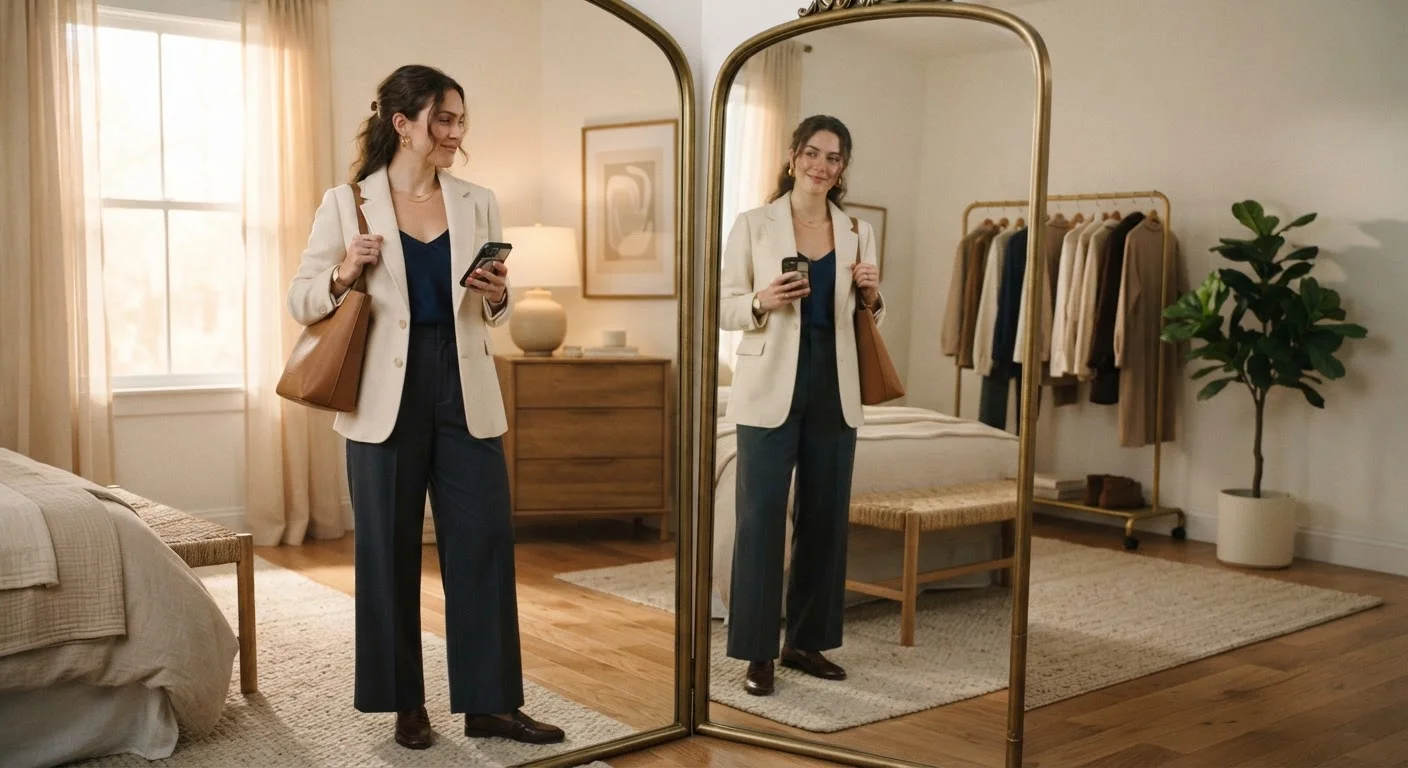
Choose one item that sets the formality level - a blazer, a wrap dress, structured trousers - then build the rest of the outfit around it. This approach prevents the common mistake of mixing signals (pairing a formal blouse with athletic shoes, for instance). Your anchor piece also gives you something concrete to describe if someone asks what you're wearing, which tends to settle your own confidence too.
Check fit, condition, and grooming
An outfit in good condition and proper fit reads as intentional regardless of price point or label. Before you leave, do a quick scan: Are there visible wrinkles, pilling, or stains? Do the proportions feel balanced? Is your grooming consistent with the level of polish your outfit suggests? These finishing details close the gap between dressed-up and truly put-together.
When You're Still Not Sure: The One-Level-Up Rule
If you've worked through the steps and still feel uncertain, apply the one-level-up rule: dress one notch above what you think is expected. Showing up slightly more polished than the crowd is almost always more comfortable than showing up underdressed. A blazer over dark jeans, for instance, works across a surprisingly wide range of events and can be easily softened by removing the jacket once you arrive.
This is especially useful for smart casual situations, which trip up even seasoned dressers. A few well-chosen transitional pieces - tailored chinos, a clean knit, a structured midi skirt - give you built-in flexibility. And if your goal is also to express your own personality within those guardrails, our guide on occasion dressing and personal voice shows exactly how to do that.
Don't Let Overthinking Stall You
Decision fatigue around clothing is real, but spending hours agonizing over an outfit rarely improves the outcome. If you've applied the framework and still feel stuck, default to the one-level-up rule and commit. Overthinking quietly shifts dressing from a source of confidence into a source of anxiety - and that shift can undermine you before you've even walked in the door.