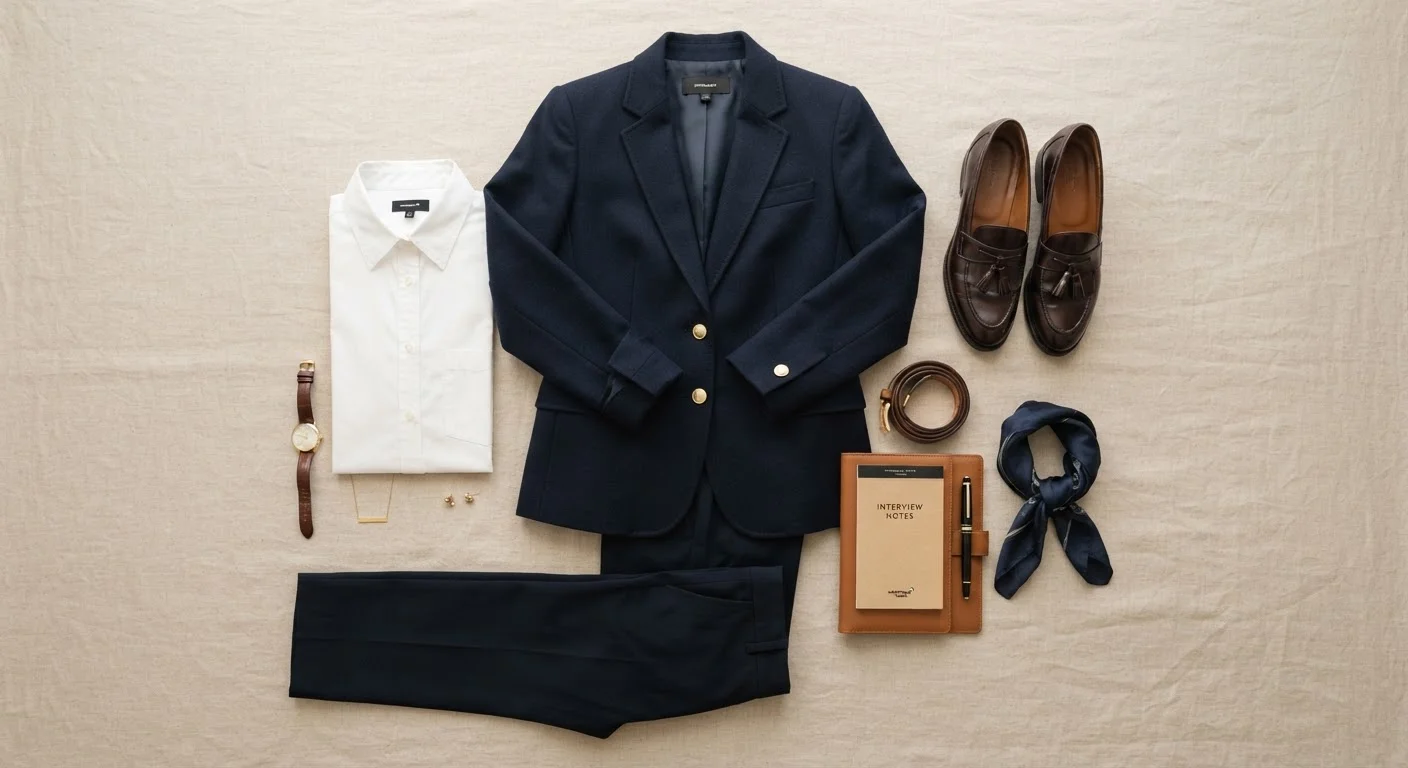
Why Interview Attire Is Still a Signal Worth Sending
In an era of video calls and hybrid workplaces, it might be tempting to assume that how you dress for an interview matters less than it once did. The reality is more nuanced. First impressions form quickly, and what you wear communicates preparation, cultural awareness, and respect - before you've said a word. That's not about conforming to rigid dress codes for their own sake; it's about demonstrating that you've taken the time to understand the environment you're hoping to join.
The good news is that dressing well for an interview has never been about spending a lot of money or owning a wardrobe full of formal pieces. It's about reading context intelligently and making deliberate choices. Whether you're walking into a boutique law firm, a creative agency, or a casual tech startup, the same underlying process applies - research, calibrate, execute. Our guide on dressing confidently when you're unsure of the dress code also covers this decision-making framework in broader contexts.
Use Social Media as a Style Clue
Browse the company's LinkedIn page, Instagram, or team photos on their website. How employees dress in those images is often a reliable proxy for actual workplace norms. If everyone is in jeans and hoodies, a full suit may signal you haven't done your homework.
What to Wear and What to Avoid by Industry
Here's a quick-reference breakdown of common interview dress expectations by sector:
| Industry | Suggested Tier | Key Pieces |
|---|---|---|
| Finance / Law | Business Formal | Suit, structured dress, polished shoes |
| Healthcare / Education | Business Casual | Neat separates, clean footwear, minimal accessories |
| Creative / Media | Smart Casual to Business Casual | Blazer, tailored pants or skirt, expressive detail |
| Tech / Startups | Smart Casual | Well-fitted chinos, clean sneakers, neat top |
| Retail / Hospitality | Business Casual | Pressed shirt or blouse, dark trousers, clean shoes |
Across all industries, there are a few universal avoids: visibly wrinkled clothing, strong perfume or cologne, athletic wear (unless the role specifically involves it), and anything that feels overly casual like ripped denim or graphic tee humor. Your outfit should invite attention to you, not itself.
Fit Beats Price Every Time
A well-fitted, affordable outfit will almost always read as more polished than an expensive item that doesn't suit your body. Before your interview, check that nothing pulls, gaps, or bunches. A quick visit to a tailor for basic alterations can make a significant difference and is often more affordable than you'd expect.
If you want to anchor your interview look more deeply within a broader, coherent approach to how you dress, our piece on dressing with intention is a practical companion read.
Research the company's culture and typical dress environment
Before you open your closet, open a browser. Search the company's LinkedIn, team pages, and any press photos. Look for patterns: Are employees shown in suits and structured separates? Neat business casual? Or relaxed, creative attire? This gives you a concrete starting point rather than guesswork. If the company is newer or has little public imagery, look at peers in the same industry for broader context.
Identify your industry's general formality tier
Different fields carry different baseline expectations. Corporate finance, law, and traditional banking typically call for business formal - structured suits, pressed shirts or blouses, and closed-toe shoes. Healthcare and education often favor smart business casual: clean, neat, and professional without being stiff. Creative industries like marketing, design, and media welcome personality - a well-fitted blazer over a tasteful graphic top may read better than a conventional suit. Tech and startups generally land in smart casual territory, though some venture-backed firms have returned to more polished dress norms. Use the industry tier as your floor, not your ceiling.
Aim one level above the workplace's everyday dress code
A widely practical rule: dress one notch more formal than the day-to-day standard. If employees typically wear jeans and button-downs, opt for chinos or trousers and a neat blazer. If the norm is business casual, step up to polished separates or a structured dress. This signals respect for the opportunity without appearing out of touch with the environment. Need a refresher on what each tier actually means? Our dress codes breakdown walks through every label clearly.
Choose a base outfit and check fit across all pieces
Lay out every item you plan to wear - top, bottom or dress, outerwear, shoes, and any accessories. Try the complete look on and do a movement check: sit, stand, reach, and walk. Nothing should restrict movement, gap at buttons, or bunch at the shoulders. Fit is the single variable that communicates effort and self-awareness more than any logo or price point. If something needs a minor alteration - a hem, a tuck - address it a few days before, not the morning of.
Add intentional, understated personal touches
A job interview is still a human interaction, and a hint of personality signals confidence and self-awareness. A tasteful pocket square, a structured bag in an unexpected color, or a simple piece of jewelry can make your overall look feel considered rather than costumed. The key word is intentional - one or two details, not five. For more on threading personal voice through dress-code-driven situations, see our article on occasion dressing without losing your personal voice.
Prepare the outfit the night before
Lay out every item - including socks, belt, and bag - the evening before your interview. Steam or iron anything that needs it, wipe down shoes, and do a final lint-roll pass on dark fabrics. Doing this the night before eliminates morning-of stress, which is the enemy of calm, confident body language. Hang the outfit on a door or chair so it's visible and ready. This small ritual also gives you a chance to notice a missing button or a stain with enough time to swap in a backup.