Inside the Hair Strand: A Quick Structural Tour
Before heat damage makes sense, it helps to picture what a hair strand actually is. Each strand has three main layers: the medulla (the soft inner core, not always present), the cortex (the thick middle layer packed with keratin protein chains), and the cuticle (the outermost layer of overlapping, scale-like cells that protect everything underneath).
The cortex is where most of hair's strength, elasticity, and color live. It's held together by three types of chemical bonds: hydrogen bonds (weak, easily broken by water or heat), salt bonds (sensitive to pH changes), and disulfide bonds (the strongest, requiring chemical processes to break). Understanding which bonds heat affects tells you a lot about why styling tools work - and where the risk begins.
For a deeper look at how the hair shaft interacts with everyday products, see what's actually happening when you shampoo and condition.
What Heat Actually Does to the Fiber
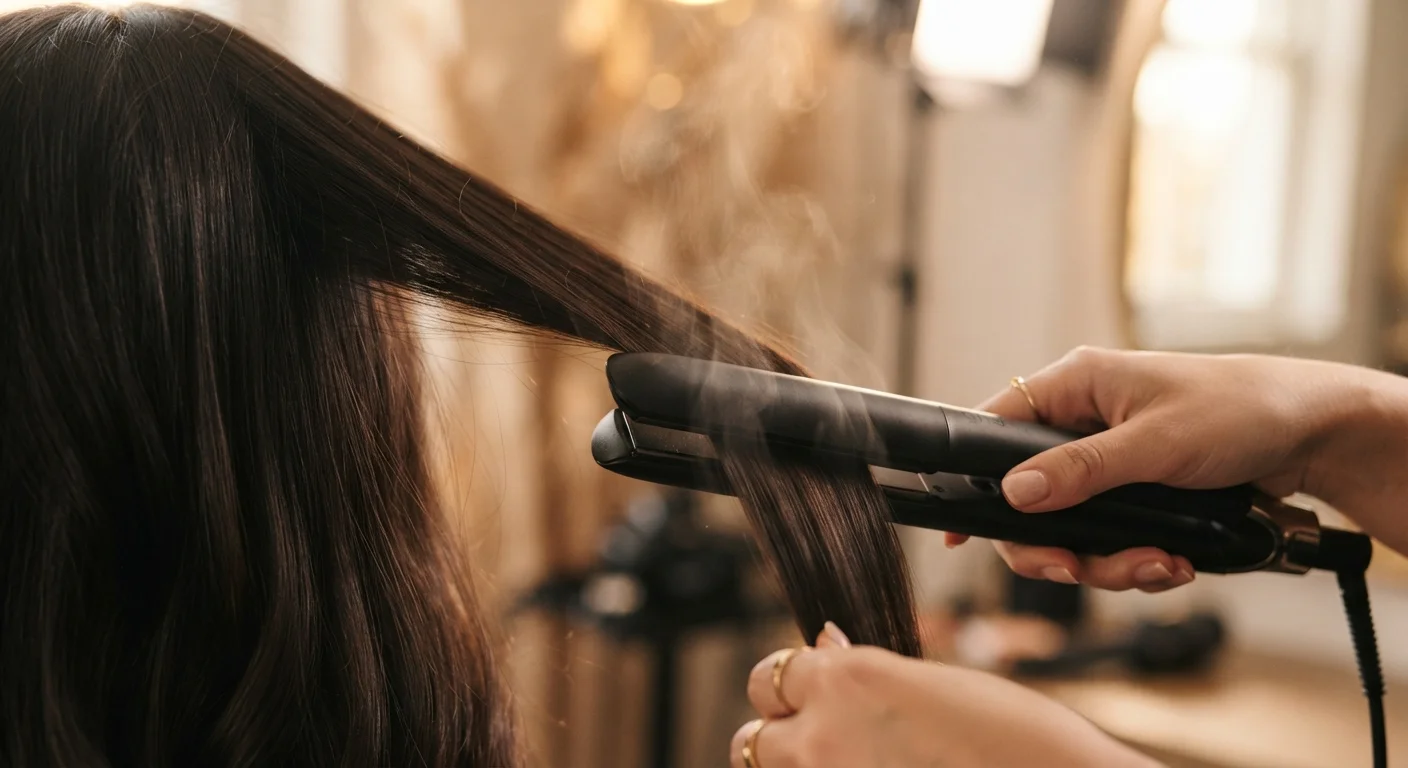
When you press a flat iron against a damp or dry strand, thermal energy penetrates the cuticle and reaches the cortex. At lower temperatures, this breaks the hydrogen bonds holding protein chains in place - exactly the mechanism that lets you reshape curl into sleekness, or create a wave where none existed. Once the strand cools, hydrogen bonds reform in the new shape. This process, done carefully, is the intended design of heat styling.
The problem begins when temperatures climb higher or exposure is prolonged. Around and above 300-350°F, the cuticle scales can crack, lift, or fuse unevenly. The cortex proteins themselves begin to degrade - a process researchers call thermal denaturation. The hair loses water content, becomes increasingly porous, and the disulfide bonds that give strands elasticity can be compromised.
~300°F
Temperature where cuticle damage accelerates
Hair science literature generally identifies the range of 300-350°F as where irreversible structural changes to the cuticle and cortex begin to occur with repeated exposure.
3 layers
Structural layers in a single hair strand
Each strand has a protective cuticle, a keratin-packed cortex, and a central medulla - heat damage works its way inward from the outside.
Hair that has been chemically processed - bleached, colored, or relaxed - is already working with a partially altered bond structure. For these strands, the threshold for visible damage is meaningfully lower. Hair porosity also plays a major role: high-porosity hair, with its raised or gappy cuticle, absorbs heat unevenly and loses protective moisture faster.
Recognizing the Signs of Heat-Stressed Hair
Heat damage doesn't always announce itself dramatically. Early and ongoing signs include:
- Dryness and rough texture - cuticle disruption prevents moisture from staying sealed inside the cortex.
- Loss of elasticity - healthy hair stretches slightly when wet and springs back; damaged hair snaps or stays limp.
- Split ends and mid-shaft splits - the cortex literally separates when protein degradation is severe.
- Frizz that wasn't there before - lifted cuticle scales catch ambient humidity unevenly.
- Styles that no longer hold - heat-styled curls or waves that fall flat quickly can indicate the cortex has lost its responsiveness.
The Stretch Test for Elasticity
Wet a single strand and gently stretch it. Healthy hair typically stretches up to about 30% of its length before snapping back. If a wet strand breaks almost immediately with very little stretch, that's a practical signal of compromised cortex integrity - often consistent with heat or chemical damage. This simple test costs nothing and gives you real feedback about your hair's current condition.
If you're noticing these signs and want to understand what your baseline hair structure actually looks like, building a routine matched to your hair's actual needs is a helpful starting point.
Protective Habits That Reduce Thermal Stress
The most effective protection starts before the tool touches your hair. Heat protectant products - applied to damp or dry hair before styling - work by forming a coating that slows thermal transfer to the protein core. They don't create a magic shield, but they meaningfully reduce the rate at which heat reaches vulnerable bonds.
Beyond protectants, these habits make a real structural difference:
- Use the lowest effective temperature. More passes at a lower temp generally cause less cumulative damage than one pass at maximum heat.
- Never style soaking-wet hair with a flat iron. Water trapped inside the cortex turns to steam under a flat iron, which can cause internal bubbling - sometimes called "bubble hair" - that leaves strands severely weakened and brittle.
- Keep tools moving. Holding a flat iron stationary concentrates heat in one spot and accelerates damage.
- Space out heat styling days. Allowing hair to air-dry or wear in its natural state gives the moisture balance time to stabilize.
It's also worth noting that healthy scalp function supports the quality of new growth over time - giving heat-damaged strands a healthier replacement as they shed and regrow. Scalp Health 101 covers why that foundation matters.
This article is for general informational and educational purposes only. It is not a substitute for professional advice from a licensed cosmetologist, trichologist, or dermatologist. If you are experiencing significant hair loss or scalp concerns, please consult a qualified healthcare provider.