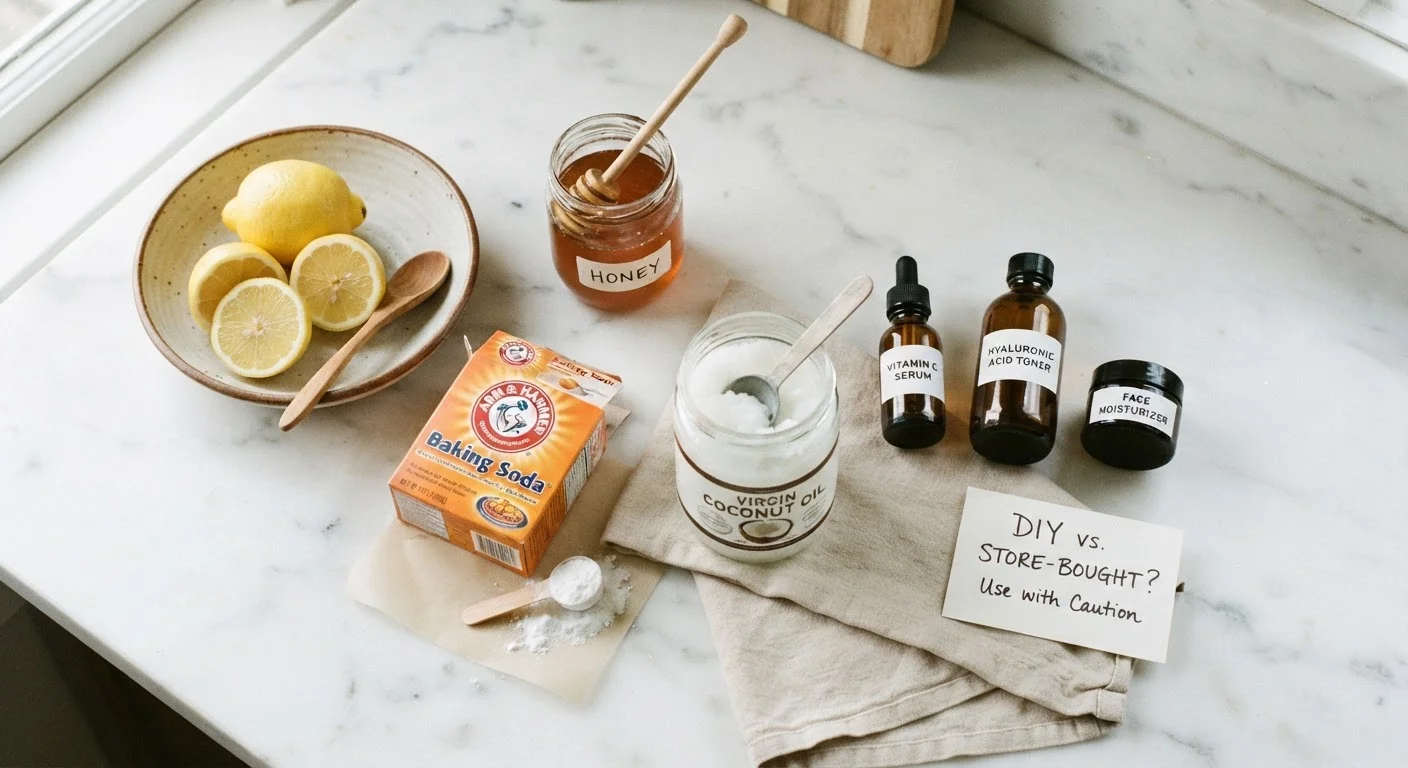
The DIY Beauty Appeal - and Where It Gets Complicated
The idea is genuinely appealing: skip the store, raid your kitchen, and whip up a face mask or hair treatment with ingredients you can actually pronounce. DIY beauty has a long history rooted in folk traditions, budget creativity, and a healthy skepticism of ingredient lists that read like chemistry homework. That spirit is worth celebrating - but it also deserves an honest look at the science.
The core issue isn't that home remedies are inherently bad. It's that the gap between feels soothing and is safe for repeated skin contact is wider than most tutorials acknowledge. Your skin has a finely tuned acid mantle - a protective barrier with a slightly acidic pH - and many common kitchen staples sit well outside that comfortable range. A one-time hack and a weekly ritual are very different things for your complexion.
For a grounding look at how routine complexity affects skin health overall, the pros and cons of multi-step skincare routines is worth a read before layering in any new treatment, DIY or otherwise.
Myth
Lemon juice is a great natural brightener and can fade dark spots safely.
Fact
Lemon juice is highly acidic and phototoxic - applying it to skin before sun exposure can cause chemical burns and worsen pigmentation.
Lemon juice has a pH of around 2, far more acidic than healthy skin (pH 4.5-5.5). Direct application can strip the acid mantle, cause irritation, and - critically - lemon contains psoralens, compounds that dramatically increase UV sensitivity. A lemon-treated face in sunlight isn't glowing; it's at risk for a condition called phytophotodermatitis, which can produce dark, uneven patches that are far harder to treat than the original concern.
Myth
Baking soda makes an excellent face scrub and helps balance oily skin.
Fact
Baking soda is strongly alkaline and disrupts the skin's protective barrier, potentially triggering dryness, breakouts, and sensitivity.
With a pH of around 9, baking soda sits far above the skin's natural acidic range. Using it as a scrub or mask can neutralize the acid mantle, leaving skin vulnerable to bacterial overgrowth and transepidermal water loss. Dermatologists routinely caution against it - the short-term sensation of smoothness masks the barrier damage happening underneath. Gentle, pH-balanced exfoliants formulated for facial use are the evidence-backed alternative.
Myth
Coconut oil is the ultimate natural moisturizer and works well on all skin types.
Fact
Coconut oil is comedogenic for many skin types and can clog pores, making it a poor choice for acne-prone or oily skin.
Coconut oil scores high on the comedogenic scale - a measure of how likely an ingredient is to block pores. While it works reasonably well as a body moisturizer for some people, applying it to the face, especially on skin prone to congestion or breakouts, can worsen those conditions. It also lacks the emulsifying agents and humectants (like glycerin or hyaluronic acid) that help draw water into skin cells. Its popularity is cultural and sensory - not grounded in clinical evidence for facial use.
Myth
You can make an effective vitamin C serum at home using crushed supplements.
Fact
Homemade vitamin C preparations degrade rapidly and can cause irritation; stable formulation requires precise pH and packaging.
L-ascorbic acid (the active form of vitamin C) is notoriously unstable - it oxidizes quickly when exposed to air and light, turning ineffective or even potentially irritating. Commercial serums use specific pH levels (typically 2.5-3.5), antioxidant stabilizers, and opaque airtight packaging to preserve potency. A crushed tablet dissolved in water has no such protection, and the resulting pH can be unpredictable and harsh. The result is more likely to irritate than to deliver the brightening or antioxidant benefits the treatment intends.
Myth
Toothpaste is a quick fix for pimples because it dries them out overnight.
Fact
Toothpaste contains ingredients - including fluoride, sulfates, and fragrances - that can cause contact dermatitis and worsen inflammation.
The toothpaste-on-a-pimple trick has circulated for decades, but dermatological consensus is firmly against it. Toothpaste is formulated for enamel, not skin, and its active and inactive ingredients frequently cause redness, peeling, and allergic reactions in facial tissue. Any drying effect is real - but so is the irritation it causes around the spot. Skin that's inflamed and compromised is more prone to post-inflammatory hyperpigmentation. For spot treatment options, our guide to common acne myths covers what research actually supports.
What the Evidence Actually Supports
Not all home remedies are myths. Colloidal oatmeal - finely milled oatmeal suspended in water - has genuine evidence behind it for soothing dry, irritated, or eczema-prone skin. The FDA has recognized it as a skin protectant ingredient, and its anti-inflammatory compounds (avenanthramides) are well documented. A plain oat bath or oat-water compress is a low-risk, low-cost option for temporary relief of itching or mild irritation.
Similarly, honey - particularly raw or manuka varieties - has documented antimicrobial properties and is used in some medical-grade wound dressings. As an occasional mask on intact, non-reactive skin, it's generally well tolerated. The caveat: that doesn't make it an acne cure or a substitute for targeted treatment. For a deeper look at what actually works (and doesn't) for breakouts, check out our article on acne myths that may be worsening your breakouts.
Stop Immediately If You Notice These Signs
Stinging, redness, swelling, or blistering after any DIY treatment are signals to rinse the area with cool water and discontinue use entirely. Do not continue a treatment hoping irritation will subside - it often escalates. If symptoms persist beyond 24-48 hours or the reaction is severe, consult a dermatologist. This is especially important for treatments applied near the eyes or on broken skin.
The bigger principle here mirrors advice you'd hear in any skilled discipline: knowing when to DIY and when to defer to a professional is itself a form of expertise. Just as some car repairs are safely handled at home while others require trained hands and proper tools - as explored in our guide on when DIY car maintenance makes sense - the same framework applies to your skin. Minor, low-risk treatments on healthy skin are very different from attempting to treat active conditions, broken skin, or persistent concerns without professional guidance.
DIY Treatments Are Not Medical Treatments
If you're dealing with a diagnosed skin condition - eczema, rosacea, psoriasis, cystic acne, or persistent hyperpigmentation - home remedies are not a substitute for professional care. Applying unregulated ingredients to compromised skin can aggravate conditions significantly. Always consult a licensed dermatologist before experimenting with DIY treatments on skin that is already inflamed, broken, or under medical management. This article is general information only and is not medical advice.
If you're building a broader beauty practice, our complete overview of daily beauty routine basics offers a solid, research-informed foundation to work from - no DIY guesswork required.