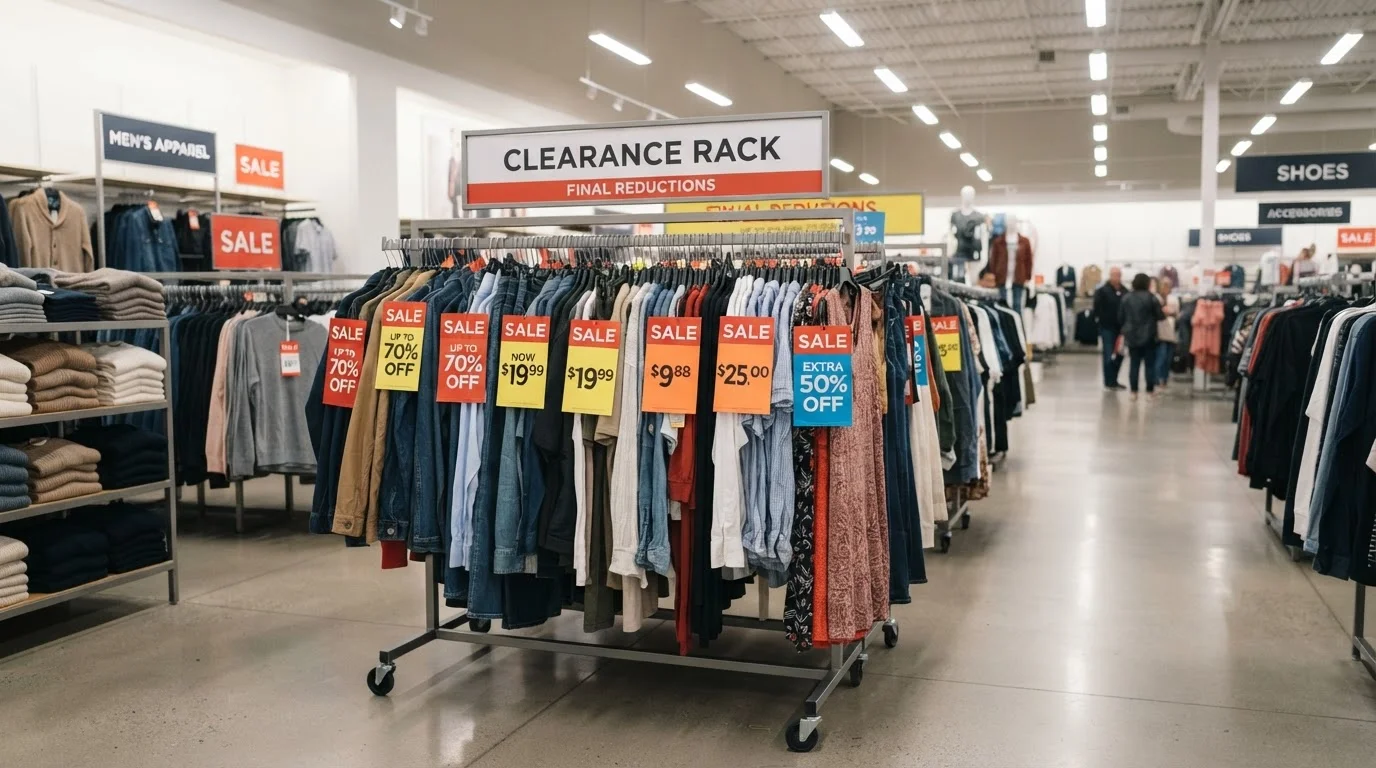
Why Clearance Myths Persist
Clearance sections trigger a reliable psychological response: scarcity plus discount equals urgency. Retailers have understood this for decades, and the section's red-tag aesthetic reinforces the idea that you're getting a rare, final-markdown deal. But the mechanics behind clearance pricing are more varied - and sometimes more strategic - than most shoppers assume.
Understanding how clearance actually works doesn't mean becoming cynical about every sale. It means being equipped to identify the purchases that genuinely represent value versus those that only look like one. The myth-and-fact pairs below draw on consumer research, retail pricing practices, and Federal Trade Commission guidance on advertised discounts.
Myth
Clearance price means the lowest price this item will ever be sold for.
Fact
Clearance prices can be - and often are - discounted further as inventory ages, and competing retailers may already carry the same item at a lower price.
Retailers typically set clearance prices in tiers. An item tagged 30% off in week one may drop to 50% or 70% off if it doesn't sell. Buying at the first clearance markdown doesn't guarantee you've reached the floor. Additionally, price-tracking tools consistently show that identical SKUs appear on other retail channels - sometimes at prices lower than what the clearance tag claims.
Myth
Clearance items are always being discontinued and won't be restocked.
Fact
Many clearance items are seasonal rotations, not permanent discontinuations; the same product may return next season or appear in a different store location.
Retailers rotate seasonal inventory to make shelf space for incoming stock. That doesn't mean the product line is ending. Apparel styles, for example, often cycle back with minor updates. If urgency is the primary reason you're buying, it's worth a quick search to confirm whether the item is genuinely being discontinued or simply moving off the floor to make room.
Myth
The percentage-off claim on a clearance tag always reflects a genuine prior price.
Fact
Reference prices on clearance items are sometimes inflated, making the discount appear larger than the actual reduction from typical market price.
The Federal Trade Commission has long-standing guidance stating that a "former price" used in a comparison must reflect a price at which the item was genuinely offered for a reasonably substantial period. However, retailers occasionally mark items up before marking them down, or base percentages on suggested retail prices rarely charged in practice. Cross-checking the item's price history using a tracking tool is the most reliable way to evaluate whether the markdown is real. This dynamic is part of a broader pattern discussed in couponing myths that mislead casual shoppers.
Myth
Clearance sections offer the same return rights as regular-priced merchandise.
Fact
Most retailers apply stricter - often "all sales final" - return policies to clearance items, leaving buyers with fewer options if a product doesn't work out.
Return restrictions on clearance merchandise vary by retailer, but it is standard practice for clearance sections to carry reduced or eliminated return windows. Shoppers who discover a defect or sizing issue after purchase may have limited recourse. Before buying, confirm the specific return policy that applies to clearance stock - not the general store policy, which may not cover it. For a full picture of your rights as a shopper, the Consumer Rights hub outlines protections that apply regardless of sale status.
Myth
If something is on clearance, there must be something wrong with it.
Fact
Most clearance items are functionally identical to full-price stock; the primary reason for markdown is typically inventory management, not product defect.
Clearance is an inventory tool, not a defect disclosure. Seasonal items, overstocked sizes, and products being rotated out of a store's assortment all land on clearance without any quality issue. While it's reasonable to inspect clearance items carefully - especially electronics or items sold without packaging - assuming hidden defects is not supported by how clearance merchandise actually enters those sections.
What to Actually Do at the Clearance Rack
Once you strip away the assumptions, a practical approach to clearance shopping comes down to a few habits. First, verify the reference price. The FTC requires that advertised "former" prices reflect genuine prior selling prices for a reasonably substantial period - but enforcement is complaint-driven, and inflated reference prices still appear in practice. A quick price-history lookup using a browser tool or retailer app can confirm whether a claimed markdown is real.
Second, factor in the full cost of the purchase. Clearance items frequently carry "all sales final" policies or shortened return windows. For clothing, that matters if fit is uncertain. For electronics, it matters if quality can't be fully assessed in-store. Our guide to consumer rights for everyday shoppers covers what protections still apply even on final-sale merchandise.
"All Sales Final" Has Real Consequences
When a clearance tag is accompanied by a final-sale restriction, you typically cannot return the item even if it turns out to be defective - unless the defect constitutes a violation of an implied warranty under state law. Before purchasing clearance electronics, appliances, or high-value items, ask specifically about the return and warranty terms that apply. Don't rely on the general store policy poster at the entrance.
Third, compare across channels before assuming the clearance price is the floor. Identical or near-identical items sometimes appear on manufacturer websites, third-party marketplaces, or competing retailers at similar prices - without the restrictions that accompany clearance stock. The broader dynamics of how discounts are framed and what they actually mean are explored in what "on sale" actually means.
~30%
Shoppers who verify clearance prices before buying
Consumer surveys by organizations including Consumer Reports have consistently found that a minority of shoppers cross-check clearance prices against other sources before purchasing.
60%+
Retailers with stricter clearance return policies
Analysis of major U.S. retailer return policies by consumer advocacy groups has found that the majority apply more restrictive terms to sale or clearance merchandise than to full-price items.
None of this makes clearance shopping a bad idea. End-of-season markdowns on items you'd buy anyway, at prices verified against market comps, represent genuine savings. The goal is simply to let the evidence - not the tag color - drive the decision. For a related look at how discount claims work more broadly, see whether buying on discount always saves money.
This article is for general informational purposes only and does not constitute financial or purchasing advice tailored to your individual situation.