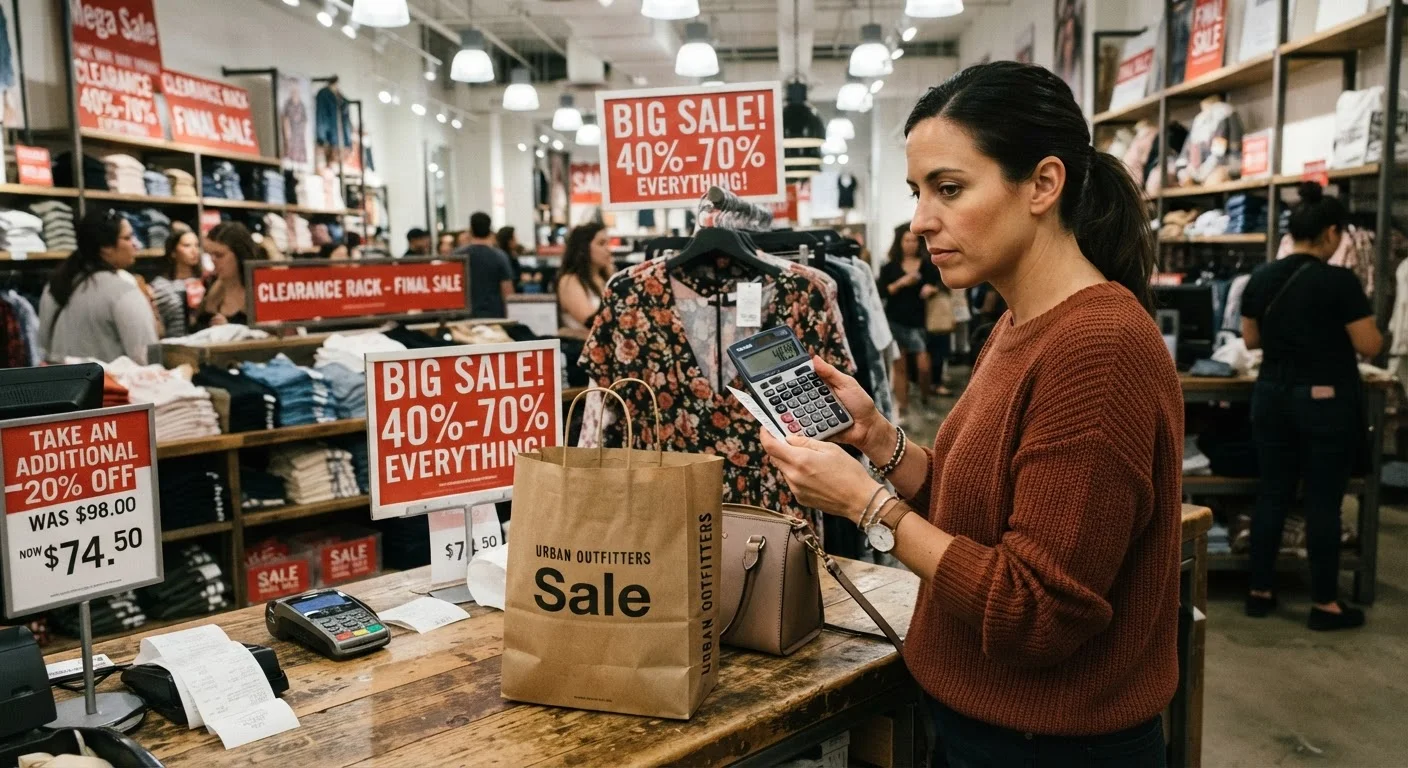
Why the Discount Framing Deserves Skepticism
The idea that buying something on sale automatically saves money is one of retail's most durable myths. It persists because it contains a kernel of truth - if you were going to buy something anyway and the price drops, you genuinely spend less. The problem is that most real-world discount decisions don't fit that tidy scenario.
Retailers invest heavily in pricing psychology. Research in consumer behavior consistently finds that shoppers anchor to the stated original price and evaluate the sale price relative to that anchor - not relative to what the item is actually worth or what competitors charge. That mental shortcut is easy to exploit. Understanding how discounts are constructed, rather than just advertised, is the foundation of smarter spending. For a closer look at how pricing signals can mislead, see how phantom discounts work.
Myth
A 50% discount means I'm saving half the item's value.
Fact
You only save money if the original price was genuine and you were already going to make the purchase.
Percentage-off figures are calculated against the stated original price, which may have been set artificially high. U.S. consumer protection guidelines require that advertised "original" prices reflect prices at which the item was actually sold for a meaningful period, but enforcement is uneven. Even when the original is legitimate, if you weren't planning the purchase, you haven't saved anything - you've spent money you otherwise would have kept. Understanding what "on sale" actually means is a useful starting point for reading discount claims critically.
Myth
Limited-time sales mean I need to decide quickly or lose out.
Fact
Urgency is a sales tactic; most time-limited offers either recur or can be matched elsewhere.
Artificial urgency is one of the most well-documented persuasion techniques in retail. Countdown timers and "only 3 left" messages are frequently reset or replenished. Acting quickly to avoid missing a deal is exactly the mental state retailers want you in - it reduces deliberate evaluation. Before responding to urgency cues, a useful question is: would I want this item at this price if I had a week to think about it? Identifying signals of a genuinely good deal can help you separate real value from clever packaging.
Myth
Buying more items during a sale saves more money overall.
Fact
Buying extra items you don't need at a discount still costs more than not buying them at all.
Tiered discounts - "buy two, get 20% off" - work by shifting your reference point from what you need to what qualifies for the better deal. The second or third item only saves money if you would have bought it anyway at any price. Otherwise, you've spent more in absolute terms while feeling like you saved. This pattern is covered in detail in why buying more to save more often costs you more.
Myth
Clearance prices are always the lowest a product will go.
Fact
Clearance tags indicate a retailer wants to move inventory, not necessarily that the price is at its floor.
Clearance sections are stocked for a range of reasons - seasonal changeover, overstocking, or discontinuation - and the pricing reflects those inventory goals rather than a guaranteed rock-bottom value. A clearance item may still be priced above what the same product sells for at a different retailer, or what it will sell for once stock clears further. For a detailed look at how clearance pricing actually works, what the data shows about clearance sales separates common assumptions from evidence.
Myth
If I use a coupon, I'm always getting a better deal than without one.
Fact
Coupons can steer shoppers toward purchases they wouldn't otherwise make, at prices that aren't necessarily competitive.
Coupons are a promotional tool before they're a savings tool. They're designed to drive trial, increase basket size, and build loyalty to specific products - not primarily to benefit the shopper. A coupon for a product you don't use, or for a brand that's more expensive than its alternatives even after the coupon, doesn't represent savings. Common coupon misconceptions addresses how to evaluate whether a coupon genuinely improves the deal.
The Real Math Behind Your 'Savings'
Before accepting any discount at face value, it's worth running a few concrete checks. First, establish the item's realistic market price - not just the stated original - by searching across multiple sources. Price-tracking browser tools can show whether a product's "regular" price has genuinely held at the claimed level or has fluctuated strategically around sale events.
Second, calculate cost-per-use or cost-per-unit, not just the sticker discount. A 40% markdown on a perishable item you'll only partially use is not a 40% saving in practice. The same logic applies to bulk deals, explored in depth in when bulk buying actually makes financial sense.
Third, factor in any downstream costs: storage, accessories required for use, subscription lock-ins, or disposal fees. These erode headline savings quickly.
~40%
Shoppers who bought something unplanned due to a sale
Consumer research consistently finds a significant share of sale purchases involve items shoppers did not intend to buy before seeing the discount.
Up to 30%
Price inflation before major sale events
Independent price-tracking analyses of major retail sale events have found original prices raised by meaningful amounts in weeks prior, reducing actual savings.
Finally, ask whether the purchase fits your actual budget and plan - not the budget you imagine you'll have because you "saved" on this item. Spending money you hadn't allocated is not saving, regardless of the percentage off. The Saving & Debt hub offers practical frameworks for keeping discretionary spending aligned with real financial goals.
Watch Out for Post-Sale Spending Regret
Purchases driven by discount framing rather than genuine need are among the most common sources of buyer's remorse. If you find yourself justifying a purchase primarily because of the price reduction rather than the item's value to you, that's worth pausing on. Returning unused sale items promptly - within the return window - is always an option, and most major retailers are required to honor their stated return policies.