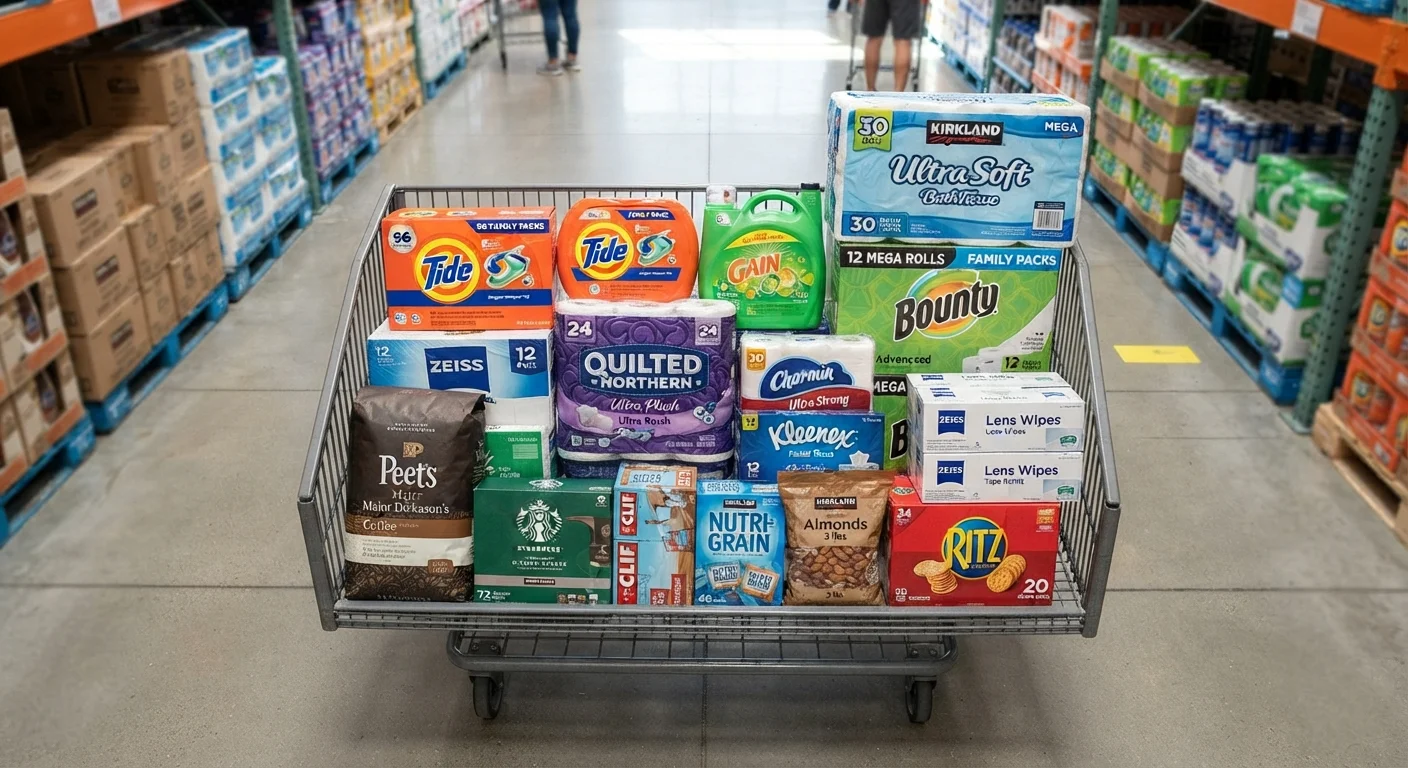
The Core Mechanics of Bulk Savings
Warehouse-style retailers and bulk-pack offerings work on a straightforward principle: sellers move more volume per transaction, so they pass a portion of that efficiency to the buyer as a lower per-unit price. For commodities you reliably consume - paper goods, canned staples, cleaning supplies - that math often holds up. The question is whether it holds up for you specifically, given your actual consumption rate, storage space, and budget constraints.
The per-unit price is just one variable. A 30% unit-price reduction means nothing if 40% of the product expires before you use it, or if the upfront spend disrupts your monthly cash flow. Applying the same scrutiny you'd give any large purchase - budget fit, alternatives, timing - is equally valid at the warehouse checkout.
Lower cost per unit on stable-use products
For items consumed at a predictable rate, bulk pricing consistently delivers a lower per-unit cost than standard retail packaging - sometimes 20-40% less on commodity staples.
Fewer shopping trips and restocking gaps
Keeping a larger supply of household essentials reduces the frequency of routine shopping trips and the risk of running out at inconvenient times.
Useful for large or multi-person households
Families or shared households with high consumption rates can exhaust bulk quantities before expiration, making the savings straightforward rather than theoretical.
Predictable spend on recurring necessities
Stocking up on non-perishables at a known price protects against gradual retail price increases for products you'll definitely need regardless.
When Bulk Buying Works Against You
Marketing around bulk deals frequently exploits a cognitive bias: larger numbers feel like larger value. A "buy 3, save 15%" label is compelling even when you only need one unit, or when the same item is regularly priced lower at a standard retailer. Before assuming a bulk price is competitive, verify the per-unit math against what you'd ordinarily pay.
Perishables are the clearest risk category. Food waste represents a direct financial loss that offsets any per-unit savings. The same logic applies to products with formulation cycles - cosmetics, medications, and some supplements have expiration or efficacy windows that bulk quantities often outlast. Buying more to save more only works when you actually use what you buy.
High upfront cost strains monthly cash flow
A single warehouse trip can cost several hundred dollars, which may create short-term budget pressure even if the per-unit economics are sound.
Perishables and short shelf-life items often go to waste
Food spoilage, expired supplements, or products that lose efficacy before use directly subtract from any unit-price savings - sometimes resulting in a net loss.
Membership fees require sufficient purchase volume to justify
Annual warehouse club fees must be offset by actual savings; occasional or category-limited shoppers may not reach the break-even threshold.
Storage space is a real and often ignored cost
Large quantities require physical space that not all households have, and any added storage costs - shelving, reorganization, or off-site units - should factor into the savings calculation.
Unit prices are not always actually lower
Some bulk or warehouse pricing benchmarks against a premium-tier retail price, not the realistic everyday price. Comparison shopping is necessary to confirm a genuine discount.
Hidden Costs That Reduce Real Savings
Warehouse club memberships typically run $50-$65 per year at major retailers. That cost needs to be absorbed by your actual savings to break even. For infrequent shoppers, or those who buy bulk in only one or two categories, the membership fee may cancel out months of unit-price advantages.
Membership Fee Break-Even Check
Before joining a warehouse club, estimate your realistic annual savings on the specific products you'd actually buy there. If your projected savings don't clearly exceed the annual membership cost - typically $50-$65 - the economics may not work in your favor. Some clubs offer trial periods or shorter-term passes worth exploring first.
Storage overhead is another underweighted cost. If bulk buying prompts you to rent a storage unit, reorganize your home, or purchase additional shelving, those costs belong in your savings calculation. Even time - driving to a warehouse location, loading oversized packages, reorganizing pantry space - has a real value. Treating bulk purchases as part of your overall budget plan, not as a separate "savings activity," helps keep that accounting honest.
~$1,500
Estimated annual U.S. household food waste cost
The USDA has estimated that American households waste a significant portion of purchased food, with costs running into hundreds to over a thousand dollars annually per household - a direct risk for over-bought perishables.
20-40%
Typical per-unit savings on commodity staples
Consumer finance analysts generally cite this range for non-perishable bulk purchases compared to standard single-unit retail pricing, though actual savings vary by product and retailer.
A Framework for Deciding What to Buy in Bulk
The most reliable candidates for bulk purchasing meet several criteria simultaneously: they are non-perishable or have a long shelf life, you use them at a consistent and measurable rate, the per-unit price is verifiably lower than standard retail (not just lower than a temporarily inflated price), and you have adequate storage without added expense.
Product categories that commonly meet these criteria include: bathroom tissue, paper towels, dish soap, laundry detergent, canned goods with multi-year shelf dates, and dry goods like rice, pasta, and oats - for households that cook regularly. Contrast that with fresh produce, specialty items you try once, or products tied to trends or seasons. Off-season timing strategies may serve those categories better than bulk volume.
When a purchase doesn't fit neatly, a closer look at whether bulk is genuinely saving you money can prevent a spending pattern that looks thrifty but quietly costs more. For large non-bulk purchases, negotiating on price is often a more targeted strategy.