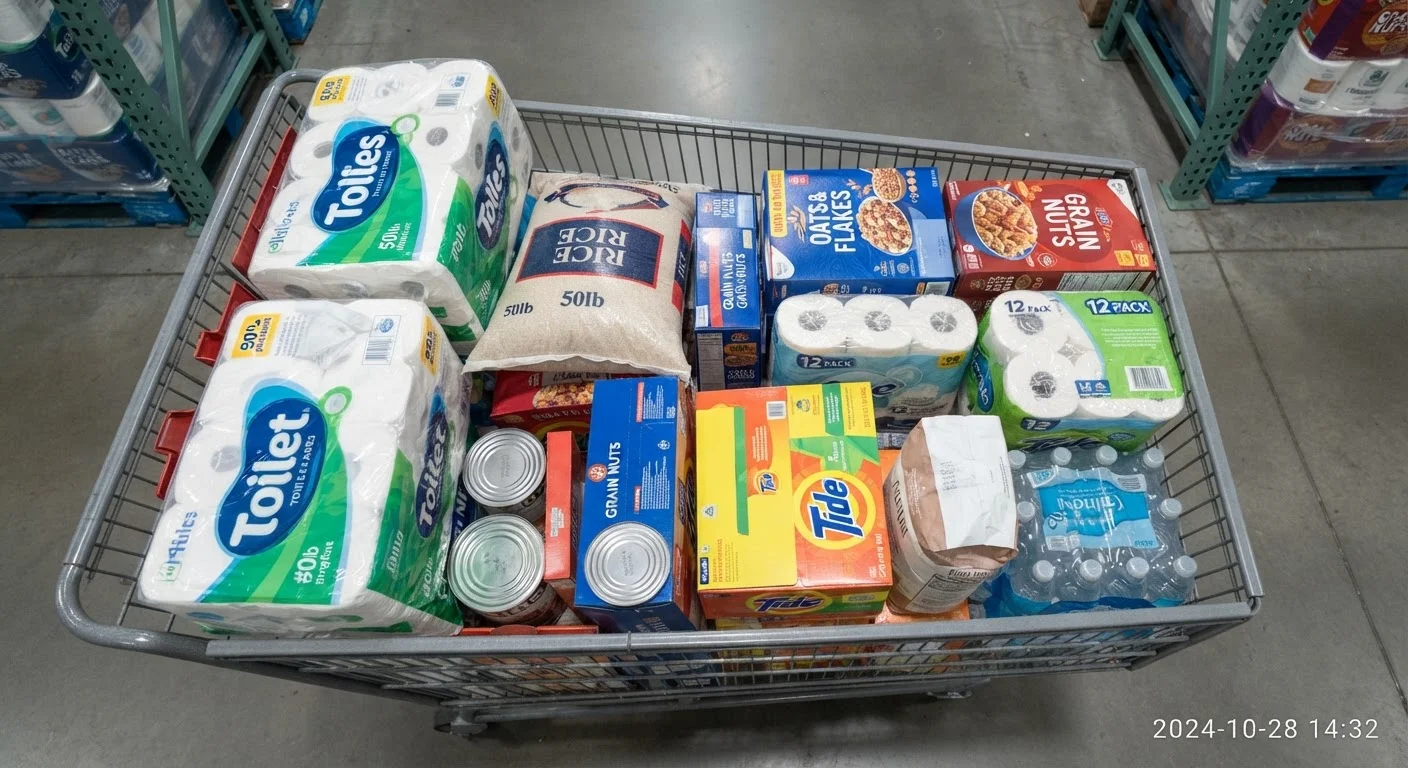
The Core Promise - and the Hidden Catch
The pitch for bulk buying is straightforward: pay less per unit by buying more at once. Warehouse clubs, online retailers, and grocery stores all use this mechanic, and the per-unit math often does check out on paper. A 48-roll pack of toilet paper typically costs less per roll than a 12-pack. That part is real.
But the total-cost picture is more complicated. You pay the full lump sum upfront, tying up cash you might need elsewhere. You absorb storage costs - whether that's physical space, containers, or a chest freezer. And if you don't use everything before it expires or degrades, the waste erases the discount entirely.
Understanding bulk buying honestly means separating the per-unit price from the total economic cost of the purchase. These two numbers are rarely the same. See also when bulk savings are real and when they aren't for a deeper look at this distinction.
Lower cost per unit on frequently used items
For staple products with long shelf lives, the per-unit discount is genuine and accumulates meaningfully over months of use.
Fewer shopping trips and less decision fatigue
Stocking up reduces the frequency of routine purchases, saving time and reducing the risk of paying full price in a pinch.
Protection against price increases
Locking in a current price on items you'll definitely use can hedge against inflation or temporary supply disruptions.
Reduced packaging waste per unit
Larger packages generally use less packaging material relative to the product volume, which can align with environmental goals.
Where Bulk Buying Genuinely Pays Off
Certain product categories consistently reward bulk purchasing. Non-perishable household staples - paper products, cleaning supplies, canned goods with multi-year shelf lives, and personal care items used daily - are the strongest candidates. Consumption is predictable, there's no spoilage risk, and the savings compound over time without requiring behavior change.
Bulk also makes sense when it replaces a recurring errand. Buying a six-month supply of laundry detergent eliminates six separate trips and removes the risk of buying at full price in a pinch. That convenience has real, if unmeasured, value.
For households tracking spending closely, budgeting basics matter here: bulk purchases make more sense when your monthly budget has room to absorb a larger one-time outlay without disrupting bill payments or emergency savings.
~25%
Average food waste in U.S. households
The USDA estimates that American households waste roughly 30-40% of the food supply, much of it at the consumer level - a key risk factor for bulk food purchases.
~$1,500/yr
Estimated annual household food waste cost
The Natural Resources Defense Council has estimated the average U.S. family of four loses close to $1,500 annually to discarded food, illustrating how spoilage undermines savings strategies.
When Bulk Buying Quietly Costs More
Perishables are the most obvious trap. Produce, dairy, deli meats, and bakery items bought in large quantities frequently spoil before they're consumed, turning apparent savings into direct waste. The same logic applies to items with expiration dates - medications, vitamins, and some packaged foods - where a two-year supply bought at a discount may expire before use.
Less obvious is the consumption acceleration effect: research in consumer behavior suggests that people use more of a product when they perceive an abundant supply. Buying a jumbo bottle of dish soap doesn't save money if you unconsciously use more per wash. This effect is documented most clearly with food, snacks, and beverages.
There's also the issue of product fit. Buying 96 units of a shampoo you've used once, a cleaning product with a scent you haven't tested at full-room scale, or a food item your household hasn't confirmed it likes is a financial gamble. Buying more to save more often costs you more explores this pattern in detail.
High upfront cost strains monthly cash flow
A single bulk run can consume a disproportionate share of a monthly budget, even if the per-unit math is favorable.
Spoilage and expiry erase savings
Perishables and products with expiration dates bought in excess quantities often go to waste, negating any discount.
Consumption acceleration increases actual usage
Perceived abundance can lead to using more per occasion, meaning the supply runs out faster than planned and net savings shrink.
Storage space has real or opportunity costs
Dedicating cabinet, pantry, or garage space to bulk goods has value - especially in smaller homes or apartments where space is limited.
Bulk price isn't always cheaper per unit
Unit pricing isn't always displayed, and retailers sometimes price smaller packages more competitively during sales. The math must be checked, not assumed.
A Practical Framework Before You Commit
Before adding a bulk item to your cart, run through four questions:
- Do I use this regularly? If it's not already a household staple, bulk is premature.
- Will it stay good? Check the expiration date and estimate whether your household will realistically consume it in time.
- Is the unit price actually lower? Stores are not required to make bulk the cheaper option. Pull out the unit price label or calculate it yourself.
- Do I have space? If storing the purchase requires purchasing more containers or rearranging your home significantly, factor that into the cost.
Comparing the real cost of bulk against alternatives is worth the effort. Price-per-use math applies here just as it does with durables: what you pay per actual use determines value, not the package price.
Membership Fees Change the Math
Warehouse clubs that offer bulk pricing typically charge annual membership fees ranging from roughly $50 to $130. If your household's actual bulk savings don't exceed that annual fee, the net benefit may be zero or negative. Track what you genuinely save on products you would have bought anyway - not on impulse purchases driven by the bulk format.
Discount framing is also worth interrogating. A bulk deal that's only available with a membership fee, or one that requires spending past a free-shipping threshold, may be less advantageous than it appears. See sales myths about discounts for more on how framing affects perceived savings.