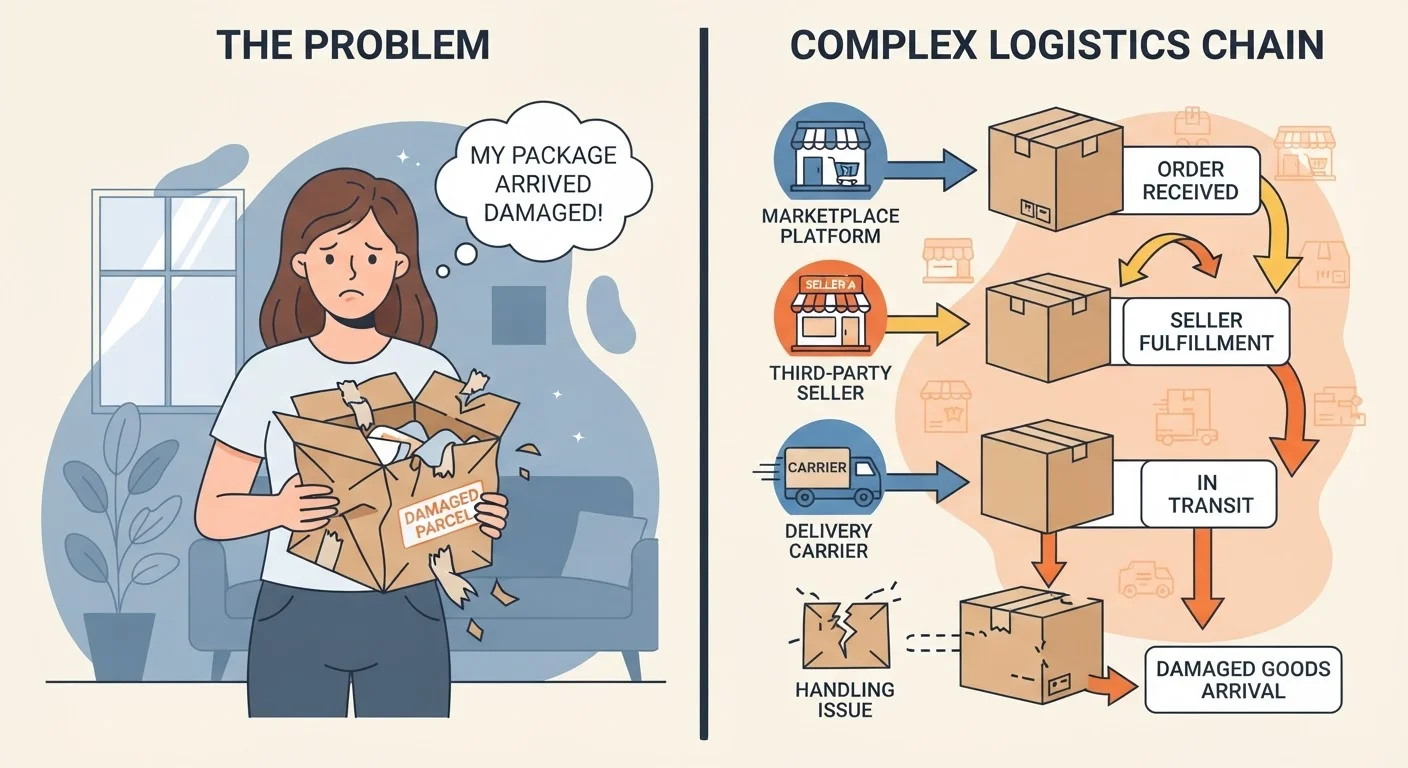
The Platform Is Not Your Seller
When you browse Amazon, eBay, or Walmart Marketplace, the familiar branding can create the impression that you're buying from the platform itself. Often, you're not. A significant portion of listings on major marketplaces are fulfilled by independent sellers who simply rent space on the platform. The purchase contract - the legal relationship that governs your refund, return, and remedy rights - is between you and that seller.
This matters because each seller sets its own return window, condition requirements, and dispute process, within whatever minimum rules the host platform enforces. A seller operating out of a warehouse in Ohio and one shipping from overseas may both appear identically in search results, but your practical recourse if something goes wrong can differ dramatically. For a broader grounding in how consumer rights work from checkout through return, see our complete consumer rights overview.
Fulfilled by the Platform ≠ Sold by the Platform
A product labeled 'Fulfilled by Amazon' (FBA) means Amazon handles warehousing and shipping - it does not mean Amazon is the seller. The product may still be owned and listed by a third-party seller, and your purchase contract remains with that seller. Check the 'Sold by' field on a listing to confirm who you are actually buying from.
Where Your Protections Actually Come From
When a third-party purchase goes sideways, your protections stack from multiple sources - not all of them equally reliable.
- Seller return policy: The first layer. Terms are set by the seller and must be disclosed on the listing page. Read them before you buy, not after.
- Platform buyer-protection program: Voluntary programs like Amazon's A-to-z Guarantee or eBay's Money Back Guarantee can step in when a seller is unresponsive or ships something materially different from the listing. These programs have claim windows (commonly 30-90 days) and category exclusions.
- Federal warranty law: The Magnuson-Moss Warranty Act covers written warranties on physical products sold in the U.S., regardless of who the seller is. If a third-party seller provides a written warranty, they're bound by it. Be aware, however, that some manufacturers' warranties are voided outside authorized resellers - always check warranty terms. The difference between warranties and return policies is worth understanding before you assume coverage.
- Credit card chargeback rights: Under the Fair Credit Billing Act, you can dispute a charge with your card issuer for items not received or materially misrepresented. This protection applies independent of the seller's location or the platform's policies and is often the most reliable backstop available.
~60%
Amazon sales from third-party sellers
Amazon's own reporting has consistently shown that independent sellers account for more than half of units sold in its store, underscoring how common third-party transactions are.
60 days
Federal chargeback dispute window
Under the Fair Credit Billing Act, consumers generally have 60 days from the statement date on which a disputed charge appears to notify their card issuer in writing.
Varies
Platform buyer-protection claim windows
Major marketplace buyer-protection programs set their own claim deadlines - commonly ranging from 30 to 90 days after the estimated delivery date - and these limits are not standardized by law.
Practical Limits That Catch Shoppers Off Guard
Several real-world constraints narrow your options in ways that don't show up prominently in product listings.
Overseas sellers: If a third-party seller operates internationally, pursuing them through U.S. small claims court is impractical. Your realistic options shrink to the platform's buyer-protection program and your credit card issuer.
Marketplace arbitration clauses: Many platform terms of service include mandatory arbitration clauses that affect how you can pursue disputes with the platform itself (not necessarily the seller). Understanding these clauses before a problem arises is worth the time - our article on arbitration clauses in purchase agreements covers what they mean in practice.
As-is and used listings: Third-party sellers frequently list refurbished, open-box, or used items. These listings reduce implied warranty protections, though platform buyer-protection programs and chargebacks may still apply if an item is misrepresented. The legal implications of an as-is sale are more nuanced than the label suggests.
Damaged shipments: When a package arrives damaged, carrier liability, seller responsibility, and platform policy all potentially overlap. Understanding who's liable when a delivery arrives damaged can prevent you from filing claims with the wrong party and losing your window to escalate correctly.
Always Pay With a Credit Card
Credit cards offer chargeback rights under federal law that debit cards, gift cards, and third-party payment apps generally do not. If a third-party seller dispute isn't resolved through platform channels, a credit card chargeback is often the most reliable path to a refund. Keep your order confirmation and any seller correspondence to support the claim.
How to Protect Yourself Before You Buy
The most effective consumer protection on a marketplace is the due diligence you do before checking out. Confirm the seller's identity and location - this is usually visible on the product listing or the seller's profile page. Check their return policy terms explicitly; don't assume the platform's standard policy applies. Review seller feedback with a focus on how disputes were handled, not just overall star ratings. Pay with a credit card rather than a debit card or third-party payment app to preserve your chargeback rights. Keep order confirmation emails, screenshots of the listing, and any seller correspondence - documentation is the foundation of any successful dispute or claim.
For context on how e-commerce purchases are treated differently from in-store transactions under applicable law, the rules governing online purchase protections are a useful reference. The protections exist - knowing where they come from and how to invoke them is what makes them usable.
This article is for general informational and educational purposes only and does not constitute legal or financial advice. Consumer protection laws, platform policies, and card issuer terms vary and change over time. Consult a qualified attorney or consumer protection agency for guidance specific to your situation.