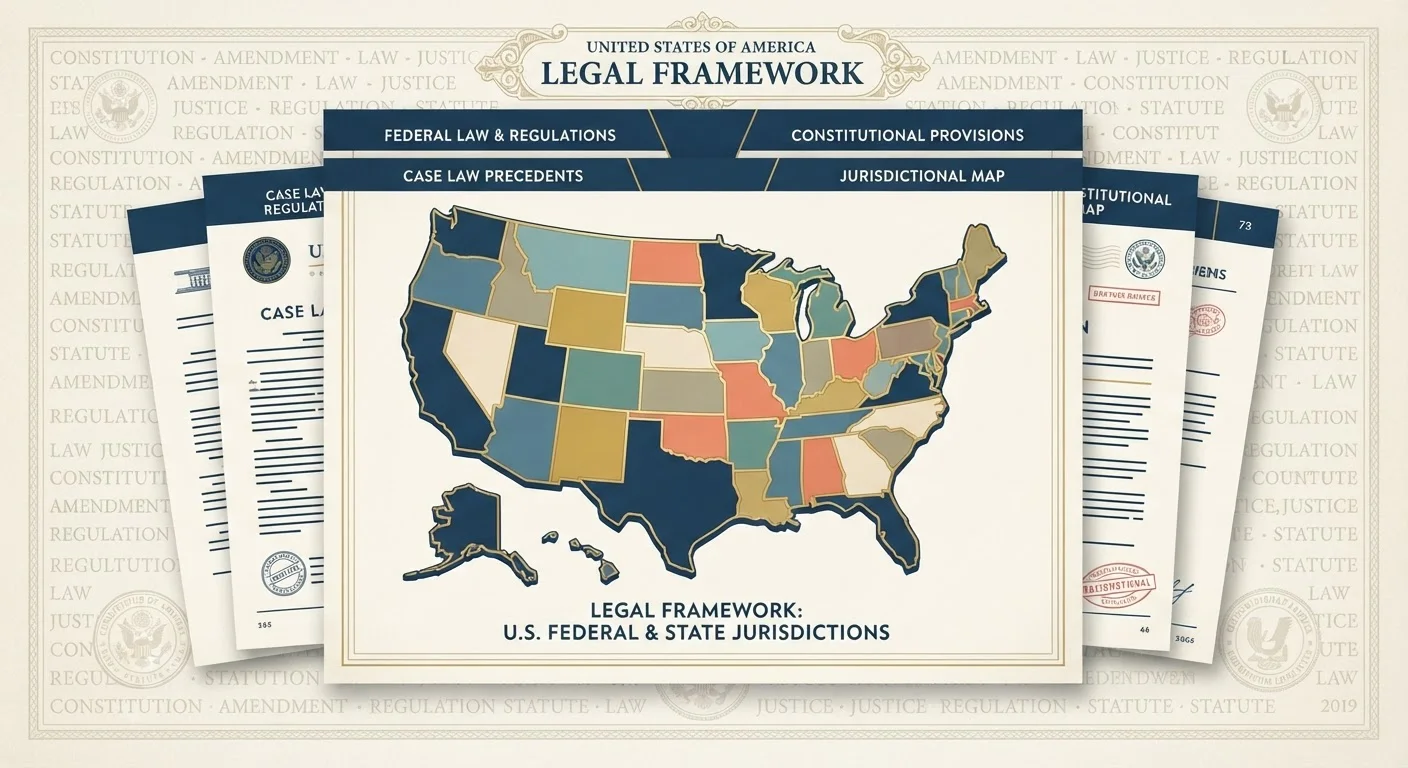
The Federal Floor and Why It Matters
Several federal agencies - including the Federal Trade Commission (FTC) and the Consumer Financial Protection Bureau (CFPB) - enforce nationwide rules on deceptive practices, credit, and certain warranty disclosures. These form a baseline every business operating in the U.S. must meet. For a fuller picture of those baseline rights, see our complete consumer rights overview.
What federal law does not do is prevent states from going further. The U.S. Supreme Court has consistently held that state consumer protection statutes survive unless Congress explicitly preempts them - and in retail and warranty contexts, that preemption is rare. The practical result: a shopper in one state may have considerably stronger remedies than a shopper in another, even for an identical transaction.
50
States with their own UDAP consumer protection statutes
Every U.S. state, plus the District of Columbia, has enacted some form of unfair or deceptive acts and practices law, according to the National Consumer Law Center's survey of state statutes.
~30
States with auto-renewal or negative-option disclosure laws
The National Conference of State Legislatures tracks roughly 30 states that have enacted specific automatic-renewal or subscription-transparency statutes, most passed after 2010.
Varies
Statutory damages per UDAP violation by state
State UDAP statutes vary widely in their remedies - some cap damages at $25 per violation while others allow $1,000 or more, plus attorney's fees, per the National Consumer Law Center's state-by-state analysis.
Where States Commonly Strengthen Consumer Rights
Deceptive trade practices acts (DTAs). Every state has some version of an unfair or deceptive acts and practices (UDAP) law. The quality and scope vary widely. Some states require proof that a practice caused actual harm; others allow consumers to recover statutory damages - a fixed dollar amount per violation - regardless of provable loss. States like Texas and California allow consumers to bring individual lawsuits under their UDAP statutes; in other states, only the Attorney General can sue.
Return and refund policies. Federal law does not require retailers to accept returns or offer refunds unless the product is defective. State law can change that equation. Several states require merchants to clearly post their return policies and, if they fail to do so, may entitle consumers to a full refund within a set window. California, for example, requires conspicuous disclosure of any policy that restricts returns.
Implied warranties. Under the federal Magnuson-Moss Warranty Act, sellers can disclaim implied warranties in certain circumstances. Multiple states - including Massachusetts, Maine, and Vermont - prohibit or significantly restrict such disclaimers in consumer sales, meaning the product must work as reasonably expected regardless of what fine print says.
Lemon laws and defective goods. While lemon laws are best known for new vehicles, some states extend similar protections to other categories of goods. Our article on state lemon laws and defective products explains where these rules apply and how to invoke them.
Subscription and Digital Purchase Protections
Two areas where state law has moved faster than federal regulation are subscription services and digital goods. California's Automatic Renewal Law, for instance, requires clear disclosure of subscription terms and an easy cancellation mechanism - requirements that go beyond baseline federal rules. Several other states have passed similar auto-renewal statutes. For a broader look at those rights, see our guide on consumer protections for subscription services.
Digital products occupy an even murkier space. State consumer protection laws are increasingly being tested against purchases of software, e-books, and app content - areas where federal guidance remains sparse. Our overview of consumer protections for digital products covers where those protections stand today.
Check Your State AG's Site Before Giving Up
If a retailer has told you that you have no recourse, search your state Attorney General's consumer protection page before accepting that answer. Many disputes that appear to be dead ends under federal law have a viable path under state statutes. State AG offices also sometimes intervene directly with businesses on behalf of consumers who file complaints.
How to Find and Use Your State's Protections
Your state Attorney General's website is the most reliable starting point. Most publish plain-language summaries of state consumer protection laws and maintain complaint portals. Filing a complaint - even if it doesn't immediately resolve your dispute - creates an official record and contributes to enforcement patterns that agencies track.
If your state grants a private right of action under its UDAP statute, a consumer law attorney can assess whether your situation warrants a lawsuit. Many work on contingency in consumer cases, particularly where statutory damages or fee-shifting provisions apply. Legal aid organizations also assist lower-income consumers with consumer protection claims at no cost.
State Law and Where a Purchase Was Made
Which state's law applies can depend on where the transaction occurred, where the consumer is located, or where the business is headquartered - and courts apply different tests. For online purchases in particular, this question is not always straightforward. If you're considering legal action, a consumer protection attorney in your state can advise on which law applies to your specific situation.
Understanding that your state may offer rights beyond the federal minimum is often the first step toward resolving a dispute you might otherwise assume is unwinnable. The law's protections only work when consumers know they exist.